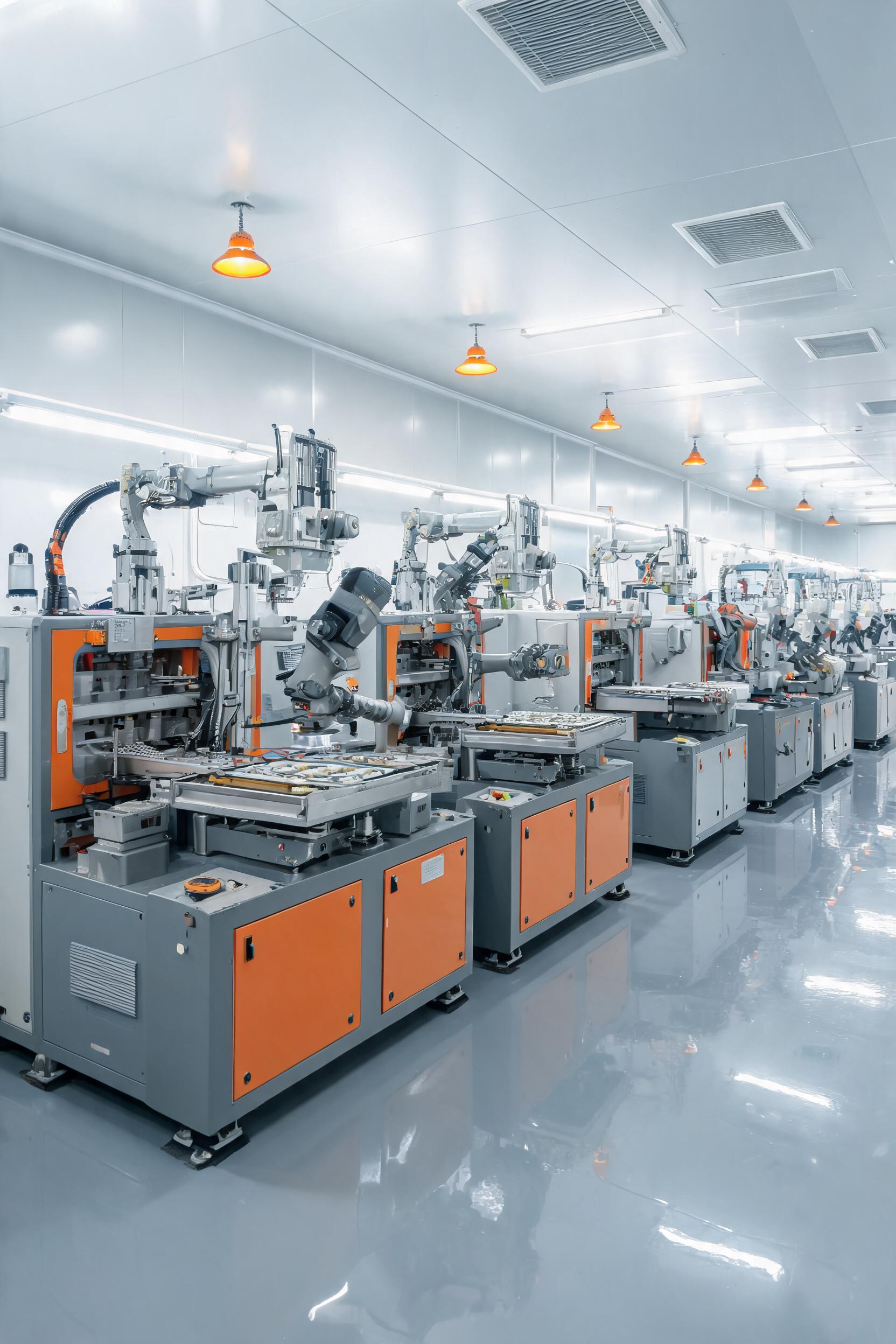
Liquid silicone rubber (LSR) has emerged as a critical material for high-precision components in medical, semiconductor, food and beverage, and aerospace industries, driven by its exceptional biocompatibility, thermal stability, chemical resistance, and low compression set. Unlike thermoplastics, LSR cures via a platinum-catalyzed addition reaction at elevated temperatures, making it highly sensitive to particulate contamination, volatile organic compounds (VOCs), and even trace levels of inhibitory substances such as sulfur, tin, and amines. For regulated sectors where even 0.5μm particulates or non-viable contaminants can lead to product failure, regulatory non-compliance, or patient harm, dust-free injection molding is not a secondary consideration but a core process requirement. This article outlines end-to-end process specifications for LSR dust-free injection molding, covering controlled environment design, raw material handling, process parameter optimization, in-line quality control, and post-processing protocols to ensure consistent, defect-free production of critical LSR components.
Controlled Environment Design and Certification Specifications
The foundation of dust-free LSR molding is a purpose-built cleanroom environment that eliminates external contamination sources while controlling process-related emissions. Unlike standard injection molding facilities, LSR cleanrooms require dual control of particulate levels and chemical contaminants, as even trace amounts of cure inhibitors can lead to incomplete cross-linking and part failure.
Cleanroom Classification and Zoning Requirements
Cleanrooms for LSR processing are classified per ISO 14644-1 standards, with appropriate zoning based on process risk. The following table outlines recommended classification and zoning for different LSR component applications:
Application SegmentISO Class (0.5μm Particulates)Max Particulate Count (particles/m³)Pressure Differential (Pa, Relative to Adjacent Zones)Gowning Requirement
Implantable medical devicesISO 7 (Class 10,000)≤352,000+15 to +20Sterile coveralls, hairnets, face masks, nitrile gloves, shoe covers
Semiconductor sealing componentsISO 6 (Class 1,000)≤35,200+20 to +25Sterile hooded coveralls, face shields, powder-free nitrile gloves, boot covers
Food contact infant productsISO 8 (Class 100,000)≤3,520,000+10 to +15Disposable coveralls, hairnets, food-grade gloves
Aerospace optical componentsISO 5 (Class 100)≤3,520+25 to +30Full-body cleanroom suits, respiratory protection, ESD-safe gloves
Zoning is structured to minimize cross-contamination between process stages:
- Gowning airlock: Transition zone between non-clean areas and production zones, with air showers to remove particulates from personnel attire.
- Raw material staging zone: Dedicated area for pre-processing LSR raw materials, isolated from molding zones to prevent cross-contamination with auxiliary materials such as release agents.
- Molding production zone: Core area housing injection molding presses, with restricted access to only essential operating personnel.
- Post-processing and packaging zone: Low-turbulence area for deflashing, inspection, and sterile packaging, separated from molding zones to avoid exposure to residual curing fumes.
Environmental Parameter Control Protocols
Beyond particulate control, LSR dust-free facilities require strict regulation of temperature, humidity, and air change rates to ensure material stability and cure consistency:
- Temperature: Maintained at 22±2°C to prevent premature curing of LSR in the feed system, which can lead to gel formation and particulate generation.
- Relative humidity (RH): Controlled at 45±5% to avoid moisture absorption by LSR base polymers, which can cause micro-voids during curing and reduce part mechanical properties.
- Air change rate: 30–60 air changes per hour (ACH) for ISO 7 zones, 60–90 ACH for ISO 6 zones, with HEPA filtration efficiency of 99.97% for 0.3μm particulates. Airflow is designed to be unidirectional (laminar) over mold cavities and material feed lines to carry particulates away from critical process areas.
- Chemical contamination monitoring: Monthly air sampling for volatile cure inhibitors (sulfur, organotin compounds, amines) via GC-MS, with maximum allowable concentrations set at <0.1μg/m³ for medical and semiconductor applications.
- ESD control: All flooring, work surfaces, and personnel grounding systems are designed to maintain electrostatic discharge levels below 100V, as static buildup can attract airborne particulates to LSR parts and damage sensitive electronic components co-molded with LSR.
Raw Material Handling and Pre-Processing Specifications
LSR is supplied as a two-part system (Part A: base polymer + platinum catalyst; Part B: cross-linker + adhesion promoter if required), which is highly susceptible to contamination during storage, transfer, and mixing. Improper handling is responsible for 40% of contamination-related LSR molding defects, per industry data, making pre-processing controls a critical component of dust-free production.
Raw Material Storage and Transfer Protocols
Proper storage and closed-loop transfer eliminate exposure to environmental contaminants and prevent material degradation:
- Storage conditions: Unopened LSR drums are stored in a temperature-controlled (15–25°C) dry storage area, isolated from chemicals such as rubber additives, paints, and cleaning agents that contain cure inhibitors. Shelf life is strictly tracked, with expired materials quarantined and disposed of per hazardous waste regulations.
- Drum handling: Prior to entering the cleanroom, LSR drum exteriors are wiped down with isopropyl alcohol (IPA) and passed through a material airlock with positive pressure to remove surface particulates. Drums are never opened in non-clean areas.
- Closed transfer system: LSR is transferred from drums to the molding press feed system via a closed, food-grade/medical-grade stainless steel pneumatic pumping system, eliminating manual handling and exposure to cleanroom air. Transfer lines are purged with filtered nitrogen prior to each material change to remove residual material and particulates.
- Colorant and additive handling: When custom coloring is required, pre-compounded LSR masterbatches are used instead of loose powder pigments to avoid particulate generation. Masterbatches are added to the material stream via a closed, volumetric dosing system integrated with the feed line, with no manual weighing or mixing performed in the cleanroom.
Material Mixing and Degassing Specifications
Inhomogeneous mixing or residual air in LSR can lead to cure inconsistencies, micro-voids, and particulate defects, requiring precise control of the mixing process:
- Static mixing requirements: LSR Part A and Part B are mixed at the recommended ratio (typically 1:1 by weight, with variation of ≤±0.5%) via a static mixer with 12–20 mixing elements, depending on material viscosity. Mixer elements are replaced after every 8 hours of production to avoid buildup of partially cured LSR, which can flake off into the material stream and cause part defects.
- In-line degassing: Prior to injection, mixed LSR passes through a vacuum degassing chamber maintained at -0.095 to -0.1 MPa pressure to remove entrained air bubbles. Degassing efficiency is verified via periodic sampling of mixed material, with allowable residual air content set at <0.1% by volume for high-precision components.
- Material pre-conditioning: For LSR grades with viscosity >500,000 cPs, the material feed lines are heated to 30±2°C to improve flow uniformity, with temperature variation limited to ±1°C to prevent premature catalyst activation.
Injection Molding Process and Contamination Control Specifications
Even with a controlled environment and properly handled materials, the injection molding process itself can generate particulates from wear, mold release agents, and residual cured material. Process specifications must therefore address both part quality and contamination prevention throughout the molding cycle.
Process Parameter Optimization for Dust-Free Production
Molding parameters are optimized to minimize material waste, reduce mold wear, and eliminate the need for external release agents that can introduce contaminants:
ParameterTypical Range for High-Precision LSR ComponentsControl ToleranceRationale for Dust-Free Operation
Injection pressure80–150 bar±2 barExcess pressure increases mold wear and flash generation, which can break off into particulates during demolding
Injection speed10–50 mm/s±1 mm/sHigh shear speeds can cause premature curing (scorching) of LSR, leading to gel particulates in finished parts
Barrel temperature15–25°C±1°CPrevents premature curing in the feed system, which would cause gel buildup and particulate contamination
Mold temperature150–200°C±2°CEnsures complete, uniform cross-linking, reducing residual uncured LSR that can transfer to subsequent parts
Curing time10–60 s (dependent on part wall thickness, 10 s per mm of thickness)±0.5 sUnder-cured parts leave sticky residues on mold surfaces, attracting particulates between cycles
Clamping force500–1000 N/cm² of projected part area±5%Prevents flash, which is the primary source of process-generated particulates in LSR molding
A critical requirement for dust-free operation is the elimination of external mold release agents. For most applications, this is achieved via:
- Use of internal release agents pre-compounded into the LSR formulation, at concentrations of 0.1–0.5% by weight to avoid surface blooming.
- Application of permanent, food-grade/medical-grade PTFE or DLC (diamond-like carbon) coatings on mold cavities, which have a service life of >100,000 cycles and eliminate the need for spray-on release agents.
If temporary release agents are absolutely required, only FDA-approved, low-VOC, non-silicone-based formulations are used, with application limited to once every 500 cycles via automated spray systems to avoid over-spray and particulate generation.
Mold Design and Maintenance Specifications
Mold design directly impacts contamination risk, as poorly designed molds can trap particulates, generate flash, and allow ingress of external contaminants:
- Mold material: High-polish stainless steel (316L or S136) with a hardness of 48–52 HRC, to resist wear and corrosion, and allow easy cleaning of residual LSR. Cavity surfaces are polished to a Ra ≤0.05μm for medical and semiconductor components, to prevent material adhesion and particulate buildup.
- Vent design: Vents are sized to 0.003–0.005 mm depth to allow air escape during injection without causing flash. Vents are cleaned with compressed filtered air every 100 cycles to remove trapped residual LSR and particulates.
- Cold runner system: Fully closed cold runners are used for most dust-free applications, as hot runner systems are prone to dead spots where LSR can cure and generate particulates. Runner systems are designed with no sharp corners or dead zones to ensure complete material purging between material changes.
- Mold maintenance protocol: Molds are removed from production every 10,000 cycles for full disassembly, ultrasonic cleaning in IPA, and inspection for wear, corrosion, or residual LSR buildup. Post-cleaning, mold surfaces are inspected via white light interferometry to verify no residual particulates >0.1μm are present prior to re-installation.
Quality Control and Post-Processing Specifications
Even with strict upstream controls, post-processing and final inspection steps are required to verify that finished parts meet contamination and performance requirements for regulated industries.
In-Line Contamination Monitoring Protocols
Real-time monitoring ensures that any contamination events are detected immediately, preventing defective parts from entering downstream processes:
- Particulate inspection: An automated high-resolution vision system is installed at the press discharge station, capable of detecting surface particulates down to 0.3μm in size. Parts with particulates exceeding the allowable limit (0 particulates >0.5μm per part for medical implant applications) are automatically rejected into sealed waste containers to avoid cross-contamination of good parts.
- Cure verification: Non-destructive Fourier-transform infrared (FTIR) spectroscopy is used to scan 10% of production parts per shift to verify cross-linking density, with acceptable cure rate set at ≥95%. Under-cured parts are quarantined, and the process is adjusted to address root causes such as low mold temperature or insufficient cure time.
- Bioburden testing: For medical and food contact parts, weekly swab testing is performed to verify bioburden levels are <10 CFU per part, with no pathogenic organisms present. If bioburden exceeds limits, the cleanroom is fully sanitized with vaporized hydrogen peroxide (VHP) prior to resuming production.
- Extractables and leachables (E&L) testing: Quarterly testing is conducted for parts intended for medical or pharmaceutical applications, per USP <661> and ISO 10993-18 standards, to ensure no residual contaminants or LSR oligomers are released under intended use conditions.
Post-Processing and Packaging Specifications
Post-processing steps must be performed under equivalent cleanroom conditions to avoid re-contamination of finished parts:
- Deflashing: For parts with unavoidable flash, cryogenic deflashing is preferred over manual trimming, as it uses liquid nitrogen to freeze flash and blast it off with non-abrasive polycarbonate media, eliminating manual handling and reducing particulate generation. All deflashing media is pre-filtered to remove fine particles prior to use, and the deflashing chamber is maintained at positive pressure relative to adjacent areas.
- Cleaning: Finished parts are cleaned via a three-stage process:
- Ultrasonic cleaning in filtered deionized (DI) water at 40°C for 5 minutes to remove surface particulates.
- Rinse with 18.2 MΩ·cm DI water to remove residual cleaning agents.
- Low-temperature vacuum drying at 60°C for 15 minutes, with drying air filtered to 0.1μm to avoid re-contamination.
- Packaging: Parts are packaged in pre-sterilized, static-dissipative polyethylene or Tyvek packaging in an ISO 5 (for implantable parts) or ISO 7 (for other applications) packaging zone. Packaging is heat-sealed and labeled with lot numbers, production dates, and cleanroom classification data for full traceability. Finished packaged parts are stored in a dedicated clean storage area, separated from raw materials and non-clean finished goods.
Conclusion
Dust-free LSR injection molding is a holistic process that requires synchronized control of the cleanroom environment, raw material handling, molding parameters, mold maintenance, and post-processing steps. Adherence to the specifications outlined in this article enables manufacturers to achieve consistent production of LSR components with particulate levels, bioburden, and performance characteristics that meet the strictest regulatory requirements for medical, semiconductor, food contact, and aerospace applications. As demand for high-precision LSR components continues to grow, ongoing optimization of these specifications—including integration of real-time particulate monitoring, closed-loop material dosing systems, and AI-powered process control—will further reduce contamination risks and improve production efficiency. For manufacturers, investing in robust dust-free molding processes not only ensures regulatory compliance but also reduces scrap rates, improves product reliability, and strengthens competitive positioning in high-value LSR market segments.