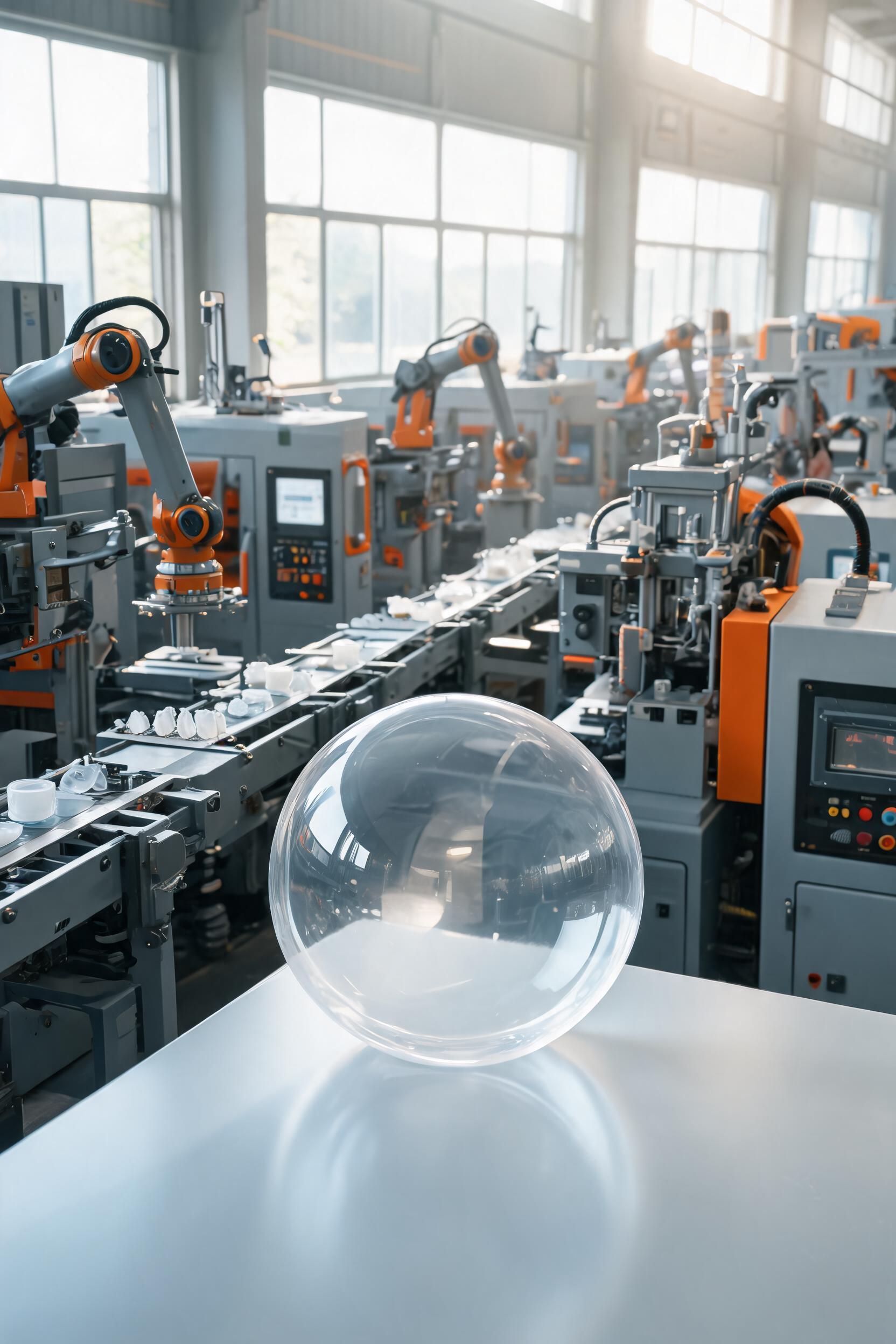
Liquid silicone rubber (LSR) has emerged as a transformative material for optical components over the past decade, outperforming traditional glass and thermoplastic optics in high-demand use cases ranging from consumer electronics to automotive lighting and medical devices. The 高透明光学液态硅胶透镜 (high-transparency optical LSR lens) combines exceptional optical performance, mechanical resilience, and manufacturing flexibility, addressing critical limitations of legacy materials while unlocking new design possibilities for precision optical systems. This article provides a technical deep dive into the core material properties, manufacturing process controls, and real-world applications of high-transparency optical LSR lenses, with a focus on quantitative performance metrics and industry-specific validation requirements.
Core Material Properties of High-Transparency Optical LSR Lenses
The performance of optical LSR lenses is rooted in the tailored chemical formulation of medical/optical-grade LSR, a two-part addition-cure silicone system composed of polydimethylsiloxane (PDMS) base polymers, fumed silica reinforcing fillers, platinum catalysts, and specialized optical modifiers. Unlike general-purpose LSR, optical grades are processed to eliminate residual impurities, micro-bubbles, and filler agglomerations that would degrade light transmission, resulting in a material optimized for visible, near-infrared (NIR), and short-wave infrared (SWIR) applications.
Optical Performance Metrics
The primary advantage of high-transparency optical LSR lenses lies in their consistent, wide-spectrum transmission and minimal optical distortion, with performance often exceeding that of polycarbonate (PC) and polymethyl methacrylate (PMMA) in harsh operating environments. Key optical parameters are summarized in Table 1, comparing optical LSR to common competing optical materials:
ParameterHigh-Transparency Optical LSROptical Glass (Borosilicate)Polycarbonate (PC)PMMA (Acrylic)
Visible Light Transmission (400–700 nm)94–96%92–98%88–91%91–93%
NIR Transmission (700–1600 nm)92–95%85–92%78–85%82–88%
Refractive Index (589 nm, 25°C)1.41–1.58 (formulation-adjustable)1.45–1.901.58–1.591.49
Abbe Number45–6030–6530–3252–58
Birefringence (nm/cm)<10<5 (annealed)50–30020–100
Yellowing Index (ΔYI after 1000h UV exposure)<1<0.55–123–8
Light Extinction Ratio (for polarizing applications)>1000:1>1500:1<200:1<500:1
Optical LSR’s low birefringence is a particularly critical feature for high-resolution imaging and polarizing optical systems, as it eliminates the image ghosting and contrast loss common to thermoplastics, which develop residual stress during injection molding. Unlike glass, optical LSR’s refractive index can be tuned across a 0.17 range via formulation adjustments, allowing designers to match refractive indices across multi-lens assemblies without relying on costly glass grades. The material’s low yellowing index under UV and high-heat exposure also ensures long-term optical stability: independent testing shows that optical LSR lenses retain >93% of their initial visible transmission after 5000 hours of accelerated weathering (85°C, 85% relative humidity, 340 nm UV radiation at 0.89 W/m²), compared to a 22% transmission loss for PC lenses under identical conditions.
Mechanical and Environmental Stability
Beyond optical performance, high-transparency optical LSR lenses offer unmatched mechanical and environmental resilience, making them suitable for use cases where glass or thermoplastics would fail prematurely. Key mechanical and durability parameters include:
- Hardness: 30–80 Shore A (formulation-adjustable), with a 50 Shore A grade exhibiting a 2% permanent compression set after 1000 hours at 125°C, eliminating the risk of lens misalignment from material creep in sealed assemblies.
- Impact resistance: 7–9 kJ/m² Izod impact strength (notched), 3–4x higher than annealed borosilicate glass, enabling lens designs without heavy protective housings for portable or ruggedized devices.
- Operating temperature range: -60°C to 200°C, with <0.05% dimensional change across the entire range, compared to 0.3–0.5% for PC and PMMA.
- Chemical resistance: Unaffected by exposure to automotive fluids, medical disinfectants (including isopropyl alcohol, hydrogen peroxide, and quaternary ammonium compounds), and outdoor pollutants, with no surface etching or transmission loss after 1000 hours of immersion in common corrosive agents.
- Hydrophobic surface properties: Native water contact angle of 105–110°, reducing surface fouling and eliminating the need for additional anti-smudge coatings in consumer and outdoor applications.
Unlike glass, optical LSR is inherently shatter-resistant, a critical safety feature for automotive head-up displays (HUDs), wearable devices, and medical instruments used in patient-facing settings. The material’s low modulus also allows for integrated sealing features: lens assemblies can be overmolded with a lower-durometer LSR gasket during production, eliminating secondary bonding steps and reducing the risk of moisture ingress in IP67/IP69K rated devices.
Precision Manufacturing Process Control for Optical LSR Lenses
While optical LSR offers superior inherent properties, the performance of finished lenses depends on strict process control across material handling, molding, and post-processing stages. Unlike thermoplastic injection molding, LSR curing is an irreversible chemical reaction, so even minor process deviations can result in permanent optical defects, requiring closed-loop monitoring of all production parameters.
Injection Molding and Curing Process Optimization
High-transparency optical LSR lenses are manufactured via liquid injection molding (LIM), a process optimized for low shear and precise material metering to avoid introducing defects. Key process steps and control parameters are outlined below:
- Material preparation: The two-part LSR resin (part A: platinum catalyst, part B: crosslinker) is stored at 5–10°C to prevent pre-curing, and degassed under <10 mbar vacuum for 15–20 minutes prior to mixing to eliminate micro-bubbles as small as 5 μm, which would cause light scattering. A static mixer with 24+ mixing elements ensures a homogeneous blend with a mixing ratio tolerance of ±0.5%, preventing under-curing or uneven crosslinking that would lead to refractive index variations across the lens.
- Mold design and operation: Optical LSR molds are manufactured from precipitation-hardened stainless steel (S136H) with a surface roughness of <5 nm Ra, polished to optical grade to replicate micron-level lens features without surface defects. Mold temperature is controlled to ±1°C across the cavity, typically set to 130–170°C depending on LSR formulation, to ensure uniform curing. Injection pressure is held at 80–120 bar with an injection speed of 5–10 mm/s to minimize shear stress on the LSR, which can cause filler alignment and birefringence.
- Curing cycle: Hold pressure is maintained for 30–90 seconds (depending on lens thickness) to compensate for the 2–3% volumetric shrinkage that occurs during LSR crosslinking, followed by a post-cure bake at 150°C for 1–2 hours to remove residual low-molecular-weight siloxanes and stabilize material properties. Post-cure reduces volatile organic compound (VOC) emissions to <0.1% by weight, a requirement for automotive and medical applications where outgassing can fog adjacent optical components.
Table 2 summarizes common manufacturing defects and their root causes, along with industry-standard acceptance criteria for optical LSR lenses:
Defect TypeAcceptance Threshold (for 10mm diameter lens)Root CauseCorrective Action
Micro-bubbles<3 bubbles <10 μm per lens, no bubbles in optical active areaIncomplete degassing, air entrainment during injectionExtend degassing time, optimize injection speed profile, add venting channels to mold
Surface blemishes<2 blemishes <20 μm, no impact on transmission >0.1%Mold surface contamination, improper demoldingImplement daily mold cleaning with lint-free wipes, use PTFE-based release agents optimized for optical LSR
Refractive index variation<0.001 across lens surfaceUneven curing temperature, inconsistent mixing ratioUpgrade to closed-loop mold temperature control, calibrate mixing dispenser weekly
Birefringence<20 nm/cm peakExcessive shear during injection, residual stressReduce injection speed, increase mold temperature by 5–10°C
When these controls are implemented, production yields for high-precision optical LSR lenses reach 92–95%, compared to 70–80% for precision glass molding of equivalent complexity, reducing per-unit costs for high-volume production runs.
Secondary Coating and Assembly Integration
While native optical LSR has excellent surface properties, specialized coatings can be applied to expand its performance for specific use cases, without the adhesion challenges common to thermoplastic substrates:
- Anti-reflective (AR) coatings: Plasma-deposited SiO₂/TiO₂ multilayer AR coatings can be applied to LSR lenses, achieving <0.2% reflectance per surface across 400–1000 nm, compared to ~4% native reflectance. The coefficient of thermal expansion (CTE) match between LSR and ceramic coatings reduces delamination risk under thermal cycling, with coated lenses passing 1000 cycles of -40°C to 125°C thermal shock without performance degradation.
- Infrared (IR) cut/bandpass coatings: Hard dielectric coatings can be tuned to block 99% of UV light (<400 nm) while transmitting >95% of visible light, or to provide narrowband transmission for NIR sensors in facial recognition and LiDAR systems. Unlike thermoplastics, LSR can withstand the 120°C deposition temperature of high-performance IR coatings without dimensional distortion.
- Overmolding integration: Optical LSR lenses can be directly overmolded onto thermoplastic or metal lens barrels, eliminating the need for adhesive bonding and reducing assembly tolerance stack-up to ±2 μm, compared to ±10 μm for conventional adhesive assembly. This integration reduces overall assembly time by 60% for multi-lens camera modules, a critical benefit for consumer electronics production.
Key Application Verticals and Performance Validation
The unique combination of optical clarity, mechanical resilience, and manufacturing flexibility has driven widespread adoption of high-transparency optical LSR lenses across three high-growth industries, each with distinct performance requirements and validation standards.
Automotive Lighting and Sensing Systems
The automotive industry is the fastest-growing adopter of optical LSR lenses, driven by the shift to electric vehicles (EVs) and advanced driver-assistance systems (ADAS). Two primary use cases dominate:
- Matrix headlight internal lenses: LSR lenses are used to distribute light from high-power LED arrays in adaptive matrix headlights, which dynamically adjust beam patterns to avoid glare for oncoming drivers. LSR’s ability to operate continuously at 150°C, 30°C higher than the maximum operating temperature of PMMA, allows lenses to be placed directly adjacent to 10 W+ LED emitters without heat sinks, reducing headlight assembly weight by 30–40%. Unlike glass, LSR can be molded into complex freeform shapes with sub-micron surface accuracy, enabling 30% more precise beam control than equivalent glass lenses. All automotive LSR lenses must meet the ISO 16750 standard for environmental resistance, including 1000 hours of salt spray exposure and resistance to stone impact at 120 km/h.
- LiDAR optical windows and collimating lenses: For autonomous driving LiDAR systems operating at 905 nm or 1550 nm, LSR lenses offer >94% NIR transmission and minimal chromatic aberration, improving LiDAR detection range by 10–15% compared to PC lenses. The material’s shatter resistance also eliminates the risk of LiDAR sensor failure from road debris, a critical safety requirement for SAE Level 3+ autonomous systems. Recent testing by a leading European automotive OEM found that LSR LiDAR windows retained 92% of their initial transmission after 10 years of simulated outdoor exposure, compared to 78% for PC windows.
Medical Diagnostic and Surgical Devices
Optical LSR’s biocompatibility and sterilization resistance make it ideal for disposable and reusable medical optical components, where glass presents a shatter risk and thermoplastics cannot withstand repeated autoclaving. Key use cases include:
- Endoscopic camera lenses: Disposable endoscopes used in gastrointestinal and laparoscopic procedures use LSR lens assemblies, which can be gamma sterilized without yellowing or refractive index shift. Unlike glass, LSR lenses can be molded into micro-lens arrays <1 mm in diameter for use in 2 mm diameter mini-endoscopes, enabling less invasive surgical procedures. All medical LSR lenses are certified to ISO 10993-5 (cytotoxicity) and ISO 10993-10 (skin irritation) standards, with no leachable components detected after 30 days of immersion in simulated body fluid.
- Pulse oximeter and biosensor lenses: LSR lenses are used to filter and collimate light in wearable and bedside pulse oximeters, which measure blood oxygen saturation via 660 nm (red) and 940 nm (NIR) light. LSR’s consistent transmission across both wavelengths reduces measurement error to <2% SpO₂, compared to <5% for PMMA lenses, and its hydrophobic surface resists fingerprint smudging in home-use devices. LSR’s flexibility also allows lenses to be integrated into elastic wearable bands, improving patient comfort during long-term monitoring.
Consumer Electronics and Wearable Devices
The consumer electronics industry uses high-transparency optical LSR lenses to enable thinner, more durable devices with improved imaging and sensing performance:
- Smartphone camera micro-lens arrays: Multi-camera smartphone modules use LSR micro-lenses to collimate light for image sensors, with LSR’s low birefringence improving image contrast by 15–20% compared to PC lenses. LSR’s ability to be overmolded directly onto sensor packages reduces the z-height of camera modules by 0.5–1 mm, enabling thinner smartphone designs. For under-display fingerprint sensors, LSR lenses transmit 95% of 550 nm visible light used for optical fingerprint scanning, while blocking stray light that would cause authentication failures.
- AR/VR headset optics: LSR is increasingly used for pancake lenses in virtual reality (VR) and augmented reality (AR) headsets, where its low weight (1.1 g/cm³ density, 40% lighter than glass) reduces headset weight and improves user comfort. LSR’s refractive index tunability allows designers to correct for chromatic aberration across the 400–700 nm visible spectrum, reducing edge distortion to <1% for 110° field-of-view headsets. Recent AR headset designs also integrate LSR freeform lenses with embedded microfluidic channels for dynamic focus adjustment, eliminating the vergence-accommodation conflict that causes user eye strain.
Conclusion
The 高透明光学液态硅胶透镜 (high-transparency optical LSR lens) represents a paradigm shift in optical component design, combining the optical performance of glass with the manufacturing efficiency and mechanical resilience of thermoplastics. With visible light transmission exceeding 95%, a 260°C operating temperature range, and the ability to be molded into complex freeform and micro-scale geometries at high production yields, optical LSR addresses critical unmet needs in automotive ADAS, medical diagnostics, and consumer electronics. Future development of high-refractive-index (1.6+) optical LSR formulations and nano-imprint lithography (NIL) processing for sub-wavelength optical structures will further expand the material’s applications, enabling next-generation LiDAR systems with 300+ meter detection ranges, flexible AR contact lenses, and miniaturized medical imaging devices with sub-cellular resolution. As manufacturing process controls continue to improve, optical LSR is poised to replace glass and thermoplastics in 60% of mid-to-high-volume optical applications by 2030, driving innovation across the entire optoelectronics industry.