
橡楚编辑部 5/17/2026 42 min read
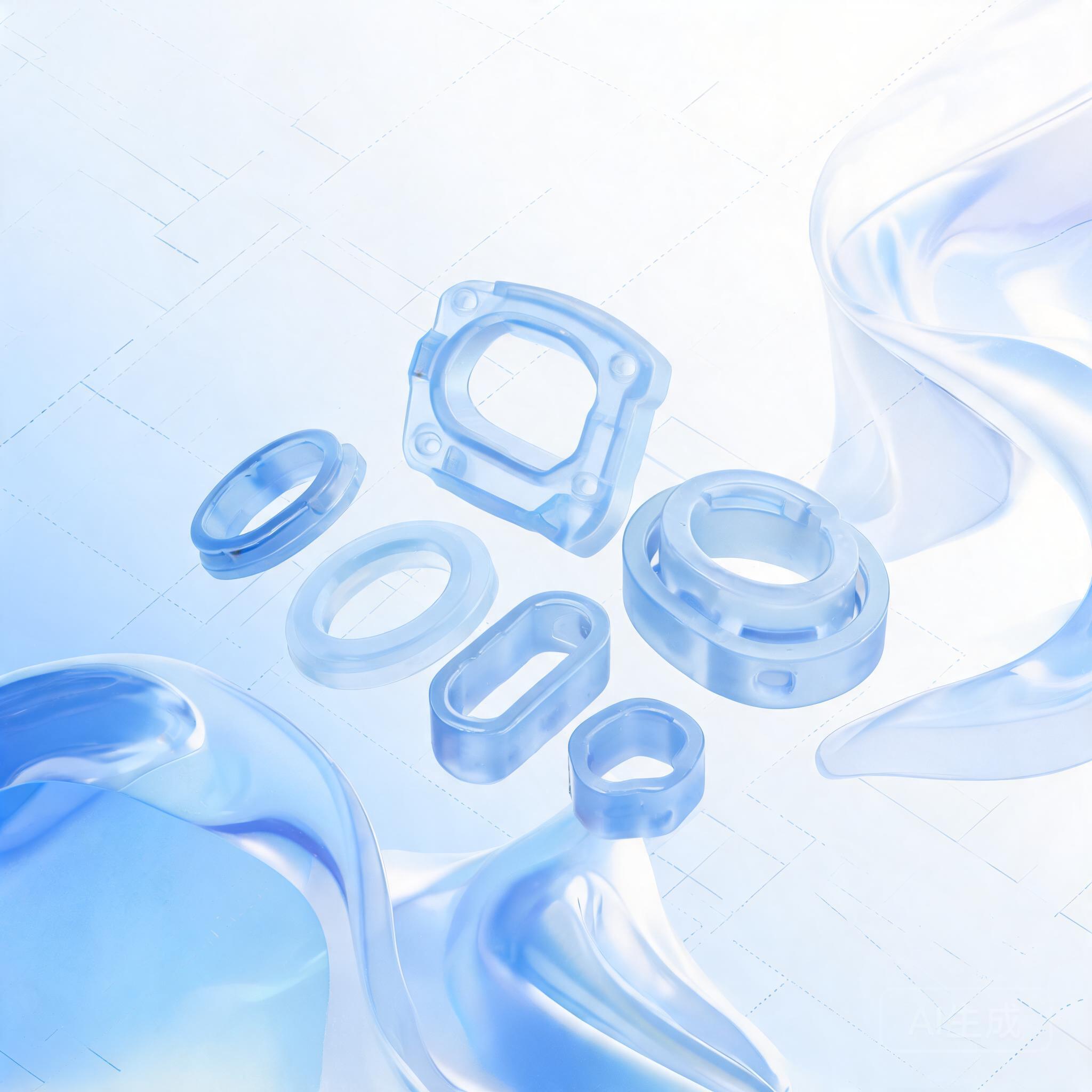
High precision liquid silicone rubber molding manufacturers specialize in producing precision LSR components for medical, automotive, consumer electronics and other fields, with core capabilities such as micron-level tolerance control, clean workshop production, and multi-material co-molding. They can meet special performance requirements such as high transparency, high sealing, and high biocompatibility, and are core partners for mass production of precision silicone parts. This article sorts out the technical strength, quality control standards and selection points of high-precision LSR molding manufacturers.
High precision liquid silicone rubber (LSR) molding has become a cornerstone of manufacturing for industries ranging from medical devices and automotive electronics to aerospace and consumer wearables, where component tolerances as tight as ±0.005 mm, biocompatibility, and long-term environmental stability are non-negotiable. Unlike conventional thermoplastic injection molding or compression molding of solid silicone, high-precision LSR processing requires specialized infrastructure, deep material science expertise, and rigorous quality control frameworks that generic manufacturers cannot replicate. Partnering with a specialized high precision LSR molding manufacturer delivers measurable value across the entire product lifecycle, from design iteration to mass production, reducing time-to-market, minimizing scrap rates, and ensuring compliance with global regulatory standards. This article breaks down the core competitive advantages of working with these specialized providers, highlighting their technical capabilities, material expertise, quality assurance systems, and end-to-end supply chain support.
The foundation of high-precision LSR molding lies in the ability to control the low-viscosity material’s flow, curing kinetics, and shrinkage behavior during the injection process, a challenge that is amplified for micro-components, complex geometric parts, and high-cavity production runs. Specialized LSR molding manufacturers invest heavily in process engineering and custom tooling design to address these unique challenges, delivering consistent precision even for the most demanding part specifications.
LSR’s low viscosity (typically 1,000–10,000 cP before curing) allows it to fill micro-features as small as 5 μm with zero flash, but this same property requires tooling with extremely tight mating tolerances to avoid material leakage and dimensional inconsistency. Specialized high-precision LSR manufacturers employ in-house tooling teams with deep experience in LSR-specific design principles, including cold runner systems, venting optimization, and shrinkage compensation tailored to individual material formulations.
For micro-component manufacturing, these providers leverage multi-axis CNC machining, electrical discharge machining (EDM) with wire cutting precision down to ±0.001 mm, and laser ablation to produce mold inserts with sub-micron surface finishes (Ra < 0.02 μm) for applications such as microfluidic chips, implantable medical sensors, and optical LSR lenses. Table 1 compares typical tooling tolerance capabilities of general molding shops versus specialized high-precision LSR manufacturers:
Many specialized manufacturers also offer modular tooling designs that allow for quick insert changes during product development, reducing prototyping tooling costs by 30–40% compared to fully custom single-cavity molds, and cutting iteration lead times from 4–6 weeks to 1–2 weeks.
Even the highest-precision tooling will not deliver consistent results without tight control over LSR molding process parameters, which are highly sensitive to variations in material mixing ratio, barrel temperature, injection pressure, and curing time. Specialized LSR manufacturers use closed-loop process control systems that monitor and adjust these parameters in real time across every production cycle, reducing part-to-part dimensional variability by up to 85% compared to open-loop systems used by general molding shops.
Typical monitored parameters include:
These closed-loop systems are integrated with manufacturing execution systems (MES) that log every process parameter for each part, enabling full traceability for medical and aerospace applications where component history is a regulatory requirement. For high-volume production runs of automotive sensor seals, for example, this level of control allows specialized manufacturers to maintain process capability indices (Cpk) of ≥1.67, meaning less than 0.6 defects per million parts, compared to Cpk values of 1.0–1.33 typical of general molding shops.
LSR is a highly versatile material, with hundreds of commercial formulations tailored for specific performance requirements, from high-temperature resistance for automotive under-hood components to drug-compatible grades for implantable medical devices. Specialized high-precision LSR molding manufacturers employ dedicated material scientists who work closely with customers to select, customize, and validate formulations that meet both performance and regulatory requirements, a capability that general molding shops rarely offer.
While off-the-shelf LSR grades work for many applications, high-precision parts often require tailored material properties to balance dimensional stability, mechanical performance, and cost. Specialized LSR manufacturers offer in-house formulation modification services, adjusting filler content, crosslink density, and additive packages to meet unique design requirements without compromising processability.
Common custom modifications include:
Specialized manufacturers also conduct pre-production material validation testing, including rheology analysis to predict flow behavior in complex molds, accelerated aging testing to validate long-term performance, and biocompatibility testing per ISO 10993 for medical applications, reducing the risk of material-related failures late in the development process.
For highly regulated industries such as medical, automotive, and aerospace, proving material and process compliance is as critical as meeting part dimensional specifications. Specialized high-precision LSR molding manufacturers maintain pre-approved quality management systems and documentation frameworks that streamline regulatory submission processes for customers, reducing time-to-market by 20–30% compared to working with uncertified providers.
Key compliance capabilities include:
For example, a medical device customer developing an implantable pacemaker lead seal can work with a specialized LSR manufacturer to select a USP Class VI approved LSR formulation, run biocompatibility testing per ISO 10993, produce parts in a Class 7 cleanroom, and receive a full validation package that cuts FDA submission time by an estimated 3 months, compared to working with a general molding shop that lacks pre-certified systems and documentation expertise.
High-precision LSR parts often have complex geometries, tight tolerance requirements, and integration needs with other components (such as plastic or metal inserts) that can lead to costly production issues if not addressed early in the design process. Specialized LSR molding manufacturers offer integrated Design for Manufacturing (DFM) support and end-to-end lifecycle services that reduce development costs, minimize production risks, and optimize part performance over its entire service life.
Many product design teams are familiar with thermoplastic molding principles but lack expertise in LSR-specific design constraints, such as the need for draft angles, venting channels, and demolding features for the soft, flexible material. Specialized LSR manufacturers assign dedicated process engineers to collaborate with customer design teams during the initial concept phase, identifying and resolving potential manufacturing issues before tooling is produced, reducing prototyping iterations by 30–50% and cutting tooling rework costs by up to 60%.
Typical DFM optimizations include:
For example, a customer developing a microfluidic chip for point-of-care diagnostic testing worked with a specialized LSR manufacturer during the design phase to adjust the channel geometry from 20 μm to 22 μm, add 0.5 mm draft angles to the channel sidewalls, and optimize gating locations to reduce shear stress on the LSR during injection. These changes reduced prototyping iterations from 4 to 2, cut tooling costs by $12,000, and improved chip performance by reducing flow resistance variability by 18%.
Specialized high-precision LSR molding manufacturers offer scalable production capabilities that align with customer needs across the product lifecycle, from low-volume prototyping runs of 10–100 parts for design validation to high-volume mass production runs of 10+ million parts per year for consumer electronics and automotive applications. Unlike general molding shops that often require customers to switch suppliers as production volumes increase, specialized LSR manufacturers can scale production seamlessly using modular tooling and duplicate high-cavity molds, ensuring consistent part quality across all production phases.
These providers also offer integrated post-processing services that eliminate the need for multiple third-party vendors, reducing supply chain complexity and lead times:
For a customer producing a high-volume automotive LSR seal for electric vehicle battery packs, a specialized manufacturer can produce 2 million parts per year in a 64-cavity mold, perform 100% in-line leak testing, and package parts with unique serial numbers for full traceability, all at a per-unit cost 15% lower than sourcing molding, testing, and assembly from separate vendors.
Partnering with a specialized high precision LSR molding manufacturer delivers far more than just finished parts: it provides access to decades of LSR-specific process engineering expertise, custom material formulation capabilities, regulatory compliance support, and end-to-end lifecycle services that reduce development risk, lower total costs, and improve product performance. For industries where even minor dimensional deviations or material failures can have severe safety, regulatory, or financial consequences, the advantages of working with a specialized provider are irreplaceable. When selecting an LSR manufacturing partner, customers should prioritize providers with in-house tooling capabilities, certified quality management systems relevant to their industry, a track record of similar high-precision projects, and a collaborative approach to DFM and material selection. As demand for high-precision LSR components continues to grow across medical, automotive, aerospace, and consumer electronics sectors, working with a specialized manufacturer will remain a critical competitive differentiator for product teams looking to bring innovative, high-reliability products to market quickly and cost-effectively.