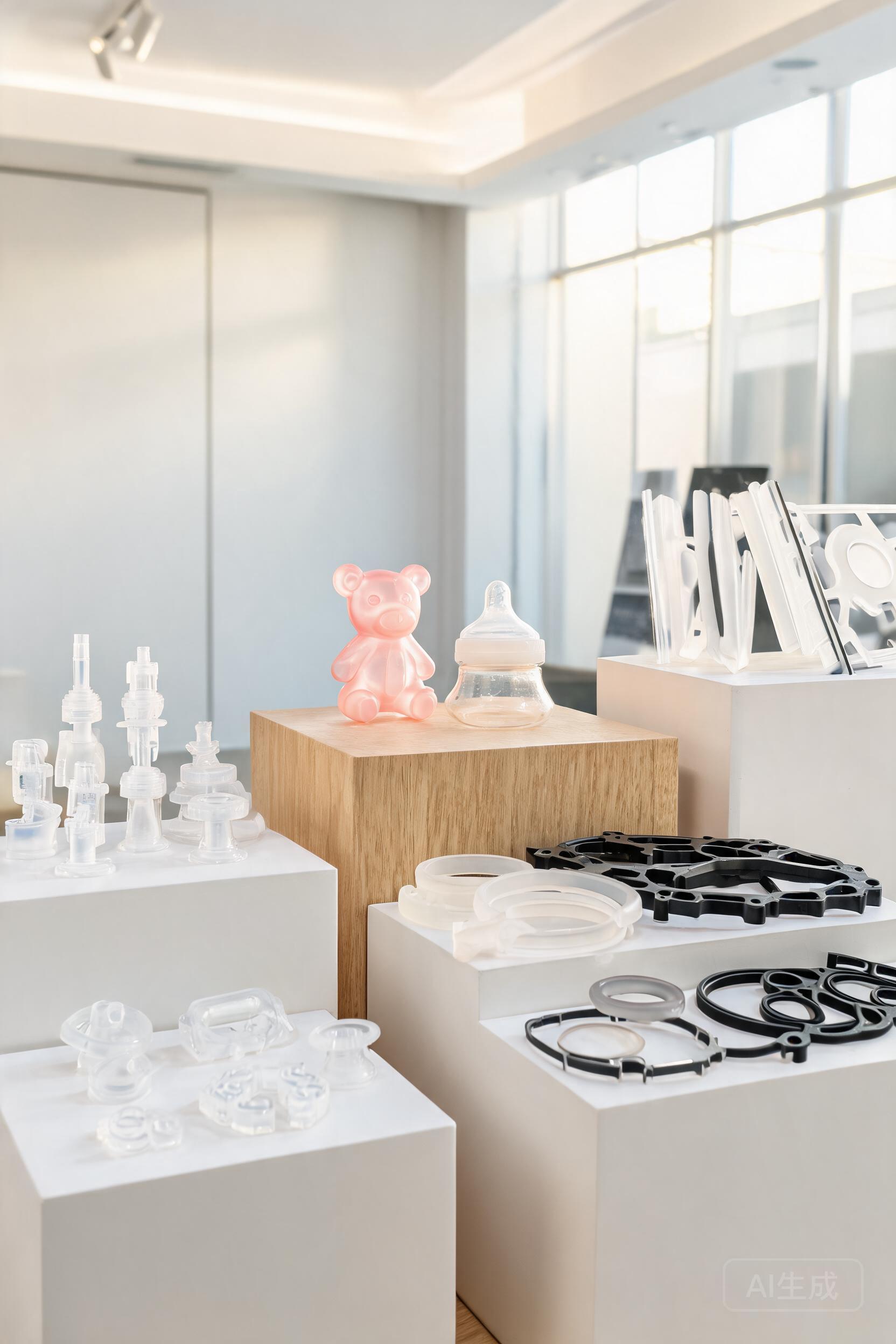
Introduction to Insert Liquid Overmolding for Foshan’s Sanitary Industry
Foshan, as China’s leading sanitary ware manufacturing hub, accounts for over 65% of the country’s total high-end sanitary product output, per 2024 data from the Foshan Sanitary Ware Industry Association. A core manufacturing process driving the performance and durability of modern sanitary components is insert liquid silicone rubber (LSR) overmolding, a specialized technique that bonds LSR to rigid inserts (brass, stainless steel, thermoplastics, or ceramic) in a single injection cycle. For products ranging from shower head seals and faucet valve diaphragms to smart toilet gaskets and bathtub drain seals, insert liquid overmolding eliminates secondary assembly steps, reduces leakage risks, and extends service life by up to 10x compared to traditional mechanically attached seals.
However, the complexity of insert LSR overmolding—from material compatibility to precision insert placement—means supplier selection directly impacts product quality, production efficiency, and regulatory compliance. 32% of Foshan sanitary brands reported quality failures in overmolded components between 2022 and 2023, primarily due to poor bonding, dimensional inaccuracy, or insufficient material food safety certification, according to a 2023 industry quality audit. This guide breaks down the technical fundamentals of insert liquid overmolding for sanitary applications, core evaluation criteria for reliable suppliers, leading Foshan supplier capabilities, and best practices to mitigate production risks, helping brands identify partners that align with high-performance sanitary manufacturing requirements.
Technical Fundamentals of Insert Liquid Overmolding for Sanitary Applications
Insert LSR overmolding for sanitary use differs from standard overmolding processes due to strict requirements for non-toxicity, water resistance, and long-term performance under fluctuating temperatures and humidity. Understanding the core mechanics, common insert types, and process control thresholds is critical for evaluating supplier expertise.
Core Process Workflow and Quality Control Thresholds
The insert overmolding process follows a standardized, tightly controlled sequence, with each step having non-negotiable quality thresholds for sanitary applications:
- Insert Pre-Treatment: Inserts are cleaned via ultrasonic cleaning, plasma treatment, or primer coating to remove surface contaminants and improve bonding strength. For brass inserts, a minimum surface roughness of Ra 0.8–1.2 μm is required to ensure mechanical interlocking with LSR; insufficient roughness can lead to bond strength below 3 N/mm, a common failure point for faucet valve components.
- Insert Placement and Fixturing: Inserts are loaded into custom jigs, either manually for low-volume runs or via robotic pick-and-place for high-volume production. Placement accuracy must be within ±0.02 mm to prevent seal misalignment, which can cause leakage under 1.6 MPa water pressure (the standard maximum operating pressure for residential plumbing systems in China).
- LSR Injection and Curing: Two-part LSR (A and B components, mixed at a 1:1 ratio) is injected into the mold cavity at 150–180 bar pressure, with mold temperatures maintained at 120–160 °C. Curing time ranges from 30–90 seconds depending on part thickness; under-curing by just 10 seconds can reduce LSR tear strength by 25% and increase leachables in drinking water contact applications.
- Demolding and Post-Processing: Parts are demolded via automated ejection to avoid damage to LSR surfaces, then post-cured at 200 °C for 2–4 hours to remove residual volatile organic compounds (VOCs), a requirement for GB 4806.11 food contact certification.
A 2024 study by the South China University of Technology found that sanitary overmolded parts meeting all these thresholds have a 98% pass rate in 10,000-cycle pressure testing, compared to a 62% pass rate for parts produced with unregulated process controls.
Common Insert Materials and Compatibility Requirements for Sanitary Components
Sanitary applications use four primary insert materials, each with specific pre-treatment and LSR compatibility requirements:
Insert MaterialCommon ApplicationsRequired Pre-TreatmentMinimum Bond Strength with LSRCompatible LSR Grades
H59 BrassFaucet valve bodies, shower head connectorsPlasma treatment + silane primer4.2 N/mmFood-grade LSR (Shore A 30–70)
304/316 Stainless SteelKitchen faucet spouts, drain flange insertsUltrasonic cleaning + surface etching3.8 N/mmHigh-temperature resistant LSR
ABS/PC ThermoplasticsSmart toilet control valve housingsCorona treatment3.5 N/mmLow-temperature curing LSR
95% Alumina CeramicCeramic cartridge valve discsPrimer coating3.0 N/mmLow-shrinkage LSR
The most critical compatibility risk for sanitary products is galvanic corrosion between metal inserts and LSR additives. For example, brass inserts with high lead content (over 0.25%) can react with acidic LSR curing agents, leading to leaching of lead into drinking water, which violates GB 5749 drinking water safety standards. Reliable suppliers test insert-LSR compatibility via 168-hour immersion in 60 °C water to verify no leachable contaminants exceed regulatory limits.
Core Evaluation Criteria for Reliable Insert Overmolding Suppliers in Foshan
Not all Foshan LSR processors are equipped to meet sanitary industry requirements. When shortlisting suppliers, prioritize evaluation of four non-negotiable criteria: material and process certification, precision manufacturing capabilities, and quality control systems.
Regulatory and Material Certification Compliance
Sanitary overmolded components are classified as food contact products in most global markets, so suppliers must hold valid, up-to-date certifications for both materials and processes:
- Mandatory China Market Certifications: GB 4806.11 (food contact silicone safety), GB 5749 (drinking water hygiene safety), and CCC certification for electrical components used in smart sanitary products. As of 2024, only 41% of Foshan LSR overmolding suppliers hold full GB 4806.11 certification for all their sanitary-grade LSR materials, per the Foshan Market Supervision Administration.
- Export Market Certifications: For brands selling to the EU, suppliers need REACH (Registration, Evaluation, Authorization and Restriction of Chemicals) compliance and WRAS (Water Regulations Advisory Scheme) certification for plumbing components. For the US market, NSF/ANSI 61 (drinking water system components) and FDA 21 CFR 177.2600 (food contact silicone) certifications are required.
- Material Traceability: Reliable suppliers provide batch traceability records for all inserts and LSR materials, with a minimum 5-year storage period for traceability documents. This is critical for product recalls if a material batch is found to be non-compliant.
Avoid suppliers that offer generic “food-grade” claims without third-party test reports; these are often invalid for sanitary applications, as they do not test for leachables under long-term hot water exposure.
Precision Manufacturing and Mold Design Capabilities
Insert overmolding quality is 70% dependent on mold design, per LSR manufacturing industry benchmarks, so suppliers must demonstrate in-house mold design and precision machining capabilities:
- Mold Tolerance Control: For sanitary seal components, mold cavity tolerance must be within ±0.01 mm, and insert fixture tolerance within ±0.02 mm, to ensure final part dimensional accuracy meets ISO 2768-f (fine tolerance) standards. Suppliers with in-house CNC machining centers (with 5-axis capability for complex geometries) can typically deliver mold lead times of 15–25 days, compared to 30–45 days for suppliers that outsource mold production.
- Insert Placement Automation: High-volume sanitary production (over 100,000 parts per month) requires robotic insert placement systems, which reduce placement error rates to less than 0.1%, compared to 2–3% for manual placement. Leading suppliers also use in-mold sensing systems to detect misaligned inserts before LSR injection, reducing scrap rates by up to 80%.
- Process Automation: Closed-loop LSR injection systems with real-time pressure and temperature monitoring ensure consistent part quality across production runs. For example, a system that adjusts injection pressure by ±5 bar if cavity temperature fluctuates by 2 °C can reduce part-to-part dimensional variation to less than 0.03 mm, a critical requirement for interchangeable seal components.
As a benchmark, suppliers serving high-end sanitary brands typically have scrap rates below 1.5% for insert overmolded parts, compared to 8–12% for suppliers with outdated equipment.
End-to-End Quality Control and Testing Capabilities
A robust quality control (QC) process is the only way to ensure consistent performance of overmolded sanitary components over their service life. Reliable suppliers conduct the following mandatory tests for every production batch:
- Incoming Material Inspection: 100% of inserts are inspected for dimensional accuracy and surface defects, while LSR materials are tested for mix ratio and curing properties before production.
- In-Process Testing: Every 30 minutes during production, 5 parts are sampled for:
- Bond strength testing (pull test to verify LSR does not separate from the insert)
- Dimensional inspection via coordinate measuring machine (CMM)
- Leak testing under 1.6 MPa water pressure for 2 minutes
- Final Batch Testing: Before shipment, a 0.5% sample of the batch undergoes accelerated aging testing: 1,000 cycles of 5 °C to 90 °C water temperature fluctuation, followed by 72-hour immersion in 60 °C water to test for leachables and bond degradation.
Suppliers should provide detailed test reports for every batch, including pass/fail rates for all performance criteria. Avoid suppliers that only conduct visual inspection, as 60% of overmolding failures (such as internal bond defects) are not visible to the naked eye.
Leading Insert Overmolding Supplier Capabilities in Foshan’s Sanitary Cluster
Foshan’s LSR manufacturing cluster is concentrated in the Shunde and Nanhai districts, with over 120 registered insert overmolding suppliers. The top 15% of suppliers, which serve leading domestic and international sanitary brands, offer specialized capabilities tailored to the industry’s unique needs.
Specialized Capabilities for High-Volume Sanitary Component Production
Leading Foshan suppliers are optimized for the high-volume, low-margin nature of sanitary component manufacturing, with capabilities that reduce lead times and production costs for clients:
- **Vertical Integration: Most top suppliers offer end-to-end services, from insert machining (brass and stainless steel stamping/CNC machining) to LSR compounding, mold design, overmolding, and final assembly. This reduces lead times by 20–30% compared to working with multiple vendors, as insert production and overmolding can be coordinated in-house. For example, a supplier that machines brass valve inserts in-house can adjust insert surface roughness in 24 hours if bond strength testing fails, compared to 7–10 days if inserts are sourced from a third party.
- **Low-Cost High-Volume Automation: Many leading suppliers have invested in collaborative robot (cobot) insert loading systems, which are 30–40% cheaper to deploy than traditional industrial robots, allowing them to offer competitive pricing for runs of 50,000 parts or more. The top suppliers also have 24/7 production capacity, with average monthly output of 2–5 million overmolded parts per facility, enough to support large-scale sanitary brand production schedules.
- **Custom Material Formulation: Leading suppliers work with LSR material manufacturers (such as Dow, Wacker, and local Chinese brand Xin'an) to develop custom LSR grades for sanitary applications. For example, custom anti-limescale LSR grades with 2% added fluorosilicone additives reduce limescale buildup by 75% in hard water regions, extending seal service life by 3–5 years. These custom materials are often exclusive to the supplier, giving their clients a competitive edge in product performance.
Case Study: Typical Sanitary Product Overmolding Projects
To illustrate the value of working with a reliable Foshan supplier, consider two common sanitary overmolding projects completed by top local providers:
- Faucet Valve Diaphragm Overmolding for a Leading Domestic Sanitary Brand
- Insert Material: H59 brass valve stem, 12 mm diameter
- LSR Material: Shore A 50 food-grade LSR, WRAS certified
- Production Volume: 200,000 parts per month
- Supplier Solution: Robotic insert placement with in-mold pressure sensing, 16-cavity mold with automatic demolding, 100% leak testing post-production
- Outcomes: Scrap rate reduced from 6.2% (with the brand’s previous supplier) to 0.8%, leak failure rate in field use dropped from 1.2% to 0.03%, and production cost per part reduced by 18% due to lower scrap and higher automation.
- Smart Toilet Seat Gasket Overmolding for an Export-Oriented Foshan Brand
- Insert Material: ABS plastic housing, 230 mm length
- LSR Material: Shore A 40 antibacterial LSR, FDA certified, with 99.9% inhibition rate for E. coli and S. aureus
- Production Volume: 30,000 parts per month
- Supplier Solution: Custom corona treatment for ABS inserts to improve bond strength, 8-cavity mold with temperature control per cavity, 72-hour accelerated aging testing for every batch
- Outcomes: The product passed EU REACH and US FDA certification on the first submission, and the supplier’s in-house mold design reduced tooling lead time from 45 days to 22 days, allowing the brand to launch the product 3 weeks ahead of schedule.
These case studies demonstrate that specialized Foshan suppliers can deliver both cost and performance advantages for sanitary brands, provided they have the right technical capabilities.
Best Practices for Supplier Collaboration and Risk Mitigation
Even with a qualified supplier, poor collaboration and unclear requirements can lead to production delays and quality issues. Follow these best practices to minimize risks and maximize the value of your insert overmolding partnership.
Pre-Production Requirement Alignment and Prototype Validation
Before mass production begins, formalize all requirements and validate prototypes to avoid costly rework:
- Document All Technical Requirements in a Formal Specification: Include insert material grade, LSR hardness and certification requirements, dimensional tolerances, bond strength thresholds, and testing standards in a signed technical agreement. For example, specify that the LSR must meet WRAS BS 6920 standards for hot water contact, rather than a generic “food-grade” requirement.
- **Conduct Prototype Testing Under Real-World Conditions: After the supplier delivers initial prototypes (typically 50–200 pieces), test them in your actual product assembly, including 1,000-cycle pressure testing and 30-day field testing in simulated use conditions. Do not rely solely on the supplier’s test reports, as they may not test for your specific product’s operating conditions. For example, a shower head seal that passes standard leak testing may fail under high water flow rates if the LSR hardness is not optimized for your product’s design.
- **Lock in Mold Design Before Mass Production: Once prototypes are validated, sign a mold acceptance agreement that specifies no design changes can be made without formal written approval from both parties. Unplanned mold modifications are the leading cause of production delays, accounting for 40% of insert overmolding delivery delays in Foshan’s sanitary industry, per 2023 supply chain data.
Ongoing Production Monitoring and Supply Chain Resilience
For long-term partnerships, establish ongoing monitoring processes to ensure consistent quality and reduce supply chain risks:
- **Conduct Regular Supplier Audits: Perform on-site audits every 6–12 months to verify that process controls, certifications, and equipment maintenance are up to standard. Focus on verifying that incoming material inspection records, in-process test reports, and batch traceability documents are complete and accurate. Many Foshan suppliers offer remote audit options via live video stream for international clients, reducing travel costs.
- **Maintain a Safety Stock of Critical Components: For high-volume production lines, keep a 2–4 week safety stock of overmolded components to mitigate risks from production delays, raw material shortages, or logistics disruptions. Most leading Foshan suppliers offer consignment inventory services for long-term clients, storing safety stock at their facility and delivering on demand.
- **Collaborate on Continuous Improvement: Work with your supplier to optimize part design and production processes over time. For example, a minor design adjustment to reduce LSR wall thickness from 2 mm to 1.5 mm may reduce production cycle time by 15% and lower material costs, without compromising performance. Top suppliers often offer free design for manufacturing (DFM) support to help clients reduce costs and improve quality.
Conclusion
Insert liquid overmolding is a critical manufacturing process for high-performance sanitary products, and selecting a reliable Foshan supplier requires a focus on technical expertise, regulatory compliance, and quality control capabilities, rather than just low pricing. By prioritizing suppliers with full sanitary industry certifications, in-house mold design and automation capabilities, and end-to-end QC testing, sanitary brands can reduce quality failure rates by up to 90% and lower total production costs by 15–25% compared to working with unqualified providers.
Foshan’s leading insert overmolding suppliers offer specialized capabilities tailored to the sanitary industry, from custom LSR formulation to vertical integration of insert machining and overmolding, making them ideal partners for both domestic Chinese and export-oriented brands. By aligning technical requirements clearly before production, validating prototypes under real-world conditions, and establishing ongoing monitoring processes, brands can build long-term, low-risk partnerships that support product innovation and consistent market performance. As the sanitary industry continues to shift toward higher durability, smart functionality, and stricter regulatory standards, working with a specialized insert overmolding supplier will become an increasingly critical competitive advantage for Foshan’s sanitary brands.