
橡楚编辑部 7/28/2026 50 min read
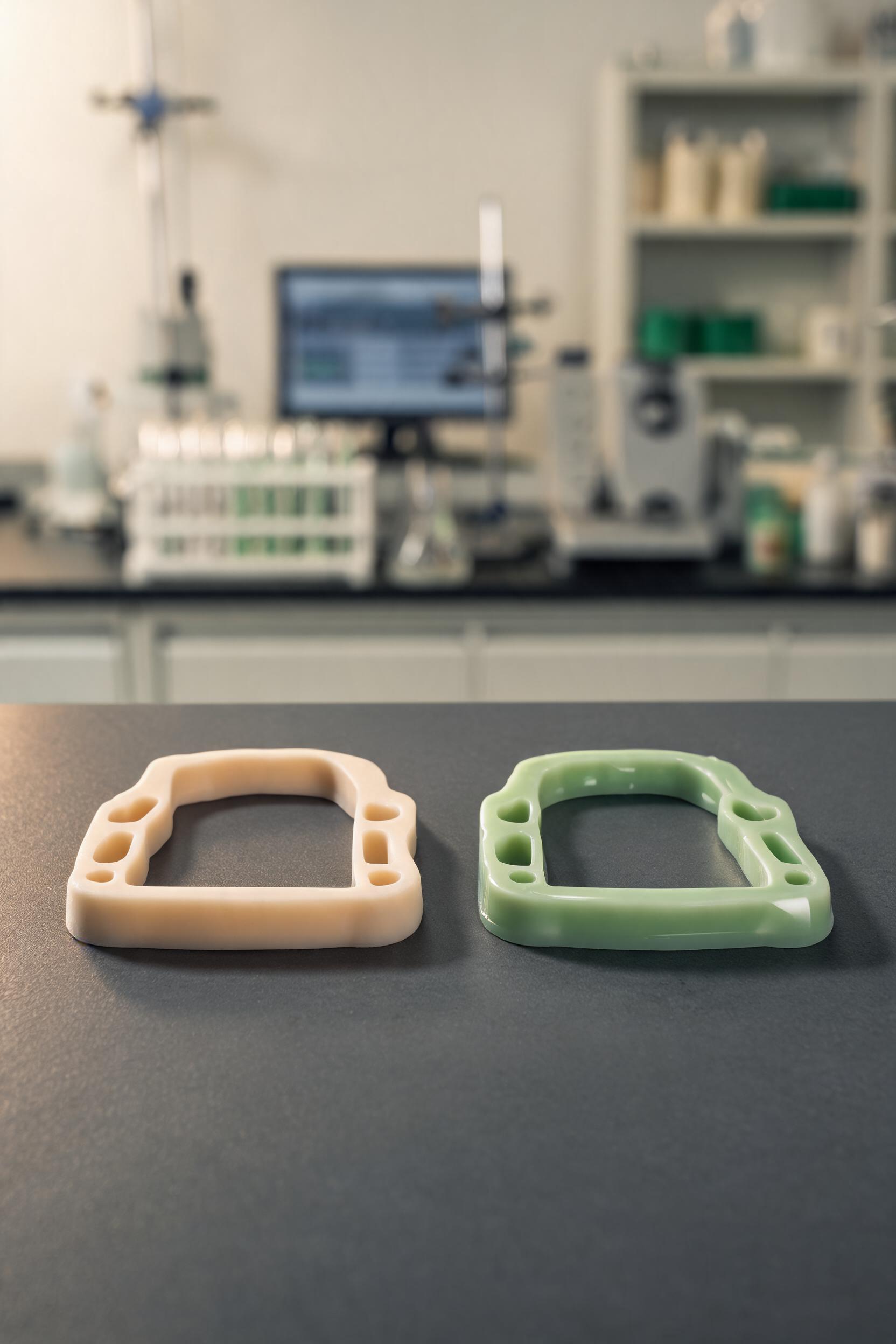
Food grade silicone parts are liquid silicone molded products that meet food contact safety standards, with core advantages such as high and low temperature resistance, non-toxicity, odorlessness, and aging resistance. They are widely used in tableware, kitchenware, food processing equipment seals and other scenarios. This article sorts out the core performance requirements, common application fields, and key judgment points of mainstream compliance standards such as FDA and LFGB, helping downstream customers select products accurately and avoid food safety risks.
Food grade silicone parts (食品级硅胶件) are high-purity liquid silicone rubber (LSR) components formulated to meet strict global regulatory requirements for direct or indirect contact with food, beverages, and edible products. Unlike commodity elastomers such as natural rubber, EPDM, or PVC, food grade LSR exhibits a unique combination of thermal stability, chemical inertness, and non-leaching properties that make it the preferred material for food and beverage processing, foodservice equipment, and consumer food contact products.
The global market for food grade silicone components is projected to reach $2.7 billion by 2028, growing at a CAGR of 6.2% driven by rising consumer demand for food safety, extended shelf life of packaged goods, and tighter regulatory oversight of food contact materials. This article provides a technical deep dive into the performance advantages of food grade silicone parts, their key application categories, a comprehensive compliance guide for global markets, and best practices for material selection and validation to ensure long-term safety and performance.
Food grade silicone parts outperform alternative elastomers across nearly every critical metric for food contact applications, from thermal stability to microbial resistance. The unique molecular structure of LSR—consisting of a silicon-oxygen backbone with methyl or other functional side groups—delivers inherent properties that cannot be replicated in carbon-based elastomers without costly additives that often introduce leaching risks.
Food processing and foodservice applications often expose components to extreme temperature fluctuations, from deep-freeze storage conditions to high-temperature sterilization cycles. Food grade silicone parts maintain consistent mechanical properties across a far wider temperature range than competing materials, eliminating the risk of cracking, brittleness, or deformation under variable operating conditions.
Table 1: Temperature Performance Comparison of Food Contact Elastomers
In addition to thermal stability, food grade silicone parts exhibit excellent mechanical performance tailored to application requirements:
Unlike many carbon-based elastomers, food grade silicone parts do not require plasticizers, UV stabilizers, or anti-aging additives to maintain these properties, eliminating the risk of additive migration into food products over time.
One of the most critical advantages of food grade silicone parts is their inherent chemical inertness, which prevents interaction with acidic, alkaline, fatty, or alcoholic food matrices. This inertness eliminates two key risks in food contact applications: leaching of material components into food, and degradation of the part from exposure to food ingredients or cleaning chemicals.
Food grade LSR exhibits no measurable reactivity with the vast majority of common food and beverage ingredients, including:
Regulatory testing confirms that food grade silicone parts release <0.1 mg/dm² of total organic compounds (TOC) under standard migration test conditions, well below the 10 mg/dm² limit set by the EU for food contact materials. By comparison, food grade EPDM can release up to 2.3 mg/dm² of additives and oligomers when exposed to fatty food simulants, while plasticized PVC can release up to 7.8 mg/dm² of phthalate plasticizers under identical conditions.
Food grade silicone parts also exhibit excellent resistance to common food processing and foodservice cleaning chemicals, including chlorine-based sanitizers, peracetic acid, and alkaline CIP (clean-in-place) solutions. After 1000 hours of exposure to 200 ppm chlorine sanitizer at 25°C, food grade LSR retains 97% of its original tensile strength, compared to 62% for EPDM and 38% for natural rubber. This chemical resistance reduces part replacement frequency and eliminates the risk of degraded parts contaminating food products.
Food processing facilities and foodservice equipment require components that support hygienic design principles, including smooth, non-porous surfaces that prevent bacterial adhesion and biofilm formation. Food grade silicone parts are inherently well-suited for these applications, as their cured surface has a surface energy of ~22 mN/m, lower than stainless steel (42 mN/m) and most other food contact elastomers.
Independent testing shows that food grade silicone surfaces have 90% lower adhesion of *Listeria monocytogenes* and *Salmonella enterica* compared to food grade natural rubber, and 75% lower adhesion compared to EPDM. Unlike porous elastomers, food grade LSR does not absorb food residues, odors, or flavors, eliminating the risk of cross-contamination between different food products.
For high-risk applications such as infant feeding products or medical food processing, platinum-cured food grade silicone parts offer an additional layer of safety: the platinum curing process eliminates residual peroxide byproducts common in lower-cost silicone curing methods, resulting in a 99.9% pure cured material with no detectable volatile organic compounds (VOCs) when tested according to FDA 21 CFR Part 177.2600.
Platinum-cured food grade silicone parts also support sterilization via all common methods used in food processing, including:
No other food contact elastomer offers this level of compatibility with multiple sterilization methods while maintaining consistent performance over hundreds of cycles.
The unique performance profile of food grade silicone parts makes them suitable for a broad range of applications across the food and beverage value chain, from primary processing equipment to consumer-facing products. Below are the highest-volume and most technically demanding application segments.
In commercial food and beverage processing facilities, food grade silicone parts are used in dynamic, high-stress environments where reliability and compliance are non-negotiable. The most common components in this category include:
For processing lines that handle acidic foods such as tomato sauce or carbonated beverages, food grade silicone parts formulated with enhanced acid resistance offer up to 3x longer service life compared to standard food grade LSR, with <1% weight change after 1000 hours of exposure to pH 2 citric acid solution at 40°C.
Foodservice and commercial kitchen applications require components that can withstand heavy daily use, frequent cleaning, and exposure to a wide range of food types. Common food grade silicone parts in this category include:
Unlike plastic components, food grade silicone parts do not melt or deform if accidentally exposed to hot surfaces, reducing the risk of fire and product contamination in commercial kitchen environments.
Food grade silicone parts are increasingly used in consumer products where food safety and ease of use are key purchasing factors. The fastest-growing segments in this category include:
For premium consumer products, self-cleaning food grade silicone parts formulated with photocatalytic titanium dioxide additives offer an additional benefit: when exposed to natural or UV light, the surface breaks down organic residues and kills 99.9% of bacteria, reducing the need for frequent washing.
Bringing food grade silicone parts to market requires rigorous testing and compliance with regional regulatory frameworks that set strict limits on material composition, migration of substances, and performance under use conditions. Non-compliance can result in product recalls, import bans, and significant financial penalties, making a structured approach to compliance critical for manufacturers and brand owners.
Food contact regulations vary by market, but most major economies align on core testing requirements while maintaining region-specific limits and labeling rules. The four most widely recognized frameworks for food grade silicone parts are outlined below.
The U.S. Food and Drug Administration (FDA) regulates food contact materials under 21 CFR Part 177.2600, which specifies the permitted ingredients, extraction limits, and use conditions for rubber articles intended for repeated food contact. For food grade silicone parts, key requirements include:
For single-use food grade silicone parts intended for use with infant formula or human milk, additional testing is required to ensure no migration of nitrosamines or other carcinogenic compounds, with a limit of <0.01 mg/kg of nitrosamine content.
The European Union regulates food contact silicone materials under Regulation (EU) 10/2011, which sets specific migration limits (SMLs) for individual substances and overall migration limits (OML) for all extractable compounds. Key requirements for food grade silicone parts include:
In 2023, the EU updated its FCM regulations to include mandatory testing for microplastic release from food grade silicone parts, with a limit of <10,000 microplastic particles per kg of food simulant after 10 repeated use cycles. This new requirement applies to all reusable food grade silicone parts placed on the EU market after 2025.
China regulates food contact silicone materials under GB 4806.11-2016, the national standard for rubber products in food contact applications. Key requirements include:
Unlike FDA and EU regulations, GB 4806.11 requires annual re-testing of production batches to ensure ongoing compliance, with random sampling conducted by local market regulation authorities at retail and distribution points.
While LFGB is a German national regulation, it is widely recognized as the most stringent food contact standard in the world, and compliance is often required for premium food grade silicone parts sold across the EU and global markets. Key additional requirements beyond EU 10/2011 include:
LFGB certification is a strong differentiator for premium food grade silicone parts, as it provides independent verification of material purity and sensory safety beyond basic regulatory requirements.
Meeting regulatory requirements for food grade silicone parts is not a one-time activity: ongoing testing and quality control are required to ensure consistent compliance across production batches. The following best practices are recommended for manufacturers and brand owners:
1