
橡楚编辑部 7/2/2026 49 min read
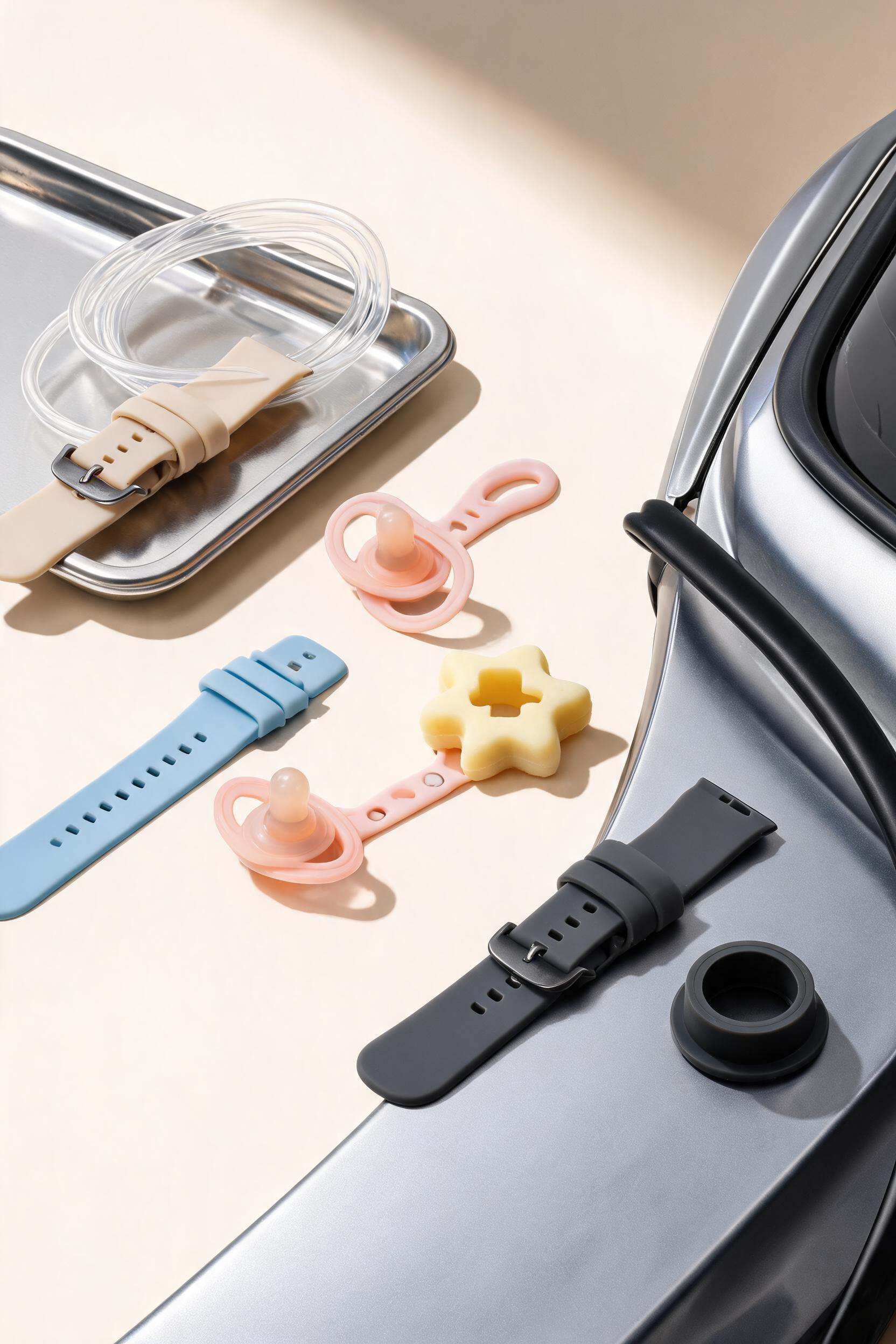
Silicone watch band is one of the common industry applications of liquid silicone rubber (LSR) products. With its skin-friendly, breathable, sweat-resistant and corrosion-resistant properties, it has become a popular accessory for smart wearable devices. Xiangchu (Hubei) Rubber Co., Ltd. is located in Ezhou, Hubei, relies on ISO 9001 certified quality management system, and specializes in producing various custom liquid silicone watch bands to meet the quality requirements of different customers.
Liquid Silicone Rubber (LSR) has become one of the most versatile materials in consumer product manufacturing over the past two decades, and its application in wearable accessories has driven transformative improvements in product performance and user experience. Among all LSR consumer products, silicone watch bands stand out as a high-volume, high-value application that leverages LSR’s unique combination of mechanical, chemical, and sensory properties to outperform traditional materials like leather, nylon, and rigid rubber.
At橡楚(湖北)橡胶有限公司, a specialized manufacturer of Liquid Silicone Rubber products based at湖北省鄂州市鄂城区经济开发区凡口街道内河巷54号, we have produced custom LSR watch band components for global wearable brands for years, gaining deep hands-on understanding of how material properties translate to end-user satisfaction. This article breaks down the core technical features of LSR silicone watch bands, compares LSR to alternative materials, outlines key manufacturing considerations, and explores emerging trends in LSR watch band design. All analysis is rooted in practical manufacturing experience and verified material data, aligned with our ISO 9001 certified quality management standards.
LSR is a two-part platinum-cured elastomer that distinguishes itself from condensation-cured solid silicone and other rubber materials through a unique set of material properties. Each of these properties directly addresses common pain points of traditional watch band materials, making LSR the preferred choice for everything from casual smartwatches to high-end luxury timepieces.
The primary reason consumers prefer silicone watch bands over alternatives is their unmatched wear comfort, which comes directly from LSR’s inherent sensory characteristics. Unlike rigid leather or nylon that requires breaking in, LSR has a low surface hardness that can be precisely tuned during manufacturing to match user preferences. The table below outlines typical hardness ranges for different types of silicone watch bands:
In addition to tunable hardness, LSR has a naturally smooth, non-tacky surface that does not irritate sensitive skin. Unlike solid silicone produced with lower-grade curing agents, platinum-cured LSR has no residual low-molecular-weight silicone oils that can transfer to skin or cause allergic reactions. This hypoallergenic property makes silicone watch bands suitable for users with contact dermatitis or material sensitivities, a benefit that cannot be matched by leather (which often contains residual tanning chemicals) or synthetic rubber (which may leach plasticizers).
LSR also has a low specific gravity of 1.10–1.15 g/cm³, making it significantly lighter than leather (1.0–1.3 g/cm³ for full-grain leather, but with added hardware that increases total weight) and metal watch bands (stainless steel has a specific gravity of 7.9 g/cm³). A typical 20mm wide LSR watch band weighs 12–18 grams, compared to 25–40 grams for a full-grain leather band of the same dimensions, reducing wrist fatigue during all-day wear.
Watch bands are exposed to a wide range of environmental stressors daily, including sweat, UV radiation, water, temperature fluctuations, and repeated bending. LSR’s inherent chemical and physical stability make it far more resistant to these stressors than alternative materials.
Key durability properties of LSR for silicone watch bands include:
Watch bands undergo thousands of bending cycles during use, as the wrist flexes during daily activity. LSR’s excellent mechanical fatigue resistance means it can withstand millions of bending cycles without cracking or losing shape.
Table 2 compares key mechanical properties of LSR vs. common alternative watch band materials:
Low compression set is a particularly critical advantage for LSR silicone watch bands. Compression set measures how much a material does not recover its original shape after being compressed. For watch bands with buckle holes or adjuster notches, low compression set means the holes will not stay deformed after repeated use with the buckle pin. Lower-grade solid silicone has a higher compression set, so buckle holes become permanently stretched and misshapen after a year of use, leading to the watch slipping or falling off. LSR’s low compression set ensures holes retain their shape for the life of the band.
To fully understand the value of LSR silicone watch bands, it is important to compare their performance to the most common alternative materials used for watch bands today. Each material has its own use case, but LSR outperforms alternatives in most categories for modern wearable applications.
Leather has been the traditional material for watch bands for centuries, and it remains popular for luxury and formal fashion watches. However, LSR outperforms leather in almost all practical performance metrics:
Leather’s only remaining advantages are its premium aesthetic for formal fashion applications and its perceived traditional value. However, modern LSR manufacturing techniques can produce silicone watch bands with textured surfaces that mimic leather grain, closing the aesthetic gap for many casual applications.
Nylon and woven fabric bands are popular for casual and sport watches due to their low cost and light weight. LSR offers key advantages over fabric:
Nylon’s main advantages are lower raw material cost for mass-market products and superior breathability for extremely high-sweat activities. However, thin LSR bands with perforations offer comparable breathability for most users while retaining LSR’s hygiene and durability benefits.
Many lower-cost silicone watch bands are made from solid silicone rather than LSR, so it is important to distinguish the performance difference between the two materials. Solid silicone is a condensation-cured material that is cheaper to produce for low-volume manufacturing, but it has significant performance drawbacks:
At橡楚(湖北)橡胶有限公司, we only produce LSR silicone watch bands to ensure consistent performance and quality for our clients, aligned with our ISO 9001 quality management system.
Not all LSR silicone watch bands are created equal. The manufacturing process has a significant impact on the final performance, safety, and aesthetic of the finished band. There are three core considerations that determine the quality of an LSR watch band.
The first step in producing a high-quality silicone watch band is selecting the correct LSR grade and curing process. All LSR used for wearable accessories should be platinum-cured, food-grade LSR that meets international safety standards such as FDA 21 CFR 177.2600 for food contact and REACH regulation requirements for restricted substances. Lower-grade tin-cured LSR should never be used for wearable products that come into contact with skin, as it can leach tin catalysts and low-molecular-weight siloxanes that cause skin irritation.
At橡楚(湖北)橡胶有限公司, we source LSR raw material from reputable global suppliers, and we test every batch for:
LSR silicone watch bands are almost exclusively produced via liquid injection molding (LIM), which offers superior dimensional accuracy, consistency, and production efficiency compared to compression molding. Key process controls that affect final quality include:
One of the key advantages of LSR for silicone watch bands is its ability to be customized for almost any aesthetic or functional requirement. Common customization options include:
As the global smartwatch market continues to grow and consumer expectations for wearable products increase, LSR silicone watch bands are evolving to meet new demand for functionality and sustainability. Two key trends are shaping current development.
Sustainability has become a core priority for both brands and consumers in the watch industry. Traditional LSR is a petroleum-derived material that is not easily biodegradable, but new developments in LSR manufacturing are addressing this gap. Manufacturers are now producing:
It is important to note that LSR is already a highly durable material, which contributes to sustainability by extending the service life of the watch band compared to less durable alternatives. A durable LSR watch band that lasts 5+ years reduces the frequency of replacement, cutting overall waste compared to leather or fabric bands that need to be replaced every 1–2 years.
As smartwatches become more advanced, silicone watch bands are evolving from simple straps into functional components that add value to the wearable ecosystem. LSR’s design flexibility enables new integrated features that cannot be produced with traditional materials, including:
LSR silicone watch bands have transformed the wearable industry by offering a unique combination of comfort, durability, hygiene, and design flexibility that cannot be matched by traditional materials like leather, nylon, or solid silicone. Their core material properties—tunable hardness, low compression set, excellent fatigue resistance, water and chemical resistance, and hypoallergenic safety—make them ideal for everything from casual smartwatches to high-performance sport watches and luxury fashion timepieces.
Producing high-quality LSR silicone watch bands requires strict control over material selection, manufacturing process, and quality testing. At橡楚(湖北)橡胶有限公司, we specialize in custom LSR product manufacturing, including high-quality silicone watch bands for global clients. Operating from our facility at湖北省鄂州市鄂城区经济开发区凡口街道内河巷54号, we maintain an ISO 9001 certified quality management system to ensure every product meets the highest performance and safety standards. If you are looking for a reliable partner for custom LSR silicone watch band manufacturing, contact us at 18071171144 or email us at churubber@163.com to discuss your project requirements.
As the wearable market continues to grow, LSR will remain the material of choice for silicone watch bands, with new sustainable formulations and functional designs continuing to improve user experience and expand application possibilities.