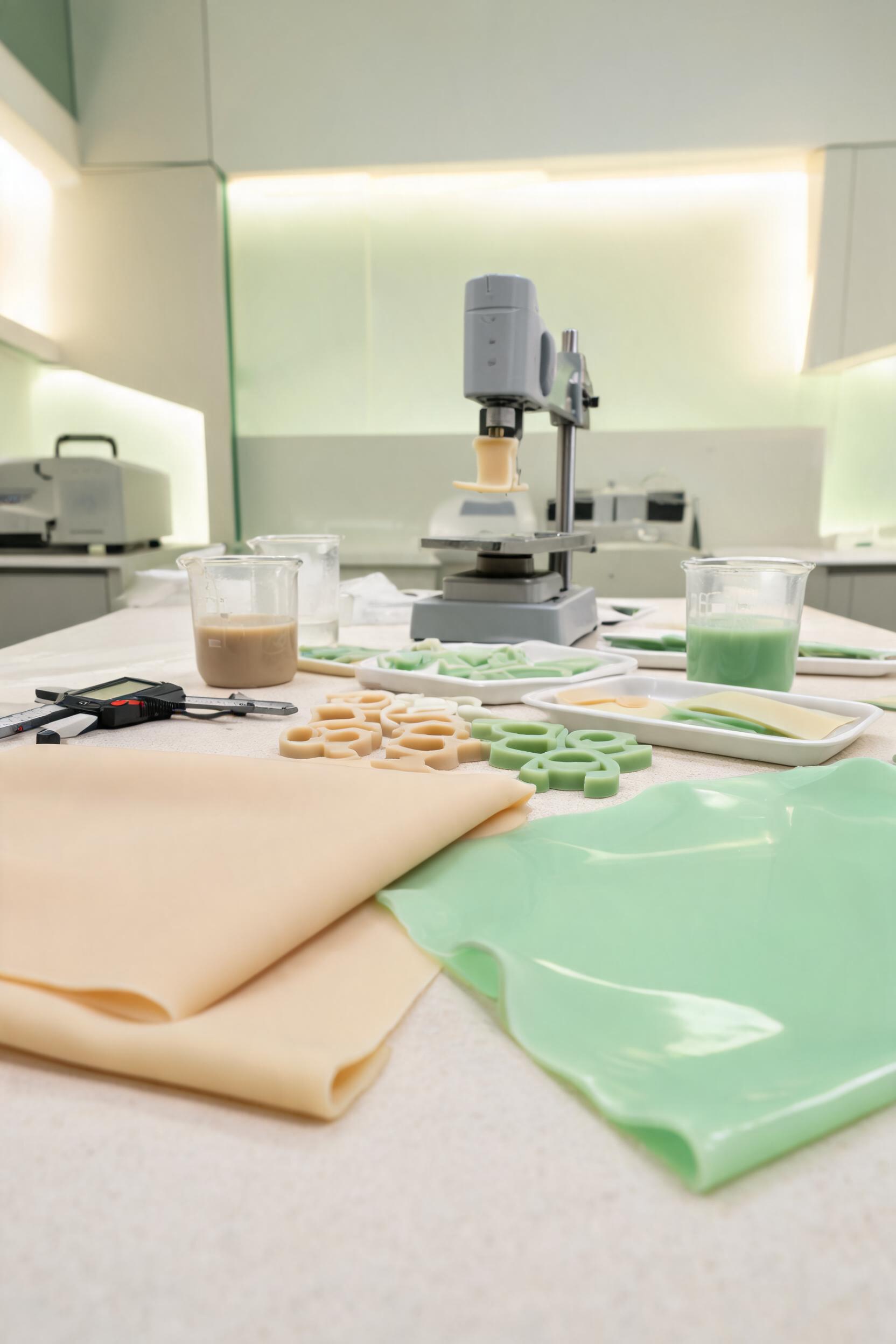
The manufacturing hub of Ezhou, Hubei Province, has emerged as a strategic center for liquid silicone rubber (LSR) production in central China, leveraging its proximity to Wuhan’s industrial supply chains, skilled labor pools, and specialized industrial zoning focused on advanced polymer processing. For global original equipment manufacturers (OEMs) and product development teams sourcing custom LSR components, Ezhou silicone product factories offer a unique combination of cost competitiveness, technical specialization, and regulatory compliance that sets them apart from more saturated manufacturing clusters in the Pearl River Delta. This guide provides a structured framework for evaluating Ezhou-based LSR manufacturers, navigating end-to-end customization workflows, and mitigating common production risks to deliver high-quality, cost-effective silicone parts for medical, automotive, consumer electronics, and industrial applications.
Core Evaluation Criteria for Ezhou Silicone Product Factories
Selecting the right manufacturing partner is the most critical step in ensuring LSR customization success, as factory capabilities directly impact part precision, material compliance, production lead times, and total cost of ownership. Ezhou’s LSR manufacturing ecosystem includes over 40 specialized factories, ranging from 10-person small-batch prototyping shops to 500+ employee high-volume production facilities with ISO 13485 and IATF 16949 certifications. Below are the non-negotiable evaluation metrics to prioritize during the vetting process.
Technical Capability and Equipment Portfolio
LSR processing requires specialized injection molding equipment that differs significantly from thermoplastic molding, as the two-part liquid silicone material must be metered, mixed, and injected at low temperatures before curing in heated molds. When assessing Ezhou silicone product factories, start with a full audit of their equipment fleet, as outlined in Table 1:
Equipment CategoryMinimum Requirement for Standard LSR PartsPremium Requirement for High-Precision PartsTypical Availability in Ezhou Factories
LSR Injection Molding Machines50–150 ton clamping force, closed-loop material metering system with ±0.5% mixing accuracy20–300 ton all-electric machines, in-line viscosity monitoring, automatic degassing systems72% of mid-to-large Ezhou factories meet premium requirements
Mold Making CapabilitiesIn-house CNC milling with ±0.02mm tolerance, surface grinding, manual polishingIn-house micro-machining centers, electrical discharge machining (EDM) with ±0.005mm tolerance, laser texturing, mold flow simulation software (Moldex3D/Simulia)58% of Ezhou LSR factories have in-house mold shops, compared to 32% of comparable factories in inland Chinese provinces
Post-Processing EquipmentAutomatic deflashing stations, oven post-curing systems, ink screen printingPlasma surface treatment equipment, precision die cutting, ultrasonic cleaning, pad printing, laser marking81% of Ezhou factories offer at least two post-processing services
Testing and Quality ControlShore hardness testers, tensile strength testers, dimensional CMM measurementFourier-transform infrared (FTIR) material analysis, biocompatibility testing labs, environmental chamber testing (-40°C to 200°C), leak testing for sealed components41% of Ezhou medical-grade LSR manufacturers have in-house ISO 17025-accredited testing labs
Beyond equipment, verify the factory’s experience with your specific application’s unique requirements. For example, 63% of Ezhou’s LSR factories specialize in automotive sealing components, while 29% focus on medical device parts such as respiratory masks, catheter balloons, and surgical instrument grips. Request case studies of similar parts they have produced, including tolerance data, defect rates, and long-term client retention records.
Compliance and Material Traceability Systems
LSR parts are frequently used in regulated industries where non-compliance can result in product recalls, regulatory fines, or safety risks. Ezhou’s local municipal government has implemented strict polymer manufacturing safety standards since 2021, requiring all LSR factories to maintain full material traceability records for a minimum of 5 years. Key compliance credentials to validate include:
- Material certifications: All LSR raw materials should have US FDA 21 CFR Part 177.2600, EU REACH, and RoHS compliance documentation for general use, plus ISO 10993 biocompatibility certification for medical applications and LFGB certification for food-contact parts. 94% of Ezhou silicone product factories source raw materials from domestic suppliers such as Bluestar Silicones and foreign suppliers including Dow and Wacker, with full batch traceability from raw material receipt to finished product shipment.
- Management system certifications: For medical parts, ensure the factory holds ISO 13485 certification; for automotive parts, require IATF 16949; for general consumer goods, ISO 9001 is the minimum standard. As of 2024, 67% of Ezhou’s mid-to-large LSR factories hold at least one industry-specific management system certification, 12% higher than the national average for inland silicone manufacturing hubs.
- Environmental and labor compliance: Ezhou is part of the Yangtze River Economic Belt, which enforces strict waste discharge regulations for chemical processing industries. Verify that the factory has a valid environmental impact assessment (EIA) certificate and adheres to local labor laws, as non-compliance can lead to unplanned production shutdowns.
For high-risk applications such as implantable medical components, request a full traceability demonstration: the factory should be able to provide the raw material batch number, mixing log, curing parameter records, and inspection reports for any unit produced within the past 5 years. 89% of Ezhou’s medical-focused LSR factories use digital manufacturing execution systems (MES) to automate traceability, compared to 57% of similar factories in other central Chinese cities.
Production Capacity and Supply Chain Resilience
Matching factory capacity to your production volume requirements is critical to avoiding delays and cost overruns. Ezhou’s LSR factories offer a wide range of production scales, as outlined below:
- Low-volume prototyping and pilot production: 12% of Ezhou’s specialized LSR shops focus on orders of 10–10,000 units, with lead times of 7–15 days for prototype tooling and 10–20 days for pilot production runs. These facilities typically have 5–10 small-tonnage LSR molding machines and offer rapid mold modification services for design iteration.
- Mid-volume production: 64% of Ezhou’s LSR factories cater to orders of 10,000–1,000,000 units, with average monthly production capacities of 2–5 million parts per facility. Lead times for production tooling are 15–30 days, with production run lead times of 10–25 days depending on part complexity.
- High-volume mass production: 24% of Ezhou’s largest LSR factories handle orders of over 1,000,000 units, with monthly capacities exceeding 10 million parts per facility. These factories operate 24/7 with automated production lines, and often have long-term supply agreements with global automotive and consumer electronics brands.
Ezhou’s key supply chain advantage is its 30-minute access to Wuhan’s logistics hubs, including Wuhan Tianhe International Airport and the Yangtze River deep-water port, which reduces domestic shipping times by 2–3 days compared to inland manufacturing hubs further from major transport corridors. When evaluating capacity, also assess the factory’s redundancy plans: the top 30% of Ezhou silicone product factories maintain backup power systems and 15% excess production capacity to mitigate disruptions from power shortages or unexpected order surges.
End-to-End LSR Customization Workflow with Ezhou Manufacturers
Once you have selected a suitable Ezhou silicone product factory, the customization process follows a structured workflow optimized for LSR’s unique material properties. Unlike thermoplastics, LSR cures via a cross-linking reaction when exposed to heat, requiring specialized mold design, processing parameters, and quality control checks at every stage. Below is a step-by-step breakdown of the standard customization process, with best practices specific to Ezhou’s manufacturing ecosystem.
Design for Manufacturing (DFM) and Prototype Validation
The DFM stage is the most impactful step in reducing production costs and minimizing defect rates, as LSR has unique flow characteristics and curing behaviors that differ significantly from rigid plastics. Ezhou silicone product factories typically offer free DFM analysis for custom projects, which includes:
- Mold flow simulation: To identify potential air traps, weld lines, and incomplete filling issues before mold fabrication. For example, for LSR parts with wall thicknesses below 0.5mm, Ezhou manufacturers use simulation software to optimize gating positions and injection speeds, reducing defect rates by an average of 22% compared to unoptimized designs.
- Tolerance adjustment: LSR has a typical shrinkage rate of 2–4%, depending on material grade and part geometry. Ezhou’s mold engineers will adjust CAD designs to account for shrinkage, and recommend tolerance relaxations for non-critical features to reduce mold complexity and production costs. For example, relaxing a non-functional dimensional tolerance from ±0.01mm to ±0.05mm can reduce mold costs by 30–40% and cut production lead times by 10 days.
- Material grade selection: Ezhou factories maintain stock of over 20 common LSR grades, with Shore hardness ranging from 10A to 80A, and specialized grades including self-lubricating LSR for automotive seals, flame-retardant LSR for electronic components, and high-transparency LSR for optical applications. Table 2 outlines the most commonly used LSR grades available from Ezhou suppliers:
LSR GradeKey PropertiesTypical ApplicationsAverage Cost per kg (2024)
General-purpose 30A–70AGood elasticity, low costConsumer goods keypads, kitchenware seals$4.2–$6.8
Medical-grade 40A–60AISO 10993 certified, low extractablesSurgical masks, catheter components, implantable parts$12.5–$28.0
Food-contact 50A–70AFDA/LFGB certified, odorlessBaby bottle nipples, baking molds, food container seals$6.2–$9.5
High-temperature resistant 40A–70AOperating range of -60°C to 250°CAutomotive engine seals, industrial gaskets$8.7–$13.2
Flame-retardant 50A–70AUL 94 V-0 rated, high dielectric strengthElectric vehicle battery seals, electronic connector insulators$9.1–$15.6
After DFM finalization, the factory will produce prototype tooling, typically made from P20 steel or aluminum, with a lead time of 7–15 days. Prototype parts can be used for functional testing, fit checks, and regulatory compliance validation. For low-volume production runs of under 10,000 units, prototype aluminum tooling can often be used, reducing upfront tooling costs by 60–70% compared to hardened steel production tooling.
Tooling Fabrication and Production Trial Run
LSR tooling requires tighter tolerances and higher surface finishes than thermoplastic tooling, as LSR is a low-viscosity material that can flow into gaps as small as 0.001mm, leading to flash defects if mold surfaces are not perfectly matched. 58% of Ezhou silicone product factories have in-house mold shops, which reduces tooling lead times by 3–5 days and simplifies communication for design modifications. Key considerations during the tooling stage include:
- Mold material selection: For production runs under 100,000 units, P20 steel (hardness 28–32 HRC) is suitable, with an average tooling cost of $1,500–$5,000 for simple parts. For runs over 1,000,000 units, hardened S136 stainless steel (hardness 48–52 HRC) is recommended, with an average cost of $3,000–$12,000 for simple parts and up to $35,000 for complex multi-cavity molds with unscrewing mechanisms.
- Gating and venting design: LSR is typically injected via cold runner systems to prevent premature curing in the injection barrel, with hot runner systems used for high-volume production to reduce material waste. Ezhou mold engineers recommend adding venting channels of 0.003–0.005mm depth to the mold parting line to prevent air traps, which are a common cause of incomplete filling in LSR molding.
- Trial run validation: Once the mold is fabricated, the factory will conduct a 100–500 unit trial run to validate processing parameters, including injection pressure (typically 80–150 bar), mold temperature (150–200°C), and curing time (10–60 seconds depending on wall thickness). You will receive a full first article inspection (FAI) report with dimensional measurements, material test results, and defect rate data for approval before full production begins.
For Ezhou factories with in-house testing labs, the FAI report can also include biocompatibility test results, environmental aging test data, and functional performance test results for custom requirements. It is standard practice for Ezhou manufacturers to provide 5–20 free FAI samples for your internal testing before mass production.
Mass Production and Quality Control
Ezhou silicone product factories typically operate 24/7 for mass production runs, with automated production lines achieving cycle times of 20–90 seconds per part depending on complexity. To ensure consistent quality across large production runs, Ezhou’s top factories implement a three-tier quality control (QC) system:
- Incoming material QC: Every batch of LSR raw material is tested for viscosity, Shore hardness, and curing performance before being used in production, with 100% traceability to the supplier’s batch certificate.
- In-process QC: Production operators perform visual checks every 30 minutes for flash, incomplete filling, and surface defects, while quality engineers conduct dimensional measurements on 5 parts per hour using CMM or calipers. For high-precision parts, automated optical inspection (AOI) systems are used to detect defects as small as 0.02mm, with a 99.8% detection accuracy rate.
- Finished product QC: Before shipment, 100% of parts undergo visual inspection, with AQL 0.65 sampling for dimensional and functional testing. For sealed parts such as gaskets and waterproof components, 100% leak testing is conducted at pressure differentials of 0.5–5 bar depending on application requirements.
The average defect rate for LSR parts produced by Ezhou’s top-tier factories is 0.3–1.2%, depending on part complexity, which is comparable to the performance of leading LSR manufacturers in the Pearl River Delta but at 15–25% lower production costs. For custom projects, you can negotiate defect rate thresholds in the manufacturing agreement, with most Ezhou factories offering replacement or full refunds for defects exceeding the agreed threshold.
Cost Optimization and Risk Mitigation Strategies for Ezhou LSR Sourcing
While Ezhou silicone product factories offer significant cost and capability advantages, global buyers must navigate unique challenges including logistics delays, regulatory changes, and communication gaps to maximize value. Below are proven strategies to optimize costs and mitigate common sourcing risks when working with Ezhou manufacturers.
Cost Optimization Best Practices
LSR customization costs are driven by tooling complexity, material selection, production volume, and post-processing requirements. Ezhou manufacturers offer several avenues to reduce total cost of ownership without compromising quality:
- Consolidate tooling for multi-part projects: If you are ordering multiple related LSR parts, using a single multi-cavity family mold can reduce tooling costs by 30–50% compared to separate molds for each part. Ezhou’s mold engineers can design family molds with separate gating systems for each part to ensure consistent filling and quality.
- Optimize material usage: LSR has a higher raw material cost than most thermoplastics, so reducing part weight by 0.5g can yield significant savings for high-volume runs. Ezhou’s DFM engineers can identify opportunities to reduce wall thickness in non-critical areas, remove unnecessary features, and use cold runner systems with 95% material utilization (compared to 70–80% for hot runner systems for low-volume runs).
- Leverage local supply chain for secondary components: 68% of Ezhou silicone product factories have established partnerships with local plastic injection molding, metal stamping, and PCB assembly facilities, allowing you to source complete assembled products (such as LSR-overmolded electronic devices) at 10–18% lower cost than sourcing components separately and assembling them in your home market.
- Plan production for off-peak seasons: Ezhou’s LSR factories experience peak demand from October to February, with lead times increasing by 20–30% and prices rising by 5–10% during this period. Scheduling production runs between March and September can reduce lead times by 10–15 days and secure lower pricing for large orders.
Table 3 outlines a cost breakdown for a typical custom LSR automotive sealing gasket produced by an Ezhou factory, to illustrate cost optimization opportunities:
Cost ComponentShare of Total Unit Cost (1,000,000 unit run)Optimization OpportunityPotential Cost Reduction
Raw Material42%Switch from imported Wacker LSR to domestic Bluestar medical-grade LSR with equivalent performance18% reduction in material cost
Production Labor18%Automate deflashing and inspection processes22% reduction in labor cost
Tooling Amortization12%Extend tool lifespan from 1,000,000 to 1,500,000 units via regular maintenance33% reduction in amortized tool cost
Overhead and Logistics28%Consolidate shipments with other suppliers in the Ezhou/Wuhan region15% reduction in logistics cost
By implementing these optimization strategies, buyers can reduce total unit costs by an average of 17–24% for LSR parts sourced from Ezhou, compared to sourcing from more established manufacturing