
橡楚编辑部 5/19/2026 41 min read
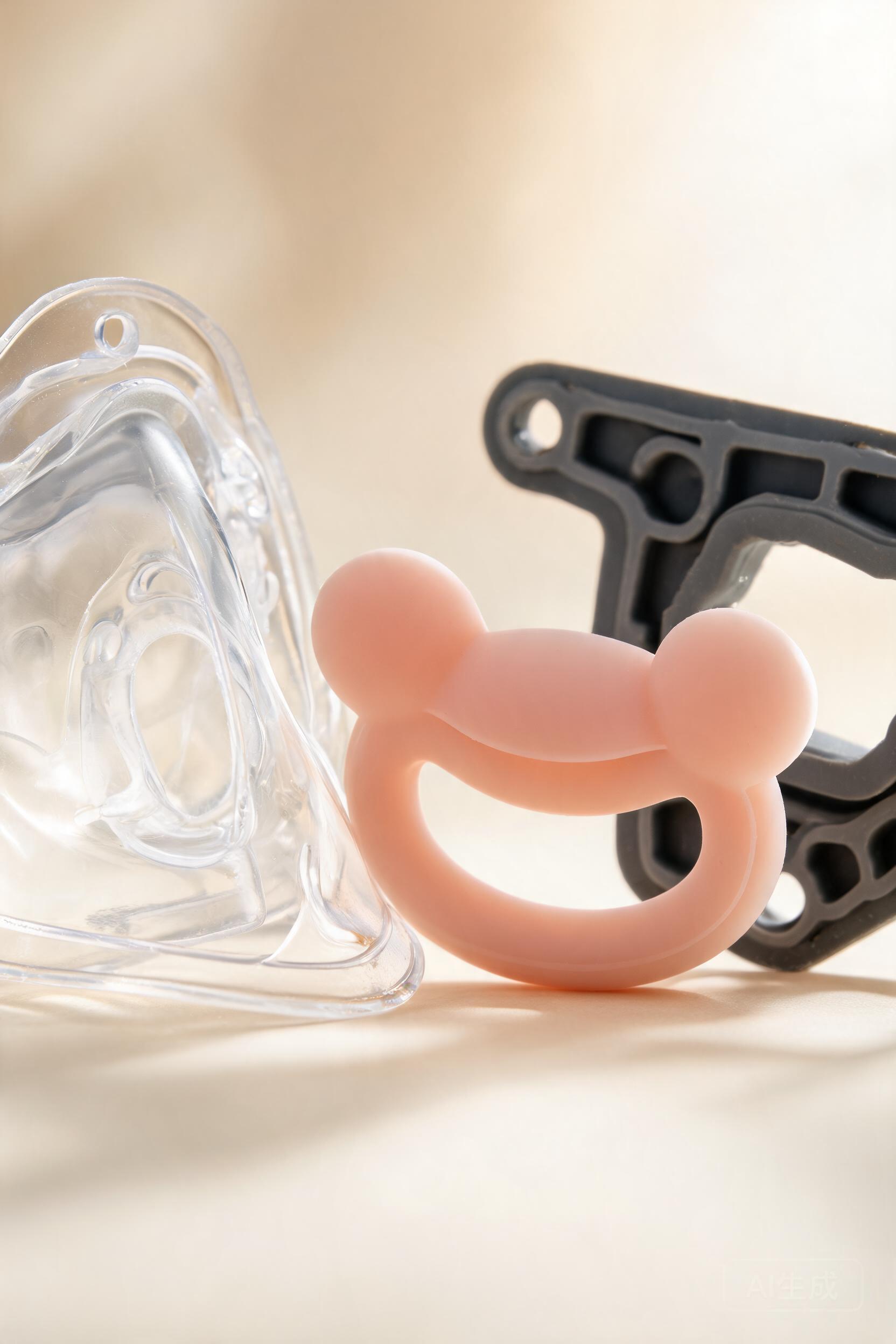
Ezhou liquid silicone rubber processing factory Xiangchu has been deeply engaged in the LSR manufacturing field for many years, focusing on high-precision LSR overmolding and personalized custom production services. It has a mature process system, strict quality control standards and rich mass production experience, which can meet the differentiated LSR product production needs of medical, electronic, automotive and other industries, providing customers with full-link processing solutions from design optimization to mass delivery.
The global liquid silicone rubber (LSR) processing market is projected to grow at a 6.8% CAGR through 2030, driven by surging demand for high-precision, biocompatible components in medical devices, automotive electronics, and consumer wearables. As original equipment manufacturers (OEMs) increasingly outsource specialized LSR production to reduce capital expenditure and access niche technical expertise, regional players with specialized capabilities are emerging as critical supply chain partners. Based in Ezhou, Hubei Province — a core hub of China’s advanced manufacturing cluster with direct logistical access to Wuhan’s industrial and shipping networks — Xiangchu Technology stands out as a specialized LSR contract manufacturing provider focused exclusively on precision overmolding and end-to-end custom LSR production. Unlike generalist rubber processors that offer LSR as a secondary service, Xiangchu has built its entire operational framework around LSR’s unique material properties, with 12 dedicated LSR injection molding lines, a Class 100,000 cleanroom, and in-house material formulation and mold design teams. This article explores Xiangchu’s core technical capabilities, quality control systems, and value proposition for global OEMs seeking reliable, high-precision LSR manufacturing partners.
Precision overmolding, the process of bonding LSR to a rigid substrate (engineering plastic, metal, or glass) in a single or multi-shot molding cycle, is Xiangchu’s flagship service. The process demands tight control of material compatibility, mold tolerance, and processing parameters to achieve a hermetic, void-free bond that meets performance requirements for extreme temperature, chemical exposure, or biocompatibility. Xiangchu has invested heavily in specialized equipment and process optimization to address the most common pain points of LSR overmolding, including delamination, flash, and dimensional deviation.
A common failure point in LSR overmolding is insufficient adhesion between LSR and the substrate, which can lead to component failure in end-use applications. Xiangchu’s R&D team has developed a standardized compatibility matrix for 27 common substrate materials, with pre-validated surface treatment and material formulation protocols to ensure bond strength exceeding 3.5 MPa for most substrate-LSR combinations, as shown in Table 1.
For custom substrates, Xiangchu conducts pre-production adhesion testing per ASTM D3163 (Standard Test Method for Strength of Adhesively Bonded Rigid Plastic Lap-Shear Joints in Shear by Tension Loading) to validate bond performance before full production runs. The team also offers self-adhesive LSR formulation options for select substrates, eliminating the need for primer coatings to reduce production time and material costs for high-volume orders.
LSR’s low viscosity (1,000–100,000 cP before curing) makes it prone to flash even at mold parting line gaps as small as 5 μm, requiring extreme precision in mold manufacturing. Xiangchu’s in-house mold shop is equipped with 5-axis CNC machining centers, wire EDM (electrical discharge machining) equipment with ±1 μm positioning accuracy, and optical measurement systems to produce molds with parting line tolerances as tight as ±2 μm for high-precision applications.
For overmolding projects, Xiangchu uses a modular mold design approach that supports both insert overmolding (pre-fabricated substrates loaded into the mold cavity manually or via robotic arm) and multi-shot overmolding (rigid substrate molded in the first cycle, then LSR injected into the second cavity in the same machine). For multi-shot overmolding projects, the team achieves dimensional accuracy of ±0.01 mm for small components (≤10 mm in size) and ±0.05 mm for larger components (≤300 mm in size). All molds undergo 100+ cycle trial runs and 3D optical scanning validation before being approved for production, reducing the risk of production downtime and part defects.
To support high-volume orders (100,000+ units per month) while maintaining consistent quality, Xiangchu has fully automated its overmolding production lines with 6-axis robotic loading and unloading systems, in-line vision inspection stations, and closed-loop process control systems that monitor injection pressure, mold temperature, and curing time in real time. For a typical automotive sensor overmolding project with 250,000 units per month volume, Xiangchu achieves a cycle time of 45 seconds per part, a first-pass yield rate of 99.2%, and a defect rate of less than 0.1% for bond failure and dimensional non-conformity.
The facility also operates 24/7 with redundant production lines, allowing the team to scale production capacity by 30% within 72 hours for unexpected order surges without compromising quality. For example, during a 2022 supply chain disruption for a European automotive client, Xiangchu scaled production of LSR-overmolded brake pressure sensor components from 150,000 units to 220,000 units per month within 5 days, helping the client avoid a 2-week production shutdown.
Beyond precision overmolding, Xiangchu offers full-spectrum custom LSR manufacturing services, supporting clients from initial product design and material formulation to mass production and post-processing. This turnkey model eliminates the need for clients to coordinate with multiple vendors for design, mold making, and production, reducing project lead times by an average of 20% compared to fragmented supply chains.
LSR’s material properties can be tailored extensively by adjusting base polymer molecular weight, crosslinking agent ratios, and filler content, making it suitable for a wide range of specialized applications. Xiangchu’s in-house material laboratory works with clients to develop custom LSR formulations that meet specific performance requirements, with capabilities including:
All custom formulations undergo comprehensive performance testing before production, including tensile strength, elongation at break, compression set, and accelerated aging testing. For medical and food contact applications, Xiangchu provides third-party testing reports from accredited laboratories (SGS, Intertek) to ensure compliance with global regulatory requirements.
For clients in the product development stage, Xiangchu offers rapid prototyping services with lead times as short as 3 days for simple components and 7–10 days for overmolded assemblies. The prototyping team uses a combination of 3D-printed soft tooling (for low-volume runs of 10–100 units) and precision machined aluminum prototype molds (for runs of 100–1,000 units) to produce functional prototypes that match the material and performance of mass-produced parts.
Unlike many contract manufacturers that treat prototyping as a low-priority service, Xiangchu assigns a dedicated project engineer to each prototyping project, providing design for manufacturing (DFM) feedback to optimize part geometry for LSR processing. Common DFM recommendations include adjusting draft angles to minimum 1.5° for deep cavity parts, adding rounded corners to reduce stress concentration, and optimizing wall thickness to a uniform 0.5–5 mm to prevent curing unevenness. For clients requiring functional testing of prototypes, Xiangchu also offers in-house performance testing, including pressure decay testing for sealed components and biocompatibility screening for medical parts.
To deliver finished, ready-to-assemble components, Xiangchu offers a full range of in-house post-processing services, eliminating the need for clients to source secondary processing from third-party vendors. Core post-processing capabilities include:
For clients with complex supply chain requirements, Xiangchu also supports vendor-managed inventory (VMI) programs, with 10,000 m² of dedicated warehouse space to hold finished goods inventory for up to 3 months of client demand.
As a supplier to regulated industries including medical devices, automotive, and food and beverage, Xiangchu has built a multi-layered quality control system that covers every stage of production, from incoming material inspection to final product testing. The facility holds ISO 9001:2015, ISO 13485:2016 (medical device quality management), and IATF 16949:2016 (automotive quality management) certifications, with all production processes aligned to global regulatory requirements.
Xiangchu’s quality control process begins with incoming material inspection, where all LSR raw materials and substrates are tested for batch consistency before being released to production. LSR raw materials are tested for viscosity, pot life, and curing kinetics, while substrates undergo dimensional inspection and surface energy testing to ensure compatibility with overmolding processes.
During production, every line is equipped with in-line inspection stations that conduct 100% inspection of critical dimensions, bond integrity, and visual defects:
For high-risk applications such as implantable medical components, Xiangchu also conducts destructive batch testing, including tensile testing of bond strength, pressure decay testing for hermetic seals, and biocompatibility testing for each production lot.
Xiangchu maintains dedicated regulatory teams for each target market to ensure products meet local regulatory requirements:
For clients entering new markets, Xiangchu’s regulatory team provides support for product registration, including compiling test reports and technical documentation to reduce the time and cost of regulatory approval.
Xiangchu operates a continuous improvement program based on Lean manufacturing and Six Sigma principles, with cross-functional teams conducting quarterly process audits to identify opportunities for waste reduction and quality improvement. Over the past 3 years, the program has reduced production waste by 28% and improved first-pass yield rates by 3.2% across all product lines.
To mitigate supply chain risks, Xiangchu maintains dual sourcing for all critical raw materials, with 3 months of safety stock for high-volume LSR grades and common substrates. The facility also has a backup power system and redundant utility infrastructure to ensure uninterrupted production during power outages or supply disruptions. During the 2020–2022 global raw material shortage, Xiangchu’s safety stock allowed it to maintain 98% on-time delivery rates, compared to an industry average of 72% for LSR processors during the same period.
As demand for high-precision LSR components continues to grow across regulated industries, specialized contract manufacturers like Ezhou’s Xiangchu Technology are filling a critical gap in the global supply chain, offering OEMs access to niche technical expertise, advanced production capabilities, and turnkey custom manufacturing services. By focusing exclusively on LSR processing, and building its core capabilities around precision overmolding and end-to-end custom production, Xiangchu has established itself as a reliable partner for clients ranging from startup medical device firms to global automotive OEMs.
What sets Xiangchu apart from generalist rubber processors is its deep understanding of LSR’s unique material properties, its in-house capabilities spanning material formulation, mold design, prototyping, and post-processing, and its rigorous quality control system aligned with global regulatory standards. For OEMs seeking to reduce development timelines, improve part performance, and build a resilient supply chain for LSR components, Xiangchu offers a compelling combination of technical depth, production flexibility, and cost competitiveness. As the LSR market continues to evolve, Xiangchu’s ongoing investment in R&D and advanced manufacturing technology positions it to remain a leading player in the global LSR contract manufacturing space for years to come.