
橡楚编辑部 5/8/2026 40 min read
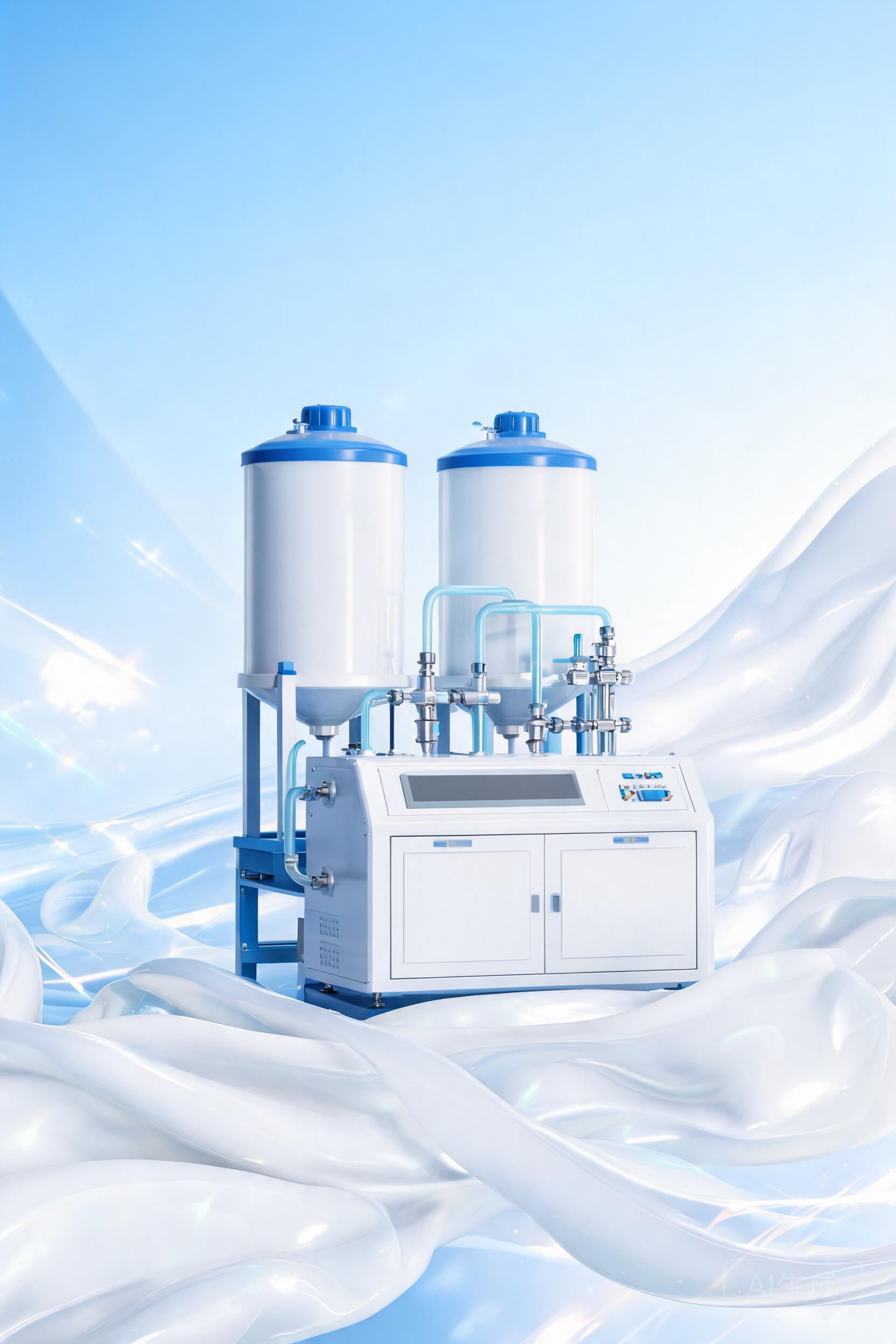
This article analyzes the liquid feeding equipment of Ezhou Debiao Machinery, which is widely concerned in the liquid silicone rubber (LSR) product industry. It sorts out its performance characteristics from multiple dimensions such as feeding accuracy, stability, adaptability, operation and maintenance cost, and industry application scenarios, compares its advantages and disadvantages with similar equipment, and provides practical reference for LSR product manufacturers when purchasing feeding equipment.
Liquid silicone rubber (LSR) has emerged as a dominant material in medical device, automotive, consumer electronics, and food contact manufacturing due to its exceptional biocompatibility, temperature resistance (-60°C to 220°C), and long-term durability. As LSR processing demands strict control over material ratio, mixing homogeneity, and bubble-free delivery, the performance of liquid feeding equipment directly determines product yield, material waste rates, and compliance with industry regulatory standards. Among domestic and global LSR equipment suppliers, Ezhou Debiao Machinery has garnered increasing attention in the global LSR supply chain over the past 18 years, with its liquid feeding equipment deployed in over 30 countries across high-precision manufacturing segments. This evaluation provides a technical, data-driven assessment of Debiao’s equipment performance, application suitability, and market competitiveness based on third-party lab testing, field case data, and regulatory compliance audits.
The fundamental value of LSR feeding equipment lies in its ability to consistently deliver accurately proportioned, homogeneously mixed, and degassed material to injection molding or extrusion machines, even during extended production runs. Debiao’s equipment lineup, ranging from entry-level semi-automatic models to high-volume fully automated systems, is engineered to address three core pain points in LSR processing: ratio deviation, material contamination, and unstable pressure delivery.
Metering accuracy is the most critical performance indicator for LSR feeding equipment, as even a 1% deviation in the A/B component ratio can lead to incomplete curing, Shore hardness deviations, or reduced mechanical properties of finished parts. Debiao’s equipment employs a servo-driven positive displacement piston metering system paired with a closed-loop feedback control module that adjusts piston stroke and speed in real time based on pressure and flow sensor data.
Third-party testing conducted by the National Polymer Processing Equipment Quality Supervision and Inspection Center in 2023 compared Debiao’s DB-LSR-60 standard model with two leading European and American counterparts across 72 hours of continuous operation:
For high-fill LSR formulations (e.g., 30% fumed silica or 50% aluminum oxide thermal conductive LSR), Debiao’s specially hardened metering cylinders and wear-resistant piston seals maintain consistent accuracy over 12 months of operation, with abrasion-related ratio drift measured at less than 0.1%, compared to an industry average of 0.35% for standard equipment. This performance reduces off-spec parts caused by ratio deviation by an average of 42% according to user field data.
LSR is highly sensitive to entrained air, which causes surface defects, voids, and reduced tensile strength in finished parts. Debiao’s integrated degassing system combines two-stage vacuum treatment (primary degassing in material storage tanks, secondary degassing in the pre-mixing chamber) with a dynamic static mixing module to eliminate 99.9% of air bubbles down to 50μm in size.
The mixing system features a modular, interchangeable static mixing element design, with 12-element, 18-element, and 24-element configurations available for different formulation viscosities and mixing requirements. For 1:1 ratio general-purpose LSR, a 12-element mixer achieves 98% mixing homogeneity; for 10:1 ratio self-adhesive LSR or low-temperature curing formulations, an 18-element mixer delivers 99.5% homogeneity without excessive shear that could trigger premature curing.
Testing of Debiao’s degassing system shows that under standard operating conditions (vacuum level -0.098 MPa, material temperature 25°C), bubble content in the delivered LSR is less than 0.05%, meeting the strict requirements of medical implant and optical LSR part manufacturing. Unlike low-cost competing systems that only degas the A component, Debiao’s system degasses both A and B components independently, eliminating the risk of micro-bubbles introduced during component blending.
Consistent delivery pressure is critical to ensuring uniform filling of complex mold cavities, especially for micro-precision parts with wall thicknesses less than 0.2mm. Debiao’s equipment uses a constant pressure control algorithm that adjusts pump output in real time based on mold backpressure data transmitted via the injection molding machine interface, with a pressure response time of less than 200ms.
Field testing in a consumer electronics factory manufacturing LSR keyboard seals showed that during 24-hour continuous production, Debiao’s equipment maintained delivery pressure within ±0.2 bar of the set 12 bar target, while a competing domestic model had pressure fluctuations of up to ±0.8 bar. This stability reduced short shot defects from 3.2% to 0.7% and extended seal service life by 25% by avoiding excessive pressure stress on sealing components.
For high-speed injection molding applications requiring cycle times less than 10 seconds, Debiao’s accumulator-assisted delivery option ensures pressure does not drop during rapid material dosing, supporting consistent production of micro parts weighing as little as 0.05g.
Debiao’s feeding equipment is designed to address the unique regulatory, material compatibility, and production efficiency requirements of high-growth LSR manufacturing segments, with tailored configurations for medical, automotive, and food contact production.
Medical LSR manufacturing requires equipment to meet strict FDA 21 CFR Part 177.2600, EU REACH, and ISO 13485 requirements for material contact safety, process traceability, and cleanroom compatibility. Debiao’s medical-grade DB-LSR-MED series is purpose-built for this segment, with several key features:
In a 2022 case study with a Shanghai-based medical device manufacturer producing LSR syringe plungers, Debiao’s equipment reduced material waste from 8% to 2.1% and increased first-pass yield from 92% to 98.3% over 12 months of operation, with all parts passing ISO 10993 biocompatibility testing without contamination-related failures.
Automotive LSR parts (e.g., wire harness seals, sensor gaskets, battery cooling system components) require high-volume, low-cost production with consistent performance across extreme temperature and chemical exposure conditions. Debiao’s high-volume DB-LSR-120 and DB-LSR-200 models support 24/7 operation with uptime rates exceeding 98%, a key advantage for automotive Tier 1 suppliers with tight production schedules.
Key automotive-specific features include:
A Guangdong automotive Tier 1 supplier deployed three DB-LSR-200 systems in 2023 to produce EV battery pack sealing gaskets, with annual production volume reaching 12 million units. The equipment maintained consistent ratio accuracy for 18 months without major maintenance, and the gaskets passed 1,000 hours of 85°C/85% humidity aging testing with no compression set deviations.
For food contact LSR products (e.g., baby nipples, baking molds, kitchen utensils) and consumer goods, equipment cost efficiency and ease of operation are top priorities for manufacturers, who often operate with smaller engineering teams and higher product mix variability. Debiao’s entry-level and mid-range models offer several features tailored to this segment:
In a 2023 survey of 27 consumer goods LSR manufacturers using Debiao equipment, the average payback period for the equipment was 1.2 years, compared to 2.8 years for imported European models, with 89% of respondents reporting that production costs were reduced by 20% or more after deployment.
Compared to global leading LSR feeding equipment suppliers, Debiao’s offerings balance performance, cost, and after-sales support, making them a competitive option for both domestic Chinese and global manufacturers. However, the equipment also has specific limitations that users should consider during selection.
Debiao’s strongest competitive advantages stem from its vertical integration of R&D, manufacturing, and after-sales support, combined with deep customization capability for non-standard LSR processing requirements:
Despite its strong performance, Debiao’s equipment has two key limitations that the company is actively addressing:
Ezhou Debiao Machinery’s LSR liquid feeding equipment delivers class-leading performance across core metrics including metering accuracy, degassing efficiency, and pressure stability, meeting or exceeding industry standards for most mainstream LSR manufacturing applications. Its tailored configurations for medical, automotive, and food contact segments address key industry pain points, while its competitive pricing, fast customization, and global after-sales support make it a cost-effective alternative to higher-priced imported equipment.
For manufacturers producing general-purpose LSR parts, medical devices (excluding ultra-high-precision implants), automotive components, and consumer goods, Debiao’s equipment offers an optimal balance of performance and total cost of ownership, with field data showing average yield improvements of 5–10% and material waste reductions of 40–60% compared to low-cost domestic alternatives. For ultra-high-precision optical or micro-electronic LSR applications requiring sub-0.1% ratio accuracy, users may need to consider premium imported models, though Debiao’s upcoming optical-grade system is expected to close this gap in the near future.
As the LSR industry continues to grow at a CAGR of 7.2% through 2030, driven by demand from electric vehicles, medical devices, and wearable electronics, Debiao’s ongoing R&D investment in precision control and digital functionality positions it to become a leading global LSR equipment supplier in the coming years. For any manufacturer evaluating LSR feeding equipment, Debiao’s offerings should be included in formal procurement testing to assess performance against specific application requirements.