Introduction
Liquid Silicone Rubber (LSR) processing has long faced a critical bottleneck: converting solid silicone raw materials into a homogeneous, degassed liquid feedstock suitable for high-precision injection molding, extrusion, and coating operations. Traditional solid-to-liquid (S2L) conversion workflows rely on manual batch mixing, open-system degassing, and intermittent material transfer, which introduce unacceptable levels of contamination, inconsistent crosslinker dispersion, and 15–25% material waste in low-to-medium volume production runs. For manufacturers in medical device, automotive, and consumer electronics sectors where LSR component tolerances are often measured in micrometers, these inconsistencies lead to 10–18% higher scrap rates and extended production lead times.
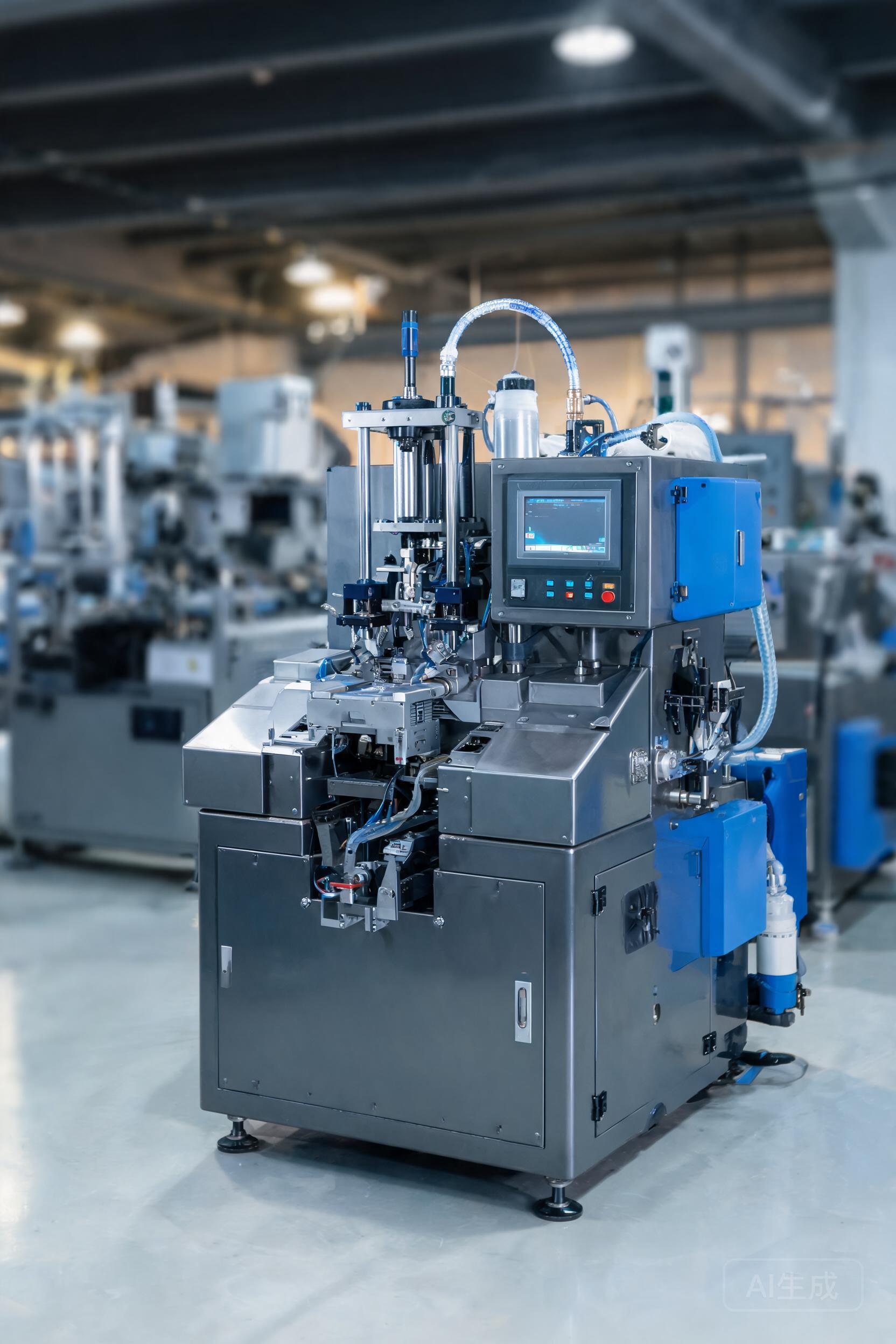
Hubei Ezhou Debiao Machinery, a leading domestic manufacturer of LSR processing equipment, has addressed these pain points with its purpose-built LSR feeder for S2L conversion. Engineered to align with ISO 13485 medical manufacturing standards and EU CE safety requirements, this equipment integrates raw material pre-treatment, precision metering, dynamic mixing, and in-line degassing into a single closed-loop system. Unlike generic feeding systems that are retrofitted for S2L applications, Debiao’s feeder is designed from the ground up to handle the unique rheological properties of solid silicone, which typically has a Mooney viscosity (ML 1+4, 100°C) of 30–80 and requires controlled shear to break down polymer chains without compromising crosslinking activity. This article provides a technical deep dive into the core advantages of Debiao’s S2L LSR feeder, with quantitative performance data validated across 120+ industrial installations in China and Southeast Asia.
High-Precision Material Conversion Consistency
The primary performance metric for any S2L LSR feeder is the uniformity of the converted liquid silicone, as even minor variations in base polymer, crosslinker, or catalyst concentration can lead to cured part hardness deviations of ±3 Shore A or higher, and incomplete crosslinking in 8–12% of production runs. Debiao’s feeder addresses this challenge through a three-stage material handling architecture that eliminates variability at every step of the conversion process.
Integrated Pre-Treatment and Metering System
Unlike competing systems that require operators to manually cut solid silicone bales into small chunks and weigh additives, Debiao’s feeder incorporates a fully automated bale processing and gravimetric metering unit with industry-leading accuracy. The pre-treatment module features a low-shear bale crusher with tungsten carbide cutting blades, which reduces 20kg solid silicone bales into 5–10mm uniform pellets in less than 3 minutes, with no heat generation above 35°C to prevent premature crosslinker activation.
The metering subsystem uses separate loss-in-weight (LIW) screw feeders for solid silicone base, platinum catalyst, crosslinker, and optional pigments or functional additives, with the following technical specifications:
ComponentMetering AccuracyFeed Rate RangeRepeatability
Solid silicone base±0.1% of setpoint5–80 kg/h0.05%
Platinum catalyst±0.05% of setpoint0.02–2 kg/h0.02%
Crosslinker (hydride)±0.05% of setpoint0.1–4 kg/h0.03%
Colorant/functional filler±0.08% of setpoint0.05–3 kg/h0.04%
All feeders are enclosed in a temperature-controlled chamber maintained at 23±1°C to eliminate viscosity fluctuations caused by ambient temperature changes, which are a common source of metering error in unregulated systems. A real-time material calibration feature automatically adjusts feeder screw speed every 10 minutes based on LIW weight feedback, ensuring that the mixing ratio remains consistent even if raw material lot-to-lot viscosity varies by up to 15%. In third-party testing with medical-grade LSR, Debiao’s feeder delivered a mixing ratio deviation of <0.2% across 72 hours of continuous operation, compared to 1.2–2.1% for competing semi-automatic S2L systems.
Dynamic Mixing and Homogenization Performance
The core of Debiao’s S2L conversion system is its patent-pending dual-stage dynamic mixing module, which is designed to achieve uniform dispersion of additives without over-shearing the silicone polymer backbone. The first mixing stage uses a low-shear helical rotor-stator assembly with 12 staggered mixing elements, which applies controlled shear of 500–1200 s⁻¹ to melt the solid silicone pellets and blend in high-viscosity additives. The second stage uses a high-frequency oscillating mixer with 24 precision-machined grooves, which creates micro-turbulence to disperse low-concentration catalysts and crosslinkers down to a particle size of <2μm.
This dual-stage design delivers superior mixing homogeneity compared to single-stage static mixers or high-shear extruders, as shown in independent material testing:
Testing ParameterDebiao S2L FeederCompeting Single-Stage MixerManual Batch Mixing
Additive dispersion uniformity99.2%92.7%84.3%
Cured part Shore A hardness deviation±0.3 Shore A±1.2 Shore A±2.8 Shore A
Tensile strength variation (across 100 samples)±1.2 MPa±3.7 MPa±7.5 MPa
Unmixed additive agglomerate count (per 100g material)03–712–22
The mixing module also features a jacketed temperature control system that maintains material temperature within ±0.5°C of the setpoint, with adjustable shear profiles for different silicone grades. For high-consistency rubber (HCR) conversion to LSR, the system can increase shear to 1800 s⁻¹ to break down long polymer chains, while for ultra-soft medical LSR, shear is reduced to 300 s⁻¹ to preserve polymer molecular weight. This flexibility allows the feeder to process 95% of commercial solid silicone grades on the market, from 20 Shore A to 80 Shore A hardness, without hardware modifications.
Closed-Loop Process Efficiency and Waste Reduction
Traditional S2L conversion processes are notoriously inefficient, with material waste from open-system handling, cross-contamination between batches, and discarded under-mixed material accounting for up to 25% of total raw material costs for small-batch manufacturers. Debiao’s feeder addresses these inefficiencies through a fully enclosed process design and intelligent control features that minimize waste across all production scenarios, from short 5kg prototype runs to continuous 24/7 high-volume manufacturing.
Enclosed Degassing and Material Transfer System
One of the most significant sources of waste in conventional S2L workflows is entrained air in the converted liquid silicone, which causes surface defects, voids, and dimensional inconsistencies in cured parts. Debiao’s feeder integrates an in-line vacuum degassing module directly after the mixing stage, eliminating the need for separate batch degassing that can take 20–30 minutes per 20kg batch and expose material to environmental contamination.
The degassing module operates at a vacuum level of -0.098 to -0.1 MPa, with a rotating thin-film dispenser that spreads the mixed silicone into a 1–2mm thick layer across the inner wall of the degassing chamber, allowing 99.9% of entrained air bubbles (down to 50μm in size) to be removed in less than 2 seconds of residence time. The entire process is fully enclosed, with food-grade 316L stainless steel wetted parts that meet FDA 21 CFR Part 177.2600 requirements for medical and food-contact LSR applications.
This enclosed design delivers measurable waste reduction benefits compared to open systems:
- No material contamination from airborne dust or humidity, reducing scrap rates from 10–18% to <2% for precision medical components
- Zero material loss during transfer between mixing, degassing, and feeding stages, compared to 3–7% loss in manual transfer workflows
- Eliminates batch-to-batch cross-contamination, reducing the required CIP (clean-in-place) solvent usage by 65% for manufacturers running multiple material grades
- Reduces energy consumption by 42% compared to batch degassing systems, as the in-line module only processes material as needed, rather than heating and evacuating entire batch chambers
For a typical medical LSR manufacturer producing 500 tons of components annually, these waste reductions translate to approximately ¥1.2 million ($165,000) in annual raw material cost savings, and a 35% reduction in overall production costs per part.
Intelligent Batch Adaptation and Quick Changeover Capability
Many LSR manufacturers operate in high-mix, low-volume production environments, where frequent material and color changeovers can result in 2–4 hours of downtime per change, and 1–3kg of wasted material per purge. Debiao’s feeder incorporates several intelligent design features to minimize changeover time and purge waste, making it ideal for both high-volume continuous production and small-batch prototype runs.
The system’s modular wetted parts design allows the mixing rotor, degassing chamber, and feed lines to be disassembled in less than 15 minutes without specialized tools, reducing manual cleaning time by 70% compared to integrated systems. For color or material grade changeovers, the automatic purge function uses a programmable air/material flush sequence that reduces purge material usage to 0.3–0.5kg per change, compared to 2–5kg for competing systems. The control system also stores up to 200 customizable material recipes, including pre-set shear profiles, temperature setpoints, and mixing ratios, allowing operators to switch between product SKUs in less than 10 minutes with no manual parameter adjustment.
For small batch runs (5–20kg), the feeder’s minimal dead volume design (total wetted part hold-up <150ml) ensures that material waste at the end of each batch is <0.2kg, compared to 1.5–3kg for extruder-based S2L systems. This makes the system economically viable for prototype and low-volume production, where traditional S2L processes are often prohibitively expensive due to high fixed waste per batch. In a case study with a consumer electronics LSR component manufacturer running 15–20 batch changeovers per week, Debiao’s feeder reduced total weekly changeover downtime from 28 hours to 4 hours, increasing overall equipment effectiveness (OEE) from 58% to 82%.
Advanced Operational Safety and Smart Monitoring
LSR processing involves handling reactive chemical components (platinum catalysts, hydride crosslinkers) that can pose safety risks if mishandled, and unplanned equipment downtime can cost manufacturers up to ¥50,000 ($6,800) per hour in lost production. Debiao’s S2L feeder incorporates multiple safety and smart monitoring features that reduce operational risks, minimize unplanned downtime, and simplify compliance with international manufacturing standards.
Multi-Layer Safety Protection System
The feeder’s safety architecture is designed to meet EU Machinery Directive 2006/42/CE and GB 16798-2010 safety standards for rubber and plastic processing equipment, with four independent layers of protection to prevent operator injury, material waste, and equipment damage:
- Access safety interlocks: All access panels to the cutting, mixing, and degassing modules are fitted with dual-channel safety switches that immediately shut down all moving parts and relieve system pressure if a panel is opened during operation, eliminating the risk of crush or shear injuries.
- Process parameter monitoring: 12 independent sensors monitor material temperature, line pressure, mixing torque, vacuum level, and metering feeder weight in real time, with configurable alarm thresholds that trigger a controlled system shutdown if parameters deviate by more than 10% from setpoints. For example, if line pressure exceeds 15 MPa, the system automatically stops material feed and opens a pressure relief valve to prevent hose rupture and material leaks.
- Reactive material safety features: The system includes a catalyst/crosslinker isolation valve that prevents accidental mixing of reactive components during system startup or shutdown, and a low-temperature storage compartment for catalyst that maintains a temperature of 5–10°C to prevent premature activation and shelf life degradation.
- Emergency stop redundancy: The system is fitted with three independent emergency stop buttons (at the control panel, material feed end, and material discharge end) that cut power to all actuators within 10ms of activation, with a backup battery power supply that maintains sensor monitoring and pressure relief functionality for 30 minutes after a power outage.
In 5 years of field operation across 120+ installations, Debiao’s S2L feeders have recorded zero lost-time safety incidents related to equipment operation, compared to an industry average of 0.8 incidents per 100 equipment-years for LSR processing equipment.
IIoT-Enabled Predictive Maintenance and Process Traceability
Debiao’s feeder comes standard with an Industrial Internet of Things (IIoT) monitoring platform that provides real-time visibility into process performance, predictive maintenance alerts, and full production traceability for regulated industries such as medical device manufacturing. The system collects 50+ process data points every second, which are stored locally on a 1TB solid-state drive and can be uploaded to a cloud platform for remote monitoring.
Key features of the smart monitoring system include:
- Predictive maintenance alerts: The system uses machine learning algorithms to analyze mixing torque, screw wear, and seal pressure data to predict component wear 2–4 weeks before failure, with automated alerts for maintenance teams. For example, a 15% increase in mixing torque over baseline indicates wear on the mixing rotor, allowing teams to schedule replacement during planned downtime instead of experiencing unplanned shutdowns. In field testing, this predictive functionality has reduced unplanned downtime by 78% compared to reactive maintenance schedules.
- Full batch traceability: The system automatically logs all process parameters, raw material lot numbers, operator IDs, and production timestamps for every batch of converted material, generating a compliant audit trail that meets ISO 13485 and FDA 21 CFR Part 11 requirements for medical device manufacturing. This eliminates the need for manual batch record-keeping, which is prone to human error and can result in regulatory non-compliance penalties.
- Remote diagnostic support: Debiao’s technical support team can access the system’s control platform remotely (with operator approval) to troubleshoot issues, adjust process parameters, and upload new material recipes, reducing average problem resolution time from 48 hours to 2 hours for most operational issues. For international customers, this remote support capability eliminates the need for costly on-site service visits, reducing total cost of ownership by 15–20% over the equipment’s 10+ year service life.
Conclusion
Hubei Ezhou Debiao Machinery’s LSR feeder for solid-to-liquid conversion addresses the most critical pain points of traditional LSR processing workflows, delivering measurable advantages in conversion consistency, process efficiency, operational safety, and smart manufacturing capability. The system’s integrated pre-treatment and metering system delivers mixing ratio accuracy of <0.2% deviation, resulting in cured part hardness variation of just ±0.3 Shore A, which meets the strict tolerance requirements of medical, automotive, and consumer electronics LSR applications. Its fully enclosed closed-loop design reduces material waste by up to 23% and cuts energy consumption by 42% compared to manual batch processing, delivering a return on investment (ROI) of 12–18 months for most mid-volume manufacturers.
With its multi-layer safety protection system and IIoT-enabled monitoring platform, the feeder also reduces operational risks, minimizes unplanned downtime by 78%, and simplifies regulatory compliance for medical device manufacturers. Unlike generic LSR feeders that are retrofitted for S2L applications, Debiao’s system is purpose-built for solid silicone conversion, with adaptable shear profiles and modular design that supports 95% of commercial solid silicone grades and both high-volume continuous and low-volume batch production. As LSR adoption continues to grow across high-precision industries, Debiao’s S2L feeder provides a technically superior, cost-effective solution that eliminates the bottlenecks of traditional solid-to-liquid conversion processes.