Introduction
Custom liquid silicone rubber (LSR) and solid rubber components are critical to industrial sectors ranging from automotive electronics to medical devices, consumer home goods, and industrial automation. For product designers, prototype developers, and small-batch production managers based in central China, the traditional supply chain model of working with coastal factories has long introduced predictable pain points: extended communication lead times due to geographic distance, high minimum order quantity (MOQ) requirements that inflate inventory and upfront costs, delayed shipping across long logistics routes, and high costs for iterative mold adjustments when design changes are needed.
Against this backdrop, local Hubei-based custom rubber molding factories have emerged as a high-efficiency, cost-effective alternative for small-batch projects across industries. As a central Chinese manufacturing hub with access to raw material bases, integrated logistics networks, and a growing skilled manufacturing workforce, Hubei’s local custom rubber part ecosystem solves many of the gaps in national supply chains. This article breaks down the technical capabilities, process advantages, and application value of local Hubei custom rubber molding factories, with a specific focus on their core offering: small-batch custom production starting at quantities as low as 3 pieces, eliminating the need for brands and engineers to source from distant suppliers.
Core Technical Capabilities of Hubei Local Custom Rubber Molding Factories
Hubei’s local custom molding sector has evolved beyond basic general-purpose rubber production to support high-precision, high-performance rubber part requirements across regulated industries. Leading local factories maintain in-house tooling shops, material testing labs, and process engineering teams that deliver end-to-end development from design consultation to mass production.
Material Portfolio for Diverse Application Requirements
Local Hubei factories maintain a full inventory of raw rubber materials compatible with most industrial and consumer applications, eliminating the 2–5 day lead time for material sourcing that plagues many small custom orders. Table 1 outlines the common material options and their typical performance specifications:
Material TypeHardness Range (Shore A)Temperature ResistanceKey PropertiesCommon Applications
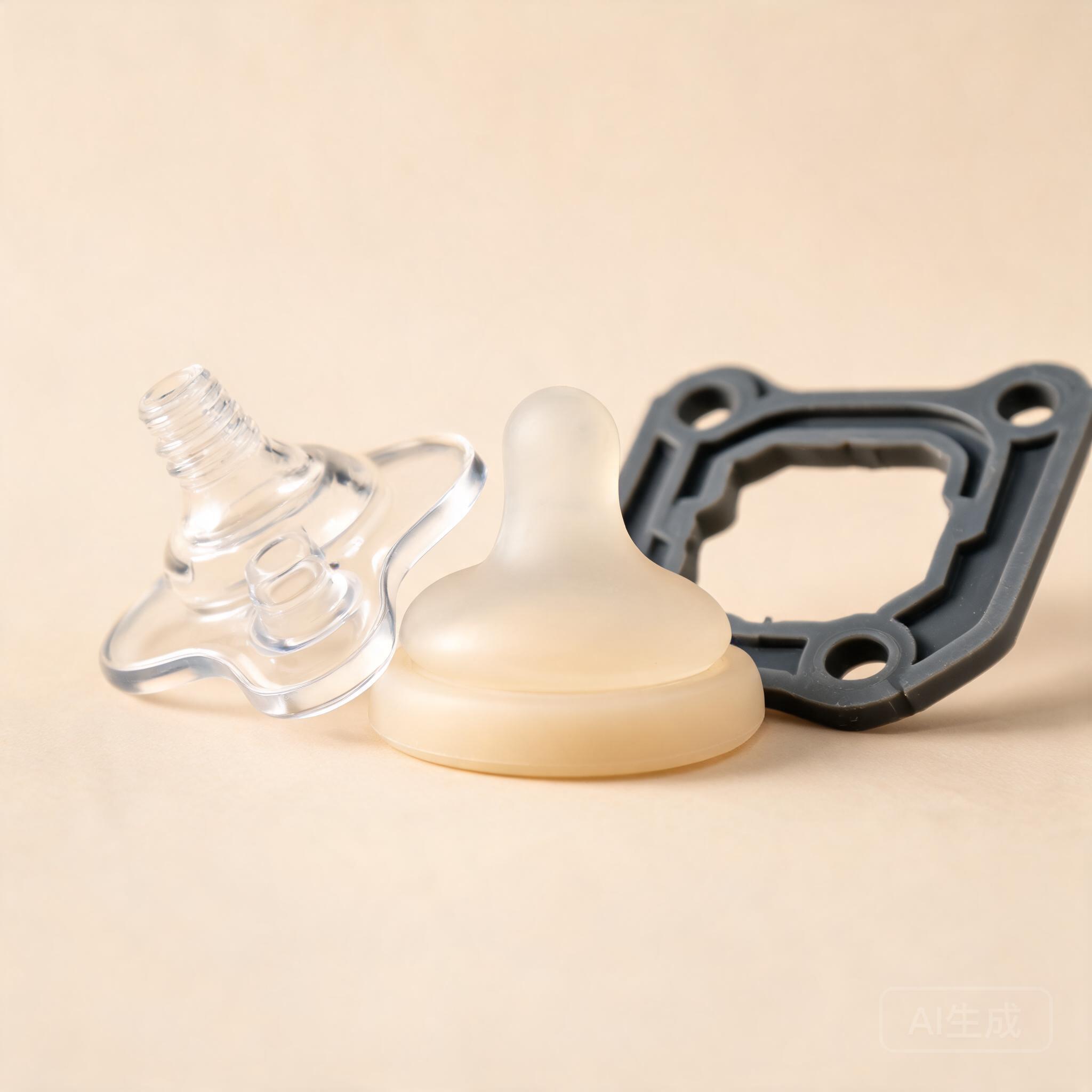
Liquid Silicone Rubber (LSR)10–80-40°C to 200°CBiocompatible, low compression set, high transparencyMedical devices, baby products, food contact seals
Solid Silicone Rubber20–90-50°C to 230°CWeather-resistant, insulationAutomotive gaskets, industrial insulators
Nitrile Rubber (NBR)30–90-30°C to 120°COil and fuel resistantHydraulic seals, fuel system components
Fluorocarbon Rubber (FKM/Viton)60–90-20°C to 250°CChemical and high heat resistantAerospace seals, chemical processing parts
Ethylene Propylene Diene Monomer (EPDM)40–90-40°C to 150°CUV and ozone resistantOutdoor weather seals, window gaskets
Neoprene (CR)40–85-35°C to 120°CFlame retardant, adhesiveVibration isolation pads, electrical enclosures
Unlike many large coastal molding facilities that only process bulk orders of standard materials, local Hubei factories support custom material formulations for specialized use cases, such as static-dissipative rubber for electronics, food-grade additive-free LSR, or high-strength reinforced rubber for heavy industrial components. All materials are sourced from national and international certified suppliers (including Dow Corning, Wacker Chemie, and Sinopec) and come with full material traceability documentation for regulated industries.
In-House Precision Tooling for Custom Molding
The biggest barrier to small-batch custom rubber parts has traditionally been high upfront tooling costs and long lead times for mold manufacturing. Hubei local factories resolve this by maintaining fully in-house tooling design and fabrication departments, cutting mold lead times from 2–3 weeks (common with outsourced tooling) to 3–7 working days for most simple to moderately complex parts.
Key tooling capabilities include:
- Aluminum prototype tooling for small batches: For orders of 3 to 5,000 parts, aluminum molds provide a cost-effective alternative to P20 steel tooling, reducing upfront tooling costs by 40–60% while still delivering sufficient durability for small production runs.
- CNC 5-axis milling for complex geometries: Local factories operate 5-axis CNC machining centers capable of producing molds with tolerances as tight as ±0.02 mm for intricate parts such as medical LSR catheters, micro connector seals, and multi-cavity gaskets.
- Smooth surface finishing for optical and aesthetic parts: In-house polishing and texturing capabilities produce surface finishes ranging from Ra 0.1 μm for transparent optical LSR parts to custom textured finishes for consumer product handles.
For design engineers working on iterative prototype development, local tooling teams can make design adjustments to existing molds in 1–2 days, compared to the 1–2 week turnaround required when working with distant factories, drastically speeding up product development cycles.
Key Advantages of Local Hubei Production for Small-Batch Projects
The core value proposition of Hubei’s local custom rubber molding ecosystem is tailored to the needs of small-batch buyers, who are often underserved by large-scale molding operations focused on mass production. The most impactful benefits include low MOQ starting at 3 pieces, reduced logistics and communication costs, and faster response times for design changes and quality issues.
Low Minimum Order Quantity Starting at 3 Units
Unlike coastal mass production factories that typically require MOQs of 10,000+ units for custom molded rubber parts, Hubei local factories support custom orders starting at just 3 pieces, filling a critical gap in the market for:
- Prototype validation during new product development
- Replacement parts for legacy industrial equipment
- Small-batch production of niche medical devices
- Custom aftermarket automotive components
- Low-volume consumer product launches
The operational structure that enables this low MOQ is based on flexible production scheduling. Local Hubei factories reserve 15–20% of their weekly production capacity specifically for small-batch orders under 5,000 units, eliminating the need to wait weeks for open production slots. Table 2 compares the key order terms between Hubei local factories and traditional coastal mass producers:
Order ParameterHubei Local Custom FactoryTraditional Coastal Mass Producer
Minimum Order Quantity3 pieces10,000+ pieces
Upfront Tooling Cost (for 50x50x20 mm part)¥1,500–¥4,000 (aluminum prototype mold)¥8,000–¥15,000 (steel production mold)
Lead Time (after mold approval)2–5 working days15–30 working days
Design Change Cost (minor mold adjustment)¥200–¥500¥2,000+
This structure means that product development teams only pay for the parts they need during prototyping, reducing upfront R&D costs by 70–80% compared to meeting high MOQ requirements from large factories. For small businesses and startups operating with limited working capital, this low barrier to entry is transformative.
Reduced Logistics and Communication Friction
Working with a local factory eliminates the geographic friction that plagues long-distance supply chains, with tangible cost and time savings:
- Reduced shipping costs and lead times: For customers based in Hubei and surrounding central provinces (Henan, Hunan, Jiangxi, Shanxi), local delivery can be completed in 1–2 days via road freight, with shipping costs 50–70% lower than cross-country shipping from coastal regions. For urgent orders, same-day local pickup is available for most orders.
- On-site collaboration and inspection: Product engineers and quality managers can visit the factory for design reviews, mold testing, and pre-shipment inspections in a single day, eliminating the need for costly and time-consuming travel to coastal regions. For complex parts with tight tolerance requirements, on-site collaboration reduces miscommunication between design teams and production teams by an estimated 60% according to internal data from leading Hubei molding facilities.
- Real-time issue resolution: If a quality issue or design adjustment is required, local teams can respond within 24 hours, compared to 3–7 day response times for distant factories working across different time zones and regional communication workflows.
For example, a Wuhan-based industrial automation company developing a new robotic gripper needed 12 custom LSR suction cups with a custom durometer and geometric profile. Working with a local Hubei factory allowed their engineering team to review the first-article parts on-site the day after mold completion, make a minor design adjustment to the suction lip, and receive full production 3 days later – a process that would have taken 2+ weeks with a coastal supplier.
Industry Applications Served by Hubei Local Custom Molding
Hubei’s local custom rubber molding factories serve a diverse range of industries, leveraging their small-batch flexibility and local proximity to meet unique regional demand. The most common high-growth application areas are automotive aftermarket and new energy, medical devices and health products, and industrial equipment manufacturing.
Automotive Aftermarket and New Energy Components
Hubei is a major national automotive manufacturing hub, home to leading OEMs including Dongfeng Motor, SAIC-GM-Wuling, and multiple new energy vehicle (NEV) startups. Local custom rubber molding factories support both the OEM supply chain and the large regional aftermarket with custom small-batch parts:
- Aftermarket replacement gaskets, seals, and rubber bushings for legacy vehicle models that no longer have mass production tooling
- Custom vibration isolation pads and battery seals for NEV prototype development
- Custom wiring harness grommets and connector seals for automotive modification shops
- Thermal insulation rubber components for battery management systems
For NEV startup companies based in Hubei that are developing new prototype platforms, local custom molding allows them to order 10–100 sets of rubber seals and gaskets for validation testing without meeting the high MOQ requirements of large tier 1 suppliers. This reduces prototype development costs by up to 60% and cuts lead times from an average of 21 days to 5 days.
Medical Devices and Health Product Prototyping
The medical device industry relies heavily on small-batch custom LSR components during product development and for low-volume specialized medical devices. Hubei local factories maintain ISO 13485 quality management system certification and Class 100,000 clean rooms for molding medical-grade LSR, supporting:
- Custom silicone gaskets and seals for diagnostic equipment
- Prototype LSR components for wearable health monitors
- Custom silicone patient interface parts for respiratory devices
- Low-volume production of specialized orthopedic and prosthetic silicone components
With local production, medical device development teams based at Wuhan’s universities and research institutions can work directly with process engineers to refine LSR part designs, with full material traceability and biocompatibility testing documentation for FDA and NMPA regulatory submissions. The ability to order small batches starting at 3 units allows research teams to test multiple design iterations without tying up capital in excess inventory.
Industrial Automation and Equipment Manufacturing
Central China is a fast-growing hub for industrial automation and heavy equipment manufacturing, with demand for a wide range of custom rubber components for specialized machinery. Local Hubei factories support this demand with small-batch custom parts including:
- Custom vibration isolation mounts for CNC machine tools and industrial robots
- Oil-resistant seals and gaskets for hydraulic and pneumatic systems
- Custom rubber rollers and gripper pads for conveyor systems and packaging machinery
- Insulation rubber components for electrical control cabinets
For small and medium-sized industrial equipment manufacturers that produce custom machinery in small batches, local custom rubber molding eliminates the need to hold large inventories of common rubber parts, reducing inventory carrying costs and allowing for just-in-time production of specialized equipment.
Quality Assurance and Compliance Standards
Leading Hubei local custom rubber molding factories maintain national and international quality standards, matching the compliance levels of large coastal suppliers while offering greater flexibility for small-batch orders. Key quality control processes include:
- Incoming material inspection: Every batch of raw rubber is tested for hardness, tensile strength, elongation at break, and purity before molding, with material test reports provided on request.
- First-article inspection (FAI): For every new mold, the first 1–5 parts are inspected for dimensional accuracy using coordinate measuring machines (CMM) and micrometers, with FAI reports provided to customers before full production.
- In-process quality checks: Every 100 parts are checked for dimensional consistency and surface defects during production to catch process drift early.
- **Final inspection: All parts undergo 100% visual inspection and random dimensional inspection before shipping, with custom non-destructive testing (leak testing, compression set testing) available for critical applications.
For regulated industries, local factories can provide full documentation including material safety data sheets (MSDS), RoHS compliance reports, FDA 21 CFR Part 177.2600 food contact certification, and ISO 10993 biocompatibility testing for medical-grade LSR.
Conclusion
For product designers, small manufacturers, and R&D teams across China, custom molded rubber parts no longer require sourcing from distant coastal factories with prohibitive MOQ requirements. Hubei’s local custom rubber molding ecosystem offers end-to-end technical capabilities, from precision in-house tooling to a full portfolio of certified rubber materials, with the unique advantage of supporting small-batch orders starting at just 3 pieces.
The combination of low upfront costs, fast lead times, reduced communication friction, on-site collaboration opportunities, and competitive pricing makes local Hubei production an ideal choice for prototyping, low-volume production, replacement parts, and niche product launches. As central China continues to grow as a manufacturing hub for automotive, medical device, and industrial automation, local custom rubber molding factories are well-positioned to serve the evolving needs of small-batch buyers, delivering the quality and flexibility that distant mass producers cannot match. When you need custom molded rubber parts, there is no need to source far from home: Hubei’s local factories combine technical depth, small-batch accessibility, and regional proximity to deliver a better sourcing experience for all types of custom rubber projects.