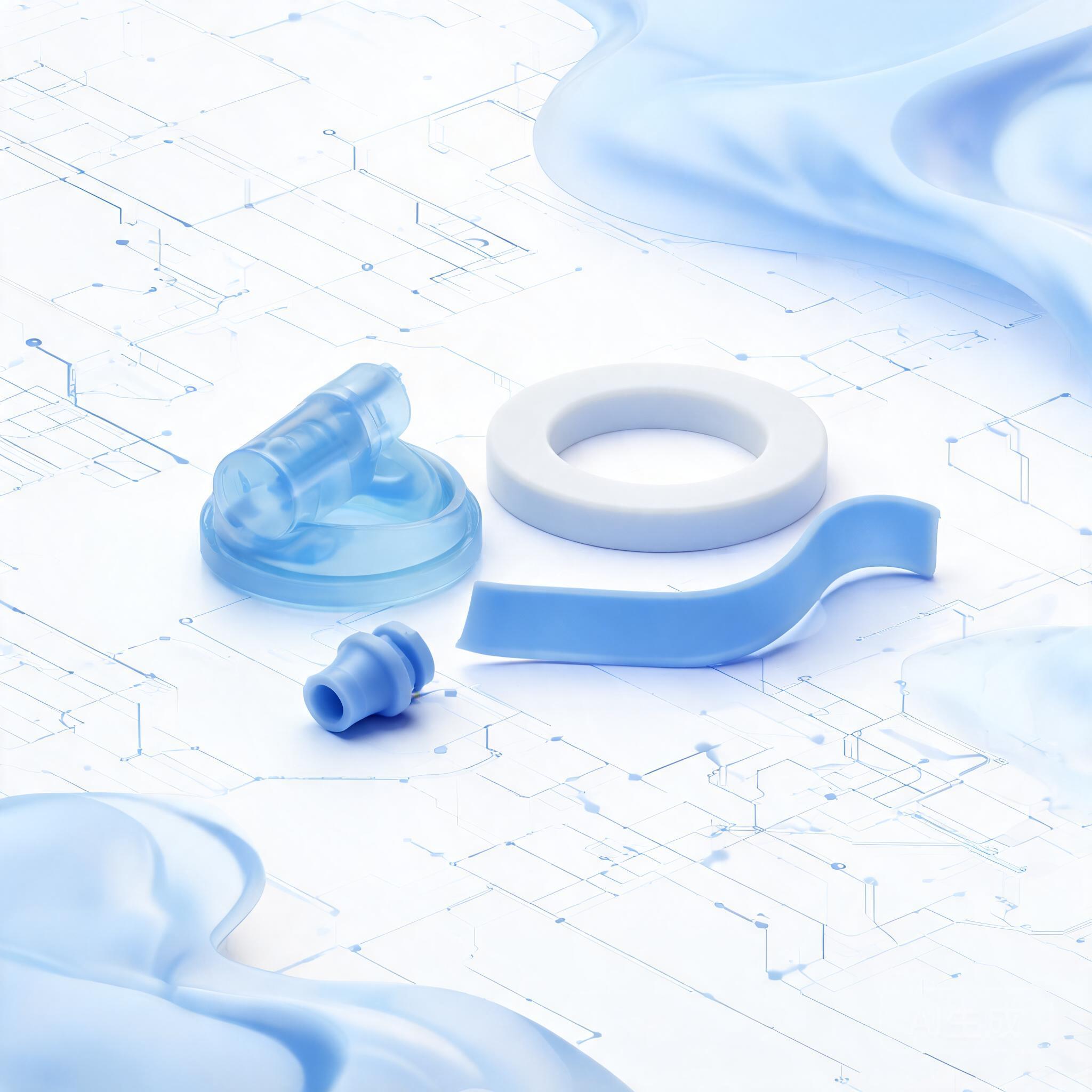
Core Material Specifications for Medical and Food Grade Silicone Components
The foundational performance of custom silicone parts depends entirely on compliance with global regulatory standards and material formulation properties. Manufacturers must prioritize material traceability and consistent formulation to meet the stringent requirements of healthcare and food contact applications.
Regulatory Compliance Frameworks for End-Use Industries
Medical and food grade silicones are subject to distinct, region-specific regulatory mandates that govern every stage of production, from raw material sourcing to final product release. Non-compliance can lead to product recalls, regulatory penalties, and significant risks to end-user safety.
For medical silicone parts, the primary global standards include:
- ISO 10993 (Biological Evaluation of Medical Devices): A series of tests assessing biocompatibility, including cytotoxicity, sensitization, irritation or intracutaneous reactivity, systemic toxicity, and hemocompatibility for parts that contact blood. Class III implantable devices require additional testing for subchronic and chronic toxicity, as well as carcinogenicity.
- FDA 21 CFR Part 177.2600: U.S. Food and Drug Administration (FDA) regulation for rubber articles intended for repeated use in contact with food, which also applies to non-implantable medical devices that contact skin or bodily fluids for less than 30 days.
- USP Class VI: The most stringent biocompatibility classification for plastics and silicones used in medical applications, requiring passing tests for systemic toxicity, intracutaneous reactivity, and implantation toxicity over a 120-hour period.
- EU MDR (Medical Device Regulation 2017/745): Replaces the older Medical Device Directive (MDD) and requires manufacturers to provide full traceability of materials, clinical evaluation data, and post-market surveillance reports for all medical silicone components.
For food grade silicone components, key standards include:
- FDA 21 CFR Part 177.2600: Specifies maximum allowable extractable levels (n-hexane extractives ≤ 0.5% by weight, water extractives ≤ 0.15%) for silicone materials in repeated food contact.
- EU Regulation 10/2011: Governs plastic materials and articles intended to come into contact with food, requiring migration testing for specific simulants (water, 3% acetic acid, 10% ethanol, and olive oil) at temperatures matching end-use conditions. Total migration limits are set at ≤ 10 mg/dm² of contact surface area.
- LFGB (German Food and Feed Code) Section 30/31: A stricter European standard that requires additional testing for volatile organic compounds (VOCs) and sensory properties (taste and odor transfer) to ensure no impact on food quality.
Table 1: Key Compliance Requirements by Application
Application CategoryRequired StandardsTypical Test ParametersPass Threshold
Short-term medical contact (<24h)FDA 21 CFR 177.2600, ISO 10993-5, ISO 10993-10Cytotoxicity, skin irritationNon-cytotoxic (cell viability ≥ 90%), no irritation
Implantable medical (>30 days)USP Class VI, ISO 10993 series (all parts), EU MDR Annex XIVHemolysis rate, 120-day implantation toxicityHemolysis rate < 2%, no tissue inflammation
General food contactFDA 21 CFR 177.2600, EU 10/2011Total migration, n-hexane extractivesTotal migration ≤10 mg/dm², n-hexane extractives ≤0.5%
High-temperature food contact (e.g., baking mats, baby bottle nipples)LFGB Section 30/31, FDA 21 CFR 177.2600Volatile organic compound (VOC) emissions, taste/odor transferVOC ≤ 0.1%, no detectable taste transfer
Material Grade Selection Criteria
Selecting the right silicone formulation is critical to balancing performance, regulatory compliance, and cost. Medical and food grade silicones are available in liquid silicone rubber (LSR) and high-consistency rubber (HCR) forms, each with distinct advantages for different manufacturing processes and end-use cases.
LSR is the most common choice for high-volume, precision custom parts, due to its low viscosity during molding, fast cure times, and consistent mechanical properties. Key properties to specify when selecting LSR include:
- Shore Hardness: Ranges from 10 Shore A (ultra-soft, for wound dressings, baby pacifiers) to 80 Shore A (rigid, for surgical instrument handles, food processing equipment seals). For applications requiring flexibility and tear resistance, a 30–50 Shore A grade is typically preferred.
- Temperature Resistance: Standard medical/food grade LSR operates between -60°C and 200°C continuously, with special grades available for autoclaving (up to 230°C for 100+ sterilization cycles) or low-temperature freezer applications (-80°C for cryogenic storage seals).
- Mechanical Properties: Typical tensile strength for medical LSR ranges from 5–12 MPa, elongation at break from 300–700%, and tear resistance from 15–50 kN/m. For dynamic applications such as peristaltic pump tubing, high tear resistance (>30 kN/m) and low compression set (<20% after 72h at 100°C) are mandatory.
- Special Formulations: Self-lubricating LSR grades reduce friction for sliding components (e.g., syringe plunger seals), while antimicrobial LSR with silver ion additives inhibits bacterial growth for medical devices and food contact surfaces that require frequent cleaning.
HCR is used for larger parts or low-volume production runs, such as custom gaskets for industrial food processing equipment or large medical device enclosures. It offers similar biocompatibility to LSR but has longer cure times and lower dimensional precision, making it unsuitable for micro-components with tight tolerances.
Custom Manufacturing Processes for Precision Silicone Parts
The choice of manufacturing process directly impacts part quality, dimensional accuracy, production cost, and lead time. Experienced manufacturers select processes based on part complexity, volume requirements, and material specifications.
Injection Molding for High-Volume Precision Components
Liquid Silicone Rubber (LSR) injection molding is the gold standard for high-volume production of custom medical and food grade parts with tight tolerances. The process uses a two-component liquid silicone (Part A: base polymer with platinum catalyst; Part B: crosslinking agent) that is mixed in a 1:1 ratio, injected into a heated mold, and cured at 120–180°C in 10–90 seconds, depending on part thickness.
Key advantages of LSR injection molding include:
- High Dimensional Precision: Capable of holding tolerances as tight as ±0.02 mm for micro-components (e.g., micro-valve seals for insulin pumps, catheter connectors) and ±0.1 mm for larger parts up to 300 mm in size.
- High Production Efficiency: Cycle times are 5–10x faster than HCR compression molding, with multi-cavity molds (up to 128 cavities for small parts such as syringe gaskets) enabling production volumes of 100,000+ units per week.
- Low Waste: The closed injection system generates minimal scrap (≤2% of total material used), reducing material costs for high-grade medical and food silicones.
To ensure part consistency, manufacturers implement process controls including:
- In-line material mixing ratio monitoring (accuracy ±0.1%) to prevent under-curing or inconsistent mechanical properties
- Mold temperature control (±1°C) across all cavities to ensure uniform cure
- Real-time injection pressure and volume monitoring to detect short shots or flash
For parts requiring overmolding onto rigid substrates (e.g., silicone grips on surgical instruments, silicone seals on plastic food container lids), two-shot injection molding is used. This process injects the rigid substrate (polypropylene, polycarbonate, or stainless steel) in the first shot, then injects LSR onto the substrate in the second shot, creating a permanent bond without adhesives. Adhesion strength between LSR and rigid substrates typically exceeds 3 MPa, eliminating delamination risks in dynamic or high-temperature applications.
Compression and Transfer Molding for Low-Volume, Large Format Parts
Compression molding is ideal for low-volume production (10–10,000 units) of large, thick silicone parts where LSR injection molding would require prohibitively expensive tooling. The process involves placing a pre-measured HCR blank into a heated mold, compressing it with a hydraulic press at 150–180°C, and curing for 5–30 minutes, depending on part thickness.
Transfer molding is a hybrid process that combines elements of compression and injection molding: HCR is forced into a closed mold cavity through a sprue, resulting in better dimensional accuracy and less flash than compression molding. It is commonly used for medium-volume production (1,000–50,000 units) of parts with complex internal features, such as food processing pump diaphragms or medical device seals.
Tooling costs for compression and transfer molding are 50–70% lower than LSR injection molding, making them cost-effective for prototype runs or low-volume custom parts. However, cycle times are significantly longer, and tolerances are wider (±0.1 mm for small parts, ±0.5 mm for parts larger than 200 mm).
Post-Processing and Quality Validation
Even with optimal molding processes, custom silicone parts require post-processing to meet regulatory and performance requirements. Standard post-processing steps include:
- Deflashing: Removing excess silicone from part edges, either manually (for low-volume parts) or via cryogenic deflashing (for high-volume parts, where parts are cooled to -120°C with liquid nitrogen and tumbled to remove brittle flash without damaging part surfaces). Cryogenic deflashing reduces labor costs by 80% compared to manual deflashing and ensures consistent edge quality.
- Post-Curing: Heating parts in a forced-air oven at 200°C for 2–4 hours to remove residual crosslinking agents and volatile organic compounds (VOCs). Post-curing is mandatory for medical and food grade parts, as it reduces extractable levels by up to 90% to meet FDA and EU migration limits. For USP Class VI parts, post-curing is extended to 8 hours at 200°C to ensure full biocompatibility.
- Surface Treatment: For parts requiring low friction or non-stick properties, plasma coating or fluorination treatment can reduce surface energy from 22 mN/m to <10 mN/m, preventing adhesion of biological fluids or food residues. Antimicrobial coating with silver or copper ions is also available for medical parts that require resistance to bacterial colonization.
Quality validation for every production batch includes:
- Dimensional inspection using coordinate measuring machines (CMM) or optical scanners (accuracy ±0.005 mm) to verify compliance with tolerance specifications
- Material property testing (tensile strength, elongation, tear resistance, compression set) to ensure consistency with formulation specifications
- Extractable and leachable testing for high-risk parts, conducted by third-party accredited laboratories to confirm compliance with FDA and EU standards
- Lot traceability documentation, including raw material batch numbers, production process parameters, and test results, stored for a minimum of 10 years for medical devices and 5 years for food contact parts.
Critical Considerations When Selecting a Custom Silicone Manufacturer
Choosing the right manufacturer is critical to avoiding production delays, non-compliance issues, and product failures. The ideal partner combines technical expertise, regulatory compliance capabilities, and end-to-end supply chain transparency.
Certifications and In-House Capabilities
The first step in evaluating a manufacturer is verifying their core certifications, which demonstrate their ability to meet industry-specific quality and regulatory requirements:
- ISO 13485: The mandatory quality management system standard for medical device manufacturers, requiring strict process controls, traceability, and risk management throughout the product lifecycle. Manufacturers without ISO 13485 certification cannot legally supply components for Class II or III medical devices in most global markets.
- ISO 22000 or FSSC 22000: Food safety management system certifications that ensure compliance with HACCP (Hazard Analysis and Critical Control Point) principles for food contact components.
- ISO 9001: General quality management system certification for non-regulated components.
- Cleanroom Production Capabilities: For medical parts that require low bioburden or are intended for sterile packaging, manufacturers must operate ISO Class 7 (10,000 particles per cubic foot) or ISO Class 8 (100,000 particles per cubic foot) cleanrooms. Class 7 cleanrooms are required for implantable components and parts that contact sterile bodily fluids, while Class 8 is sufficient for most non-implantable medical and food contact parts.
- In-House Tooling Shop: Manufacturers with in-house mold design and fabrication capabilities can reduce tooling lead times by 30–50% (from 4–6 weeks to 2–3 weeks for LSR molds) and make rapid design iterations during prototype development. They also have better control over mold quality, reducing the risk of part defects from poorly maintained or low-quality molds.
- In-House Testing Laboratory: A fully equipped testing lab with biocompatibility testing, material analysis, and performance testing capabilities allows manufacturers to validate parts faster and resolve quality issues more efficiently than relying on third-party labs.
Design for Manufacturing (DFM) Support and Prototyping
Effective DFM support is critical to reducing production costs, improving part quality, and shortening time-to-market. Experienced manufacturers provide free DFM analysis during the design phase to identify potential issues before tooling is produced, including:
- Undercuts that require complex side actions or manual demolding, increasing production costs
- Wall thickness variations that can cause sink marks, warping, or inconsistent curing
- Tolerance specifications that are unnecessarily tight, increasing tooling and production costs without improving part performance
- Material selection recommendations to optimize performance and cost for specific end-use cases
For prototype development, manufacturers should offer multiple low-cost options:
- 3D Printed Silicone Prototypes: For low-fidelity form and fit testing, 3D printed silicone parts can be produced in 1–3 days, with properties matching 70–80% of production-grade LSR. They are not suitable for functional or regulatory testing, but allow for rapid design iterations.
- Prototype Tooling: Soft aluminum or P20 steel molds can be produced in 1–2 weeks for low-volume prototype runs (10–1,000 units) using production-grade material. These parts are suitable for functional testing, biocompatibility testing, and regulatory submission.
- Pilot Production Runs: For product launches, manufacturers should offer pilot runs of 1,000–10,000 units to validate production processes before full-scale manufacturing, reducing the risk of large-scale defects.
Table 2: Prototype Option Comparison
Prototype TypeLead TimeCostMaterial GradeUse Case
3D Printed Silicone1–3 days$50–$200 per partNon-medical gradeForm/fit testing, design validation
Soft Aluminum Prototype Mold1–2 weeks$1,000–$5,000Production-grade medical/food LSRFunctional testing, regulatory submission, small batch production
P20 Steel Production Mold3–6 weeks$5,000–$50,000Production-grade medical/food LSRFull-scale production, 100,000+ unit lifecycle
Supply Chain Resilience and Transparency
Global supply chain disruptions have highlighted the importance of working with manufacturers with robust supply chain management practices. Key factors to evaluate include:
- Raw Material Inventory: Manufacturers that maintain 3–6 months of safety stock for common medical and food grade silicone grades can avoid production delays caused by raw material shortages.
- Dual Sourcing of Raw Materials: Partnering with multiple silicone suppliers (e.g., Dow, Wacker, Momentive) reduces the risk of production shutdowns due to supply issues with a single supplier.
- End-to-End Traceability: Manufacturers should provide full traceability for every batch of parts, from raw material batch numbers and supplier certifications to production process parameters and final test reports. For medical devices, this traceability must comply with Unique Device Identification (UDI) requirements in the U.S. and EU.
- Sustainability Practices: For brands prioritizing environmental responsibility, manufacturers should offer post-industrial and post-consumer recycled silicone options, as well as waste reduction programs that recycle up to 90% of production scrap. Energy-efficient production processes (e.g., solar-powered manufacturing facilities, heat recovery from molding machines) also reduce the carbon footprint of custom parts.
Conclusion
Custom medical silicone parts and food grade silicone components are critical to the safety and performance of healthcare and food industry products, requiring strict adherence to regulatory standards, material consistency, and manufacturing precision. Selecting a manufacturer with deep expertise in LSR and HCR processing, relevant industry certifications, in-house tooling and testing capabilities, and a commitment to supply chain transparency is essential to mitigating risk and ensuring long-term product success.
By prioritizing material compliance, design for manufacturing optimization, and rigorous quality validation, manufacturers can deliver custom parts that meet the most stringent performance requirements, reduce total production costs, and shorten time-to-market for new products. As regulatory requirements continue to evolve globally, working with a partner that stays current with changing standards and invests in continuous process improvement will provide a competitive advantage for brands in the medical and food sectors.