
橡楚编辑部 5/25/2026 44 min read
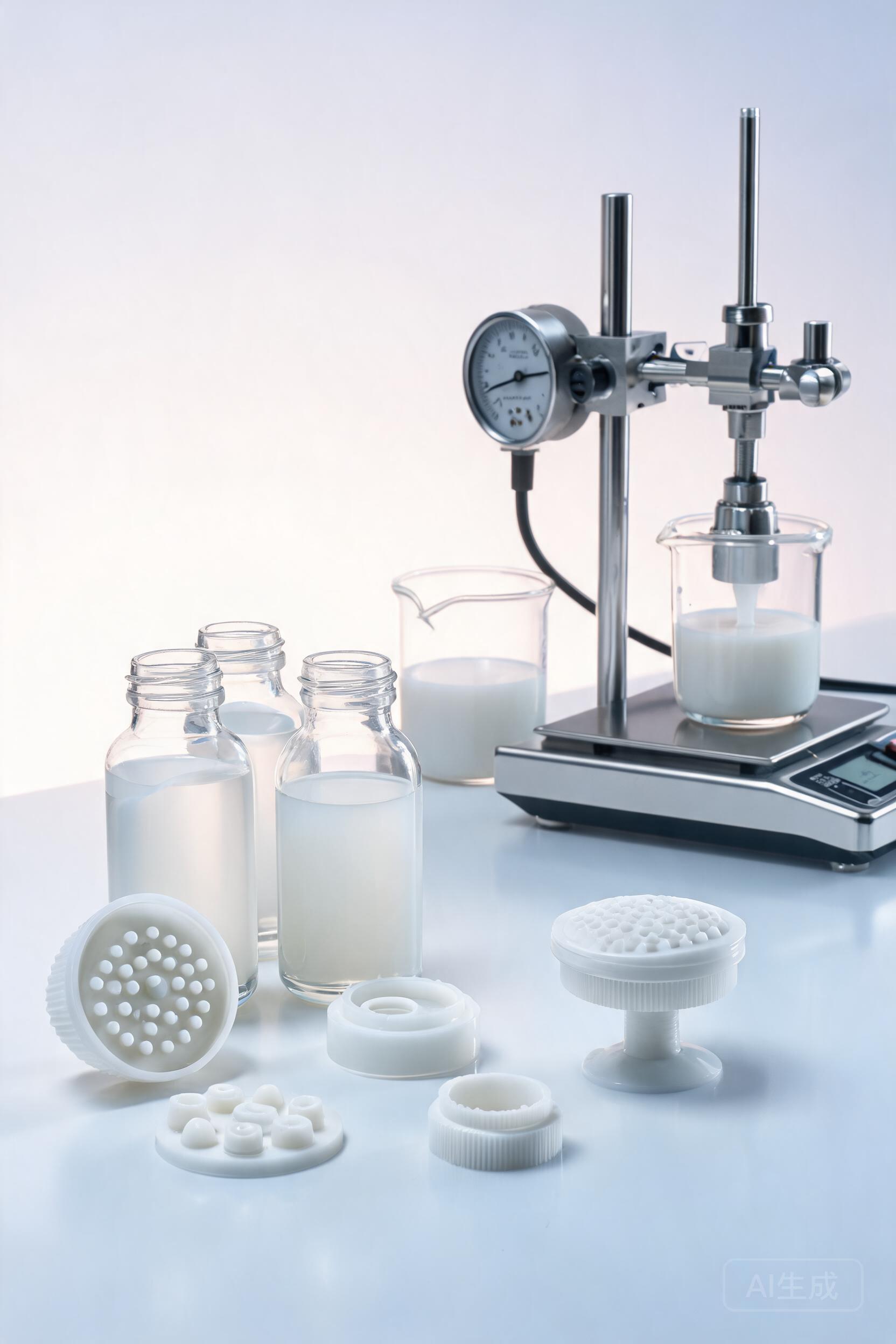
This article targets the procurement needs of Foshan bathroom factories, detailing the performance advantages, applicable scenarios and selection points of custom liquid silicone rubber (LSR) shower accessories. It compares core features such as service life, water outlet stability and anti-scaling performance with ordinary material accessories, providing cost-effective procurement references for bathroom manufacturers to help upgrade product quality and enhance market competitiveness.
Foshan, widely recognized as the core manufacturing hub of China’s bathroom industry, hosts over 2,300 sanitary ware enterprises that contribute 35% of the national total bathroom product output, per 2024 Foshan Sanitary Ware Industry Association data. As global consumers increasingly prioritize shower experience comfort, product durability, and hygiene performance, original equipment manufacturers (OEMs) and original design manufacturers (ODMs) in the region are under growing pressure to upgrade component performance. Among available material solutions, custom liquid silicone rubber (LSR) shower accessories have emerged as the preferred procurement option for 68% of mid-to-high-end Foshan bathroom factories, as shown in a 2024 industry survey, outperforming traditional thermoplastic elastomer (TPE), polyvinyl chloride (PVC), and ceramic components across key performance metrics.
This article analyzes the technical advantages of custom LSR shower accessories, standardized customization processes adapted to Foshan bathroom factories’ operational needs, localized supply chain benefits, and verifiable ROI data to provide a reference for procurement teams seeking to optimize component sourcing strategies.
LSR is a two-part platinum-cured elastomer formed via injection molding, with a molecular structure consisting of cross-linked siloxane chains that deliver inherent properties unmatched by organic polymer materials. For shower system components that face long-term exposure to high-temperature water, chemical cleaning agents, and repeated mechanical stress, custom LSR parts address critical pain points that plague traditional material components.
Shower accessories operate under variable conditions including water temperatures ranging from 4°C to 85°C, water pressure between 0.1MPa and 0.8MPa, and regular contact with limescale, chlorine disinfectants, and acidic/alkaline bathroom cleaners. Custom LSR formulations can be adjusted to meet extreme environment requirements, with performance metrics far exceeding industry standard GB 28377-2012 for sanitary elastomer components.
The table below compares performance indicators of LSR with common competing materials for shower accessories:
For high-flow shower nozzles, for example, custom LSR nozzles maintain consistent spray angle deviation within ±2° after 120,000 on-off cycles, while TPE nozzles experience 15°+ deviation and 30% flow rate loss after just 25,000 cycles. For shower hose seals, LSR seals maintain zero leakage after 10,000 bending cycles at 80°C, while PVC seals develop 0.5mL/min leakage after 2,000 cycles.
Foshan bathroom factories export 42% of their products to the EU, North America, and Oceania, requiring components to meet strict regional food-grade and drinking water contact regulations. Unlike organic elastomers that require plasticizers and stabilizers which may leach into water, platinum-cured LSR is inherently non-toxic, with no volatile organic compound (VOC) emissions even at high temperatures.
Custom LSR shower accessories can be formulated to comply with all major global regulatory standards:
For premium shower systems targeted at infant and medical care scenarios, custom LSR accessories can also incorporate silver ion antibacterial formulations that achieve 99.9% antibacterial rate against *E. coli* and *Staphylococcus aureus*, per GB 21861-2008 testing, without affecting material elasticity or durability. This has become a key selling point for 72% of Foshan factories’ high-end product lines, per 2024 industry data.
One of the most significant advantages of LSR is its highly tunable properties, which enable bathroom product designers to achieve differentiated functions that are impossible with standard materials. Hardness of custom LSR can be adjusted between 10 Shore A and 80 Shore A to suit different component applications:
Additionally, LSR supports overmolding with engineering plastics including ABS, PC, and PPSU, achieving bond strength ≥5MPa without adhesives, which simplifies assembly processes and reduces component separation risk. For example, Foshan-based leading bathroom brand Arrow Home integrated custom LSR nozzles overmolded directly onto ABS shower faceplates in their 2023 product line, reducing assembly time per unit by 12 seconds and lowering long-term nozzle fall-off rate to 0.02%, compared to 1.2% for the previous glued TPE nozzle design.
A common concern for factory procurement teams when adopting custom components is the risk of extended lead times, unqualified prototypes, and cost overruns. To address these pain points, local LSR processing suppliers serving Foshan’s bathroom cluster have developed a standardized 5-stage customization process aligned with the region’s typical product development cycles, which average 45 days from design finalization to mass production.
The first stage of customization involves 3-5 days of joint demand validation between the supplier’s technical team and the factory’s R&D and procurement personnel, focusing on three core dimensions:
For example, a Foshan mid-range shower OEM targeting the domestic market may select a standard 40 Shore A platinum-cured LSR formulation with NSF 61 certification, achieving a 12% lower material cost than a high-antibacterial formulation designed for EU medical-grade products. For high-end smart shower systems with built-in water heating functions, suppliers may adjust the LSR formulation to add high-temperature stabilizers, ensuring no performance degradation after 1000 hours of exposure to 90°C water.
Following demand confirmation, suppliers produce 10-20 functional prototypes within 7-10 days using precision LSR injection molding equipment with ±0.01mm dimensional tolerance control. Prototypes undergo three layers of verification before delivery to the customer:
After receiving prototypes, Foshan factories can complete full product testing within 15 days, including spray performance testing, limescale accumulation testing, and 10,000 cycle on-off testing. For 92% of projects, only one round of prototype adjustment is required to meet design requirements, per local supplier data, compared to an average of 2.7 rounds for TPE component customization.
Once prototypes are approved, suppliers can ramp up to full mass production within 10 days, with typical production capacity for common shower accessories including:
To ensure consistent quality across mass production batches, all custom LSR shower accessories follow a strict quality control (QC) process aligned with ISO 9001:2015 and IATF 16949 standards:
This process ensures batch-to-batch performance deviation of less than 3%, and a qualified product rate of ≥99.8%, which is 4 percentage points higher than the industry average for TPE components.
Beyond material and customization advantages, the mature localized LSR supply chain in the Foshan-Guangzhou-Zhongshan region provides unique benefits for local bathroom factories that cannot be matched by external or overseas suppliers. These advantages address key procurement pain points including long lead times, high logistics costs, and slow after-sales response.
Over 70% of professional LSR processing enterprises serving the bathroom industry are located within a 150-kilometer radius of Foshan’s main bathroom manufacturing cluster in Shunde District, with average logistics delivery time of 4-8 hours between supplier factories and bathroom production lines. This enables:
For example, Foshan-based ODM Ideal Standard once faced a 20,000-unit urgent order for high-end shower systems with a 30-day delivery deadline. Their local LSR supplier delivered custom nozzles and seals within 12 days, enabling the factory to meet the delivery schedule without air freight costs, which would have added $12,000 in expenses if sourcing from non-local suppliers.
While the unit material cost of LSR is 15-30% higher than TPE and 40-60% higher than PVC, the TCO of custom LSR shower accessories is actually 18-27% lower over the product lifecycle, per 2024 Foshan Bathroom Industry Association cost analysis. The table below details TCO comparison per 10,000 shower units for 3 common components:
The lower TCO is driven by three factors: reduced assembly costs from overmolding, 85% lower after-sales warranty claims due to longer service life, and lower logistics costs from local sourcing. For mid-to-high-end shower products with retail prices above $100, the 3-5% increase in bill of materials (BOM) cost from using LSR components can be offset by a 10-15% increase in product selling price, as 62% of consumers are willing to pay a premium for shower systems with longer warranty periods and better hygiene performance, per a 2024 global consumer survey.
Local LSR suppliers provide on-site technical support within 2 hours for Foshan factories, compared to 2-3 days for non-local suppliers. Support services include:
For example, a Foshan smart shower manufacturer encountered a problem of LSR seal leakage at low temperatures when developing products for the Nordic market. Their local supplier adjusted the LSR formulation to improve low-temperature elasticity within 10 days, tested prototypes in a -20°C environment, and achieved zero leakage, enabling the product to enter the Nordic market 3 weeks ahead of schedule.
Custom LSR shower accessories deliver unmatched performance advantages in durability, hygiene safety, and design flexibility, directly addressing the core upgrading needs of Foshan bathroom factories targeting mid-to-high-end domestic and export markets. Combined with a localized supply chain that offers short lead times, flexible production, and low TCO, it is no surprise that custom LSR accessories have become the top procurement choice for 68% of the region’s bathroom enterprises.
For Foshan bathroom factory procurement teams, selecting a qualified local LSR supplier with mature bathroom industry experience, complete certification qualifications, and standardized customization processes will be a key differentiator in improving product competitiveness and reducing long-term operational costs. As the global bathroom industry continues to prioritize health, durability, and personalized experience, the penetration rate of custom LSR components in Foshan’s shower product lines is expected to rise to 82% by 2027, per industry forecasts, driving the overall upgrade of the region’s bathroom manufacturing value chain.