
橡楚编辑部 5/29/2026 39 min read

Many domestic rubber product manufacturers want to expand overseas markets but lack professional import and export channels. Hubei Xiangchu provides professional import and export agency services. Relying on its own liquid silicone rubber factory direct supply model, it eliminates intermediate links, helps domestic rubber product manufacturers go global smoothly, reduces going global costs and increases profit margins.
China’s rubber and silicone product manufacturing sector has matured into a global leader over the past two decades, driven by advanced processing infrastructure, rigorous quality control systems, and 15–30% lower production costs compared to North American and European facilities. For international buyers ranging from medical device OEMs to automotive Tier 1 suppliers, sourcing high-quality molded rubber, liquid silicone rubber (LSR), and custom rubber components from China delivers significant margin improvements and supply chain flexibility. However, cross-border sourcing often comes with persistent pain points: misaligned communication between buyers and small-to-mid-sized factories, convoluted customs clearance procedures, unexpected middleman markup that erodes cost savings, and inconsistent quality assurance across unvetted manufacturing partners.
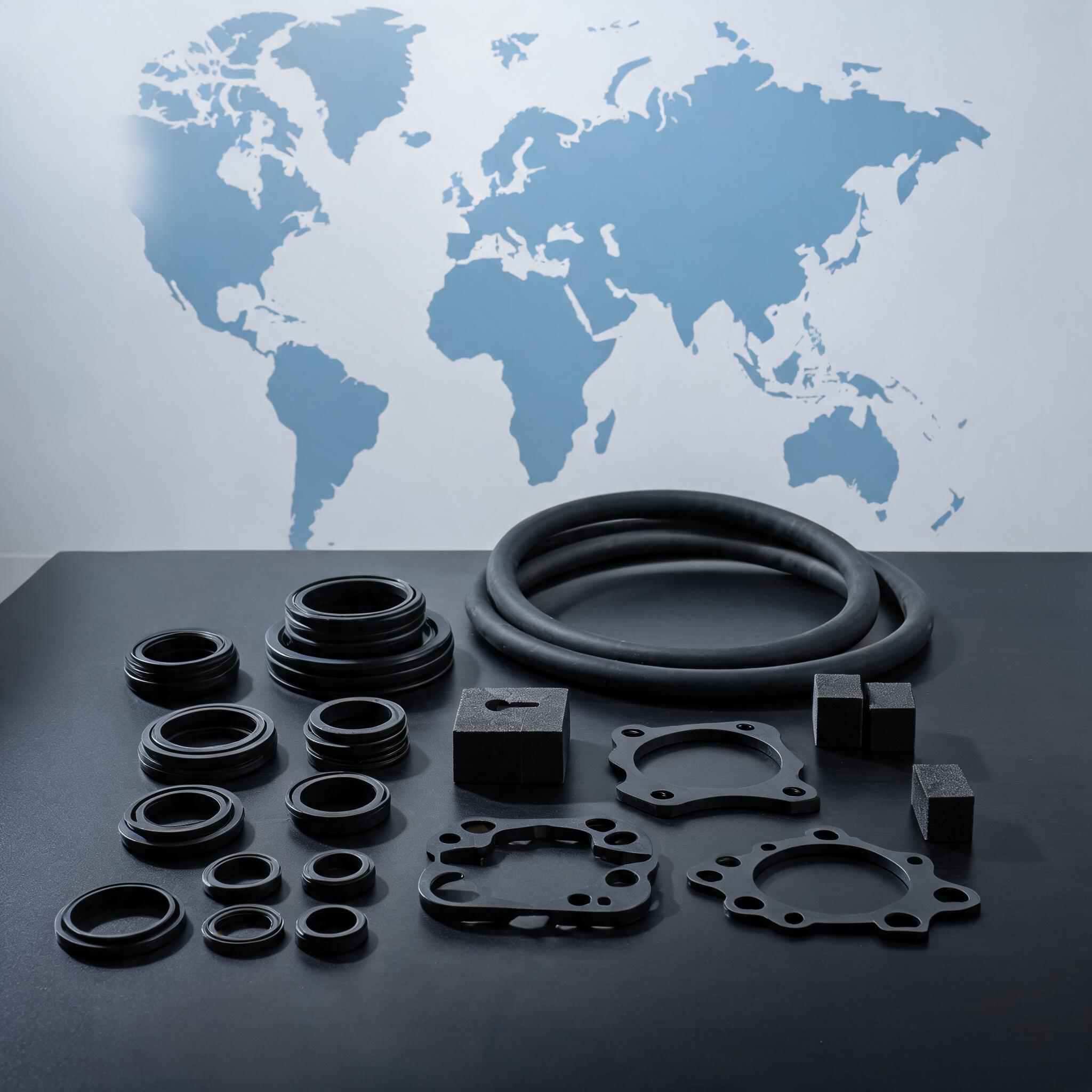
Hubei Xiangchu (橡楚湖北) addresses these gaps as a specialized end-to-end export support provider for Chinese rubber product manufacturers, connecting qualified domestic factories directly to global buyers while managing all logistics, regulatory compliance, and trade documentation. By cutting out redundant intermediary layers and leveraging deep industry expertise in rubber manufacturing standards, Hubei Xiangchu enables international buyers to access factory-direct pricing and consistent product quality, while helping Chinese rubber product producers navigate the complexities of global export markets. This article explores the key challenges in Chinese rubber product export, the value proposition of Hubei Xiangchu’s integrated import and export agency model, and actionable guidance for global buyers looking to source high-quality Chinese rubber products efficiently.
Cross-border trade of rubber products, particularly specialized components for regulated industries like medical, automotive, and aerospace, involves unique barriers that often derail even well-planned sourcing initiatives. These challenges fall into three core categories that affect both Chinese manufacturers and international buyers.
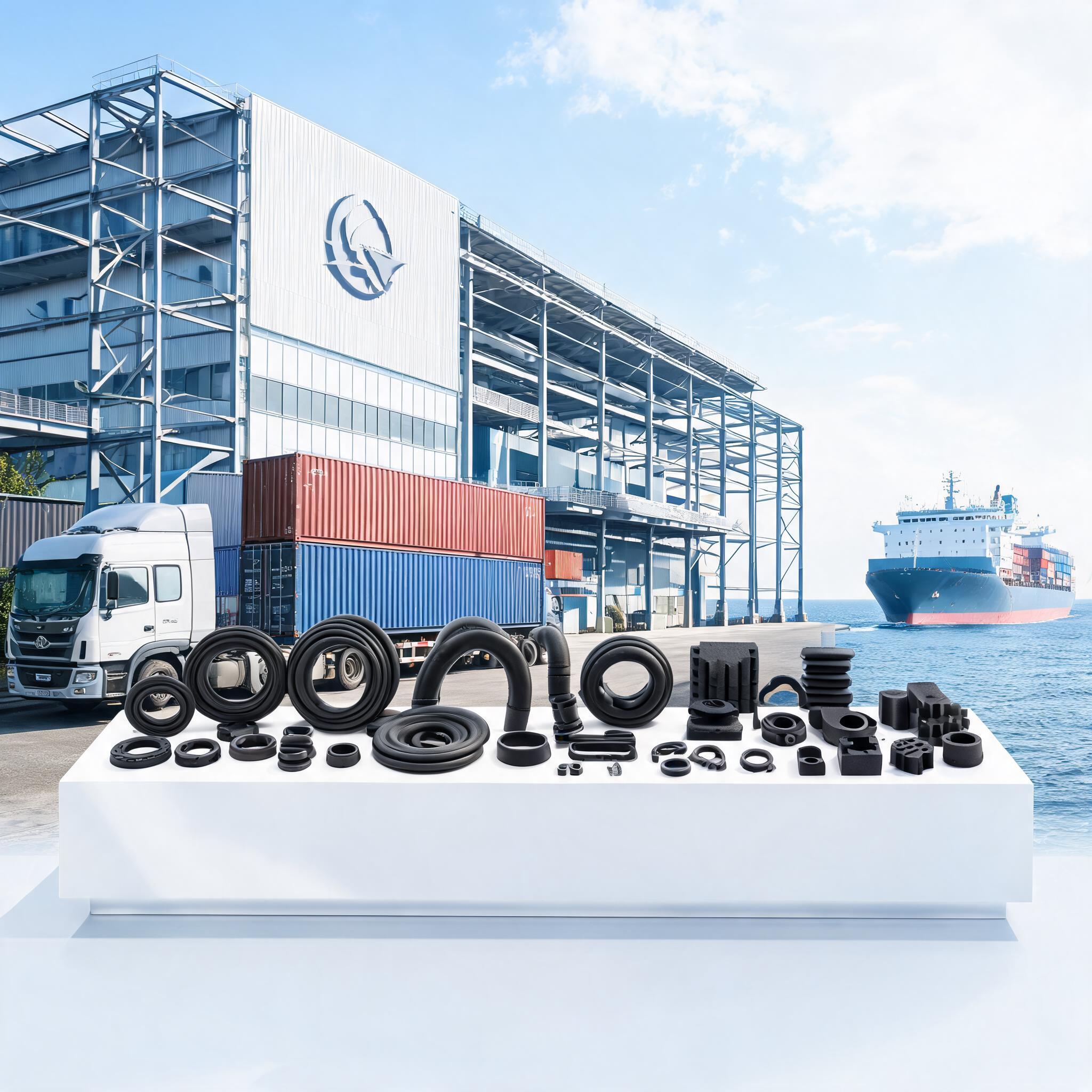
Rubber products sold in major global markets are subject to strict material and testing requirements that vary significantly by region and end-use. For example:
Most small-to-mid-sized Chinese rubber product factories lack in-house trade compliance teams with expertise in these regional regulatory frameworks. Incorrect documentation or unapproved material formulations can lead to customs detentions, product seizures, and costly rejections at the port of entry, resulting in 4–12 weeks of delays and lost revenue for both manufacturers and buyers.
A common supply chain structure for Chinese rubber product exports looks like this: Factory → Regional Trading Agent → International Import Distributor → End Buyer. Each layer adds a markup of 10–25% to the final cost, as shown in the table below for a typical order of 10,000 custom LSR medical gaskets:
This structure adds nearly 32% to the end buyer’s total cost compared to factory-direct sourcing, with no added value in terms of quality control or product customization. Many Chinese factories also lack direct export licensing or international sales capabilities, forcing them to rely on these third-party intermediaries to access global buyers, which further reduces their own profit margins while increasing end buyer costs.
Cultural and language barriers, combined with a lack of industry-specific technical knowledge among generalist trading agents, often lead to misalignment on product specifications. For example, a request for a 50 Shore A durometer LSR seal may be misinterpreted as 50 Shore 00, resulting in a full order of non-conforming product that cannot be used in the end application. Generalist trade agents also rarely conduct in-factory quality audits or in-process testing, relying on factory self-reporting that can miss critical defects related to material composition, dimensional tolerance, or aging resistance.
For global buyers, this means extended lead times to correct quality issues, high rejection rates, and uncertainty around production timelines that can disrupt end-product manufacturing schedules.
Hubei Xiangchu’s value proposition is built on an integrated model that combines export agency services with direct factory matching, cutting out redundant intermediaries while providing end-to-end support for both Chinese manufacturers and international buyers. Unlike generalist trading companies that handle a wide range of commodity goods, Hubei Xiangchu specializes exclusively in the rubber product industry, with in-house technical teams that understand the specific requirements of different product categories and end markets.
Hubei Xiangchu maintains a curated network of over 80 qualified Chinese rubber product manufacturing facilities across Hubei, Guangdong, Jiangsu, and Shandong provinces, all of which pass a rigorous 5-stage vetting process before being added to the supplier network:
This pre-vetting process allows Hubei Xiangchu to match buyers directly to factories that align with their specific volume, quality, and regulatory requirements, with no middleman markup between the factory and the end buyer. Buyers receive full transparency into factory capabilities and ex-factory pricing, with Hubei Xiangchu earning a fixed agency fee rather than a product markup, keeping total costs 15–30% lower than traditional sourcing channels.
One of the core services Hubei Xiangchu provides is full management of all export and import regulatory requirements, eliminating the compliance burden for both factories and buyers. Key services include:
Hubei Xiangchu also handles all payment processing through secure cross-border channels, reducing currency exchange risk and payment fraud risk for both parties, with flexible payment terms tailored to the order size and buyer requirements.
Unlike generalist trading agents that only conduct pre-shipment final inspection, Hubei Xiangchu deploys in-house technical quality control specialists to conduct three-stage quality checks for every order:
This three-stage process reduces the product rejection rate to less than 0.5%, compared to an industry average of 3–5% for unmanaged direct sourcing from Chinese factories.
The factory-direct model with integrated export agency support delivers measurable cost and efficiency benefits for both international buyers and Chinese rubber product manufacturers. Below is a side-by-side comparison of total cost and lead time for a typical order of 50,000 automotive rubber weather seals, comparing the traditional intermediary model and the Hubei Xiangchu model:
For Chinese rubber product factories that want to enter global export markets but lack in-house export capabilities, Hubei Xiangchu’s model delivers three key advantages:
For global buyers looking to source cost-competitive, high-quality rubber products from China, the Hubei Xiangchu model addresses the core pain points of cross-border sourcing:
Hubei Xiangchu supports a full range of rubber product categories, including:
Exporting Chinese rubber products to global markets creates win-win value: Chinese manufacturers gain access to higher-margin international demand, and international buyers gain access to high-quality, cost-competitive components that improve their overall product competitiveness. However, traditional supply chain structures with multiple layers of intermediaries erode these benefits, inflating costs for buyers and reducing margins for factories, while compliance and quality gaps create unnecessary risk.
Hubei Xiangchu’s specialized import and export agency model solves these challenges by connecting pre-vetted Chinese rubber product factories directly to global buyers, managing all compliance, logistics, and quality control processes while cutting out redundant middlemen. For domestic Chinese rubber product producers looking to expand into global markets, Hubei Xiangchu provides the end-to-end export support needed to enter new markets without heavy upfront investment. For international buyers, Hubei Xiangchu delivers transparent factory-direct pricing, consistent quality, and reduced supply chain risk compared to both traditional intermediary sourcing and unmanaged direct factory sourcing.
As global supply chains continue to prioritize cost efficiency and supply chain resilience, the direct-sourcing model supported by specialized industry export agencies like Hubei Xiangchu is positioned to become the preferred path for cross-border rubber product trade, delivering sustainable benefits for manufacturers and buyers alike.