
橡楚编辑部 5/18/2026 42 min read
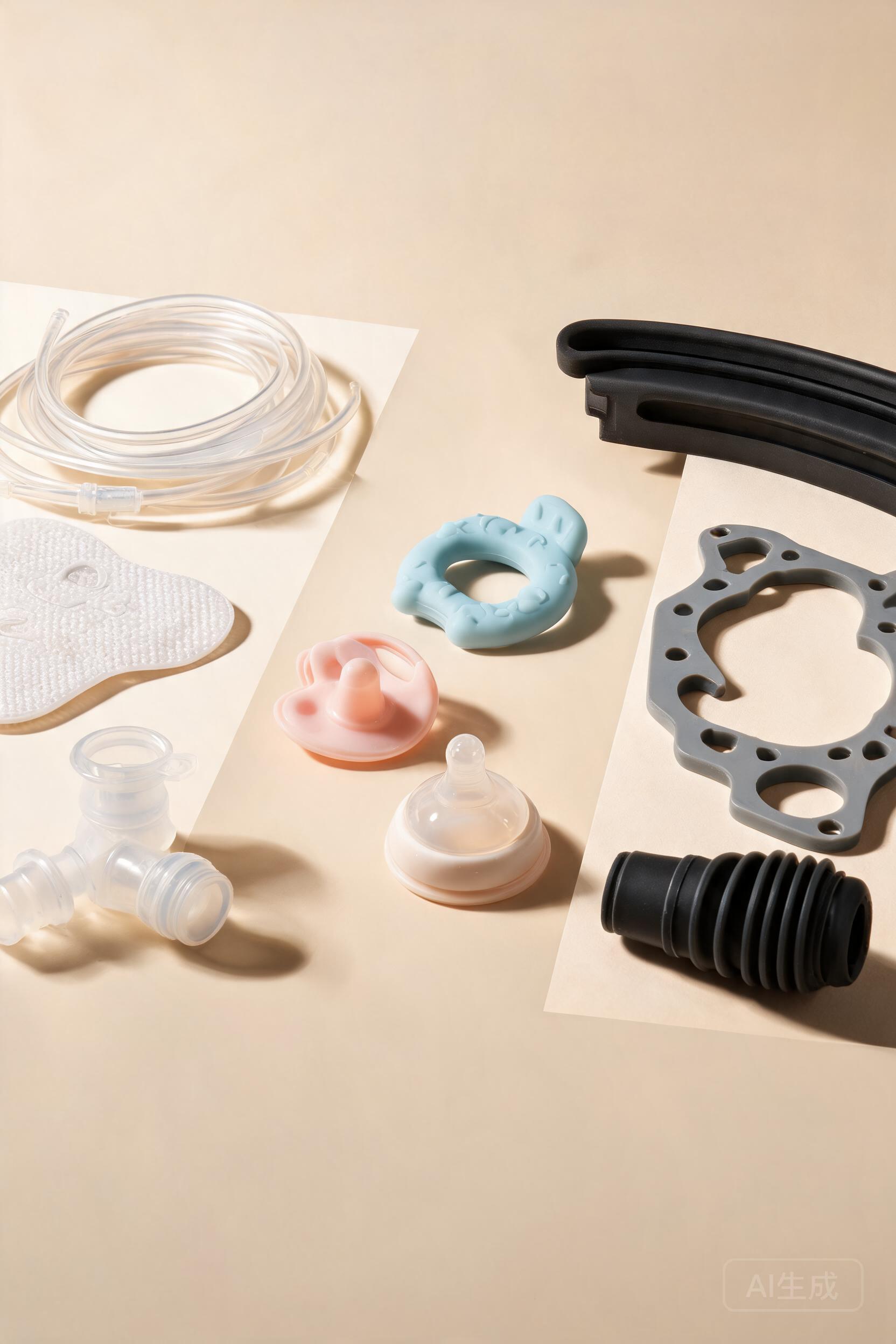
The demand for liquid silicone processing services in Central China is growing steadily, and choosing a reliable manufacturer is the core of ensuring product quality. As a local professional LSR processing service provider, Xiangchu has standardized production workshops, advanced injection molding equipment and a mature quality control system. It can undertake customized orders of silicone parts for medical, consumer electronics, automotive and other fields, escorting product quality throughout the process from mold development to mass delivery, and providing customers with cost-effective liquid silicone OEM solutions.
The Central China region, encompassing Hubei, Hunan, Henan, and Jiangxi provinces, has emerged as a strategic hub for advanced manufacturing in China, driven by favorable industrial policies, well-developed logistics networks, and a growing pool of technical talent. As demand for high-precision, medical-grade, and industrial liquid silicone rubber (LSR) components surges across automotive, healthcare, consumer electronics, and new energy sectors, the need for reliable local LSR contract manufacturers has never been more pressing. Among regional players, Hubei Xiangchu Silicone Technology Co., Ltd. stands out as a leading provider of end-to-end LSR processing solutions, with a 12-year track record of delivering custom products that meet ISO 13485, IATF 16949, and FDA 21 CFR Part 177.2600 compliance. This article evaluates the unique advantages of Central China as an LSR manufacturing base, dissects Xiangchu’s core technical capabilities and product portfolio, and provides a data-backed comparative analysis of its performance against industry benchmarks to assist global buyers in making informed sourcing decisions.
Central China’s rise as an LSR production hub is rooted in three interconnected competitive advantages that address common pain points for global OEMs, including long lead times, high logistics costs, and supply chain instability.
Located at the intersection of China’s north-south and east-west transportation corridors, Central China offers unrivaled access to both domestic and global markets. Wuhan Tianhe International Airport, the region’s primary cargo hub, operates 42 international freight routes to Southeast Asia, Europe, and North America, with average air freight lead times of 3–5 days to major global ports, 20% faster than coastal manufacturing hubs during peak shipping seasons. Additionally, the China-Europe Railway Express (Wuhan line) provides rail freight options with a 14–18 day transit time to European markets, cutting costs by 60% compared to air freight for high-volume, low-perishability LSR components.
The region also hosts a complete upstream LSR supply chain, with 12 local raw material manufacturers producing medical-grade, food-grade, and industrial LSR compounds with shore hardness ranges from 10A to 80A. This local supply reduces raw material lead times from 7–10 days (for imported materials) to 2–3 days, and lowers material costs by 15–25% compared to coastal factories that rely on long-haul raw material transportation. For manufacturers like Xiangchu, this ecosystem enables just-in-time (JIT) production models, with 98% of raw material orders fulfilled within 48 hours, minimizing inventory holding costs for clients.
Central China’s provincial governments have rolled out targeted incentives for high-precision manufacturing, including LSR processing, to drive industrial upgrading. Hubei Province’s "Advanced Manufacturing Development Plan (2023–2027)" offers tax rebates of 10–15% for LSR manufacturers that invest in medical and automotive grade production lines, as well as subsidies covering up to 30% of costs for ISO 13485 and IATF 16949 certification. These incentives are passed on to clients in the form of 10–20% lower pricing for LSR components compared to equivalent factories in the Pearl River Delta and Yangtze River Delta regions, without compromising quality standards.
Labor cost is another key advantage: the average monthly salary for skilled LSR production technicians in Central China is 35–40% lower than in coastal manufacturing hubs, while technical vocational schools in the region graduate over 8,000 polymer material and mold design professionals annually, ensuring a stable supply of skilled labor. This combination of lower labor costs and policy support enables regional manufacturers to offer more competitive pricing for both low-volume prototype runs and high-volume mass production, while maintaining strict quality control standards.
Central China is home to 278 institutions of higher education, including Wuhan University, Huazhong University of Science and Technology, and Hunan University, which have leading polymer material research departments focused on LSR formula modification and processing technology. Xiangchu, for example, maintains a long-term joint R&D partnership with the School of Materials Science and Engineering at Huazhong University of Science and Technology, with 12 full-time R&D staff and 6 visiting professors dedicated to developing custom LSR compounds and optimizing injection molding processes.
The region also hosts 19 national-level material testing laboratories, providing local LSR manufacturers with access to third-party testing services for biocompatibility, high-temperature resistance, and UV stability within 3–5 working days, compared to 7–10 days in coastal regions. This access to R&D and testing infrastructure reduces product development cycles for custom LSR components by 20–30%, a critical advantage for clients in fast-moving sectors like consumer electronics and medical devices.
Xiangchu’s 18,000 square meter production facility in Wuhan’s East Lake High-Tech Development Zone is equipped with 32 fully electric LSR injection molding machines with clamping forces ranging from 55 tons to 650 tons, supporting production volumes from 100-piece prototype runs to 10 million-piece annual mass production orders. The company’s end-to-end capabilities cover mold design, material formulation, injection molding, post-processing, and quality testing, enabling it to address complex client requirements for high-precision LSR components.
Mold precision is the foundation of high-quality LSR product production, as LSR’s low viscosity and high flowability require tight tolerances to prevent flash and ensure part consistency. Xiangchu’s in-house mold shop employs 18 senior mold designers with an average of 9 years of LSR mold experience, using CAD/CAM software including SolidWorks, Pro/E, and Moldflow to simulate LSR filling, curing, and cooling processes before mold production. This simulation reduces mold trial iterations by 30% and cuts mold development lead times to 10–15 days for standard parts, and 20–25 days for complex multi-cavity or overmolding molds.
The company’s mold production capabilities are supported by high-precision processing equipment including 5-axis CNC machining centers, wire EDM machines, and optical grinders, enabling mold cavity tolerances of ±0.003 mm and parting line clearances of ≤0.005 mm, which eliminate flash for 99.2% of production runs. Xiangchu offers two mold warranty options for clients: a standard 1-year warranty for all molds, and a lifetime maintenance plan for high-volume production molds, with routine maintenance performed every 50,000 shots to extend mold lifespan by 30% compared to industry averages. Table 1 outlines Xiangchu’s mold performance metrics compared to industry benchmarks:
Xiangchu’s R&D team specializes in custom LSR formula modification to meet unique application requirements, beyond standard off-the-shelf LSR compounds. The company has developed 17 proprietary LSR formulations, including high-temperature resistant LSR that can withstand continuous operating temperatures of 280°C, self-lubricating LSR with a coefficient of friction of 0.12, and antimicrobial LSR with 99.9% antibacterial efficacy against E. coli and Staphylococcus aureus. These custom formulations are widely used in automotive engine components, medical device parts, and smart wearable products, with 4 formulation patents approved by the China National Intellectual Property Administration.
The company’s injection molding process is fully automated, with closed-loop control systems that monitor injection pressure, curing temperature, and holding time in real time, ensuring part consistency across production runs. Xiangchu’s overmolding capability is a key differentiator, supporting LSR bonding with 12 different substrate materials including PC, ABS, PPSU, aluminum alloy, and stainless steel, with a bonding strength of ≥5 MPa, eliminating the need for adhesive in 95% of overmolding applications. For micro-precision LSR parts used in hearing aids and micro-pumps, the company can achieve part weights as low as 0.005 g with dimensional tolerances of ±0.01 mm, meeting the strict requirements of medical and consumer electronics clients.
Xiangchu’s quality control system is aligned with international standards, with 22 quality inspection stations covering raw material incoming inspection, in-process monitoring, and finished product testing, achieving a 99.7% product pass rate for mass production orders. All incoming LSR raw materials undergo 8 inspection items, including viscosity testing, shore hardness verification, and heavy metal content testing, with non-conforming raw materials rejected at a rate of 2.3% annually to prevent quality issues at the source.
During production, each injection molding machine is equipped with in-line sensors that monitor part weight, dimensional accuracy, and flash presence every 10 shots, with automatic shutdown triggered if non-conforming parts are detected. Finished products undergo batch testing including biocompatibility (ISO 10993-5), tensile strength, elongation at break, and temperature cycle testing, with full testing reports provided to clients for every production batch. The company is certified to ISO 9001, ISO 13485, IATF 16949, and FDA food contact standards, with annual third-party audits conducted by SGS and TÜV to ensure ongoing compliance. Table 2 details Xiangchu’s quality control metrics:
Xiangchu serves over 230 clients across 12 countries, with 65% of revenue coming from export markets including the United States, Germany, Japan, and South Korea. The company’s product portfolio is tailored to high-growth sectors, with dedicated production lines for medical, automotive, consumer electronics, and food contact LSR components.
Xiangchu’s 3,000 square meter Class 100,000 clean room is dedicated to medical LSR production, with all production staff trained in GMP standards and wearing sterile protective gear during operation. The company’s medical product line includes:
The company currently supplies medical LSR components to 17 medical device manufacturers including Mindray and Medtronic’s Chinese division, with a 0% product recall record over the past 8 years. For medical clients, Xiangchu offers full DHF (Device History File) documentation support, including material traceability records, process validation reports, and sterilization validation reports, to assist clients in obtaining FDA 510(k) and CE marking for their products.
Xiangchu’s automotive LSR production line is certified to IATF 16949 standards, with products designed to meet the strict durability and temperature resistance requirements of the automotive sector. Key products include:
The company is a tier-2 supplier to 6 major automotive OEMs including BYD and GAC Aion, with annual production of 42 million NEV battery pack seals, supporting 1.2 million NEV units annually. For automotive clients, Xiangchu conducts PPAP (Production Part Approval Process) level 3 validation for all new products, including 1,000-hour aging testing and temperature cycle testing, to ensure compliance with OEM specifications.
Xiangchu’s consumer electronics LSR product line is focused on high-precision, aesthetically pleasing components for smart wearables and home electronics, including:
The company supplies LSR components to consumer electronics brands including Huawei, Xiaomi, and Amazfit, with a 98% on-time delivery rate for peak season orders, supporting product launch schedules for new smart wearable devices. For consumer electronics clients, Xiangchu offers surface treatment services including matte finishing, printing, and laser engraving, eliminating the need for third-party post-processing and reducing lead times by 3–5 days.
Central China’s strategic location, cost competitiveness, and strong R&D infrastructure make it an ideal base for LSR contract manufacturing, addressing the growing global demand for high-quality, cost-effective LSR components. As a leading regional manufacturer, Xiangchu combines 12 years of industry experience, state-of-the-art production equipment, and a strict quality control system to deliver custom LSR products that meet international standards for medical, automotive, consumer electronics, and food contact applications. The company’s in-house mold design capability, custom LSR formulation expertise, and end-to-end supply chain support enable it to reduce product development cycles by 20–30% and lower costs by 10–20% compared to coastal Chinese manufacturers, without compromising quality. For global OEMs looking to diversify their supply chains and source high-quality LSR components, Xiangchu is a reliable partner with a proven track record of supporting clients across North America, Europe, and Asia. As the LSR market continues to grow at a CAGR of 7.8% through 2030, Xiangchu is positioned to expand its production capacity to 50 injection molding machines by 2025, further enhancing its ability to serve global clients with large-scale, high-precision LSR processing solutions.