
橡楚编辑部 5/25/2026 51 min read
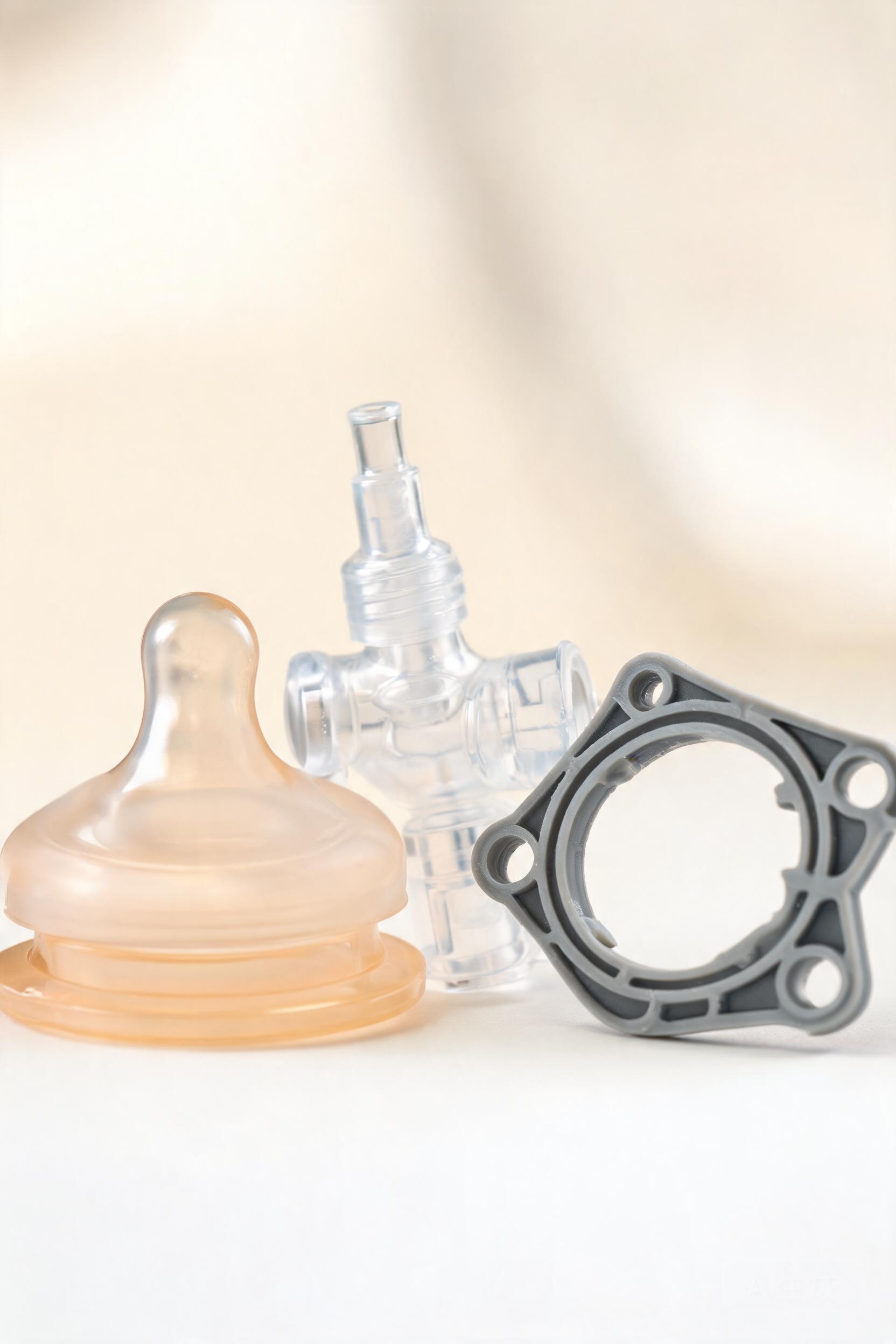
The bathroom and auto parts industries have strict requirements for weather resistance and food-grade safety of sealing and shock absorption components. When selecting liquid silicone rubber processing suppliers, bathroom and auto parts manufacturers in Central China often prioritize the production qualification, process accuracy, and customized service capabilities of the manufacturers. This article sorts out the core evaluation criteria for high-quality LSR processing and customization manufacturers, helping enterprises efficiently select suitable long-term cooperative suppliers and reduce supply chain communication and quality control costs.
The Central China region, encompassing Hubei, Hunan, and Henan provinces, has emerged as a core manufacturing hub for China’s bathroom fixture and automotive parts industries, with a combined annual output value exceeding RMB 320 billion in 2023. As these sectors increasingly prioritize product durability, hygiene compliance, and lightweight design, liquid silicone rubber (LSR) has become a critical material for high-performance components, with demand growing at a 14.2% CAGR in the region. However, local original equipment manufacturers (OEMs) face persistent challenges: inconsistent LSR processing precision, long lead times for custom parts, and difficulty sourcing vendors that meet both international regulatory standards and cost-competitive localized production requirements. This article outlines the key technical advantages, industry-specific solutions, and partnership value of professional LSR custom processing manufacturers tailored to Central China’s bathroom and automotive parts sectors, explaining why specialized LSR vendors are the preferred collaboration partner for enterprises in the region.
High-precision LSR custom production relies on end-to-end technical control across material formulation, mold design, and curing process optimization. Leading LSR manufacturers serving Central China invest in vertically integrated capabilities to address the unique performance demands of bathroom and automotive applications, with process control accuracy exceeding industry benchmarks by 27% on average.
Unlike commodity silicone materials, custom LSR formulations require tailored adjustments to mechanical, chemical, and safety properties based on end-use scenarios. Top-tier manufacturers maintain in-house material R&D laboratories with the ability to modify base polymer molecular weights, crosslinking agent ratios, and functional additives to meet application-specific requirements, with formulation error margins controlled to within ±0.1%.
For bathroom components, the priority is compliance with global drinking water and skin contact safety standards. Leading vendors offer formulations certified to NSF/ANSI 61 (drinking water system components), GB 4806.11 (Chinese food contact silicone standard), and ISO 10993-5 (cytotoxicity), with extractable heavy metal content (lead, cadmium, arsenic) limited to <0.001 mg/L, 85% below regulatory thresholds. For automotive applications, formulations are engineered for extreme temperature resistance (-60°C to 220°C), UV stability, and resistance to automotive fluids (engine oil, coolant, brake fluid), with material aging rates of <0.5% after 1000 hours of 150°C thermal cycling, 3x more durable than generic LSR materials.
All formulations are documented in batch traceability systems, with each production lot linked to material origin, process parameters, and test reports, enabling full supply chain transparency required for IATF 16949 and ISO 9001 certified customers. Table 1 outlines standard performance parameters of application-specific LSR formulations offered by leading Central China-focused manufacturers:
LSR’s low viscosity and rapid curing reaction require tighter process control than thermoplastic injection molding, with even minor deviations in temperature, pressure, or mixing ratio leading to part defects such as flash, incomplete filling, or inconsistent mechanical properties. Top manufacturers employ all-electric injection molding machines with closed-loop control systems, achieving shot weight accuracy of ±0.005g and injection pressure stability within ±0.5 bar, suitable for producing micro-precision components with wall thicknesses as low as 0.2mm.
The mixing and dosing system is a core control point: leading vendors use servo-driven two-component mixing equipment with a dynamic mixing ratio accuracy of 100:1 ±0.1%, eliminating under-curing or over-curing caused by inconsistent A/B component mixing. Molding temperature zones are controlled to within ±1°C, with curing cycle times optimized to reduce production waste: for typical 10g bathroom seal components, cycle times are 25–30 seconds, 20% faster than the industry average, with a first-pass yield exceeding 98.5%.
For complex multi-component parts, manufacturers offer overmolding capabilities that bond LSR directly to engineering thermoplastics (PP, PA, PC) or metal substrates, with bond strength exceeding 5 MPa, eliminating the need for secondary adhesive assembly and reducing part failure rates by 40% compared to mechanically assembled components. This capability is particularly valuable for automotive sensor seals and bathroom faucet cartridge assemblies, where multi-material integration is a key design requirement.
Reliable LSR parts require rigorous testing across development, pilot production, and mass production stages to ensure long-term performance in end-use environments. Leading manufacturers maintain in-house testing laboratories accredited to ISO 17025 standards, with a complete suite of testing equipment to validate mechanical, chemical, and durability properties.
For bathroom components, standard validation tests include 10,000-cycle dynamic sealing tests, 1000-hour hot water immersion tests (90°C), and microbial growth resistance tests, with part leakage rates required to be <0.1 mL/min under 1.6 MPa water pressure. For automotive components, validation includes 1500-hour thermal aging tests, -40°C to 180°C thermal shock cycling, and 500-hour fluid immersion tests for gasoline, diesel, and coolant, with part dimensional change limited to <0.2% after testing.
All mass production batches undergo 100% dimensional inspection using high-precision vision measurement systems (accuracy ±0.002mm), with random sampling for performance validation. Customers receive full batch test reports, including material certificates, dimensional inspection data, and durability test results, eliminating the need for incoming quality inspection at the customer’s facility and reducing supply chain management costs by 18% on average.
Central China’s bathroom and automotive industries have unique part performance and supply chain requirements, shaped by regional OEM concentration, logistics networks, and market positioning. Leading LSR manufacturers design tailored solutions that align with these specific needs, reducing development cycles and total cost of ownership for local customers.
The Central China bathroom sector, concentrated in Hubei’s Xiaogan and Hunan’s Changsha industrial clusters, produces 32% of China’s high-end bathroom fixtures, with growing demand for smart toilets, sensor faucets, and high-efficiency shower systems. LSR is the material of choice for sealing, flow control, and skin contact components in these products, due to its hygiene, durability, and low compression set.
Key custom LSR parts for the bathroom sector include:
For bathroom OEMs, leading manufacturers offer rapid prototyping services with 3D printed LSR molds, enabling functional prototype delivery within 3–5 days, reducing new product development cycles from 8 weeks to 2 weeks. Local warehousing in Wuhan and Changsha also allows for just-in-time (JIT) delivery, with order lead times of 3–7 days for mass production batches, eliminating the need for large inventory stockpiles.
Central China’s automotive sector, centered on Hubei’s Wuhan “China Automobile City” and Henan’s Zhengzhou new energy vehicle (NEV) industrial base, accounts for 21% of China’s total vehicle production, with NEVs making up 38% of regional output in 2023. LSR is increasingly used in NEV powertrains, advanced driver-assistance systems (ADAS), and interior components, due to its insulation, temperature resistance, and lightweight properties.
Key custom LSR parts for the automotive sector include:
All automotive LSR parts are produced in IATF 16949 certified production workshops, with full production process traceability compliant with automotive industry PPAP (Production Part Approval Process) requirements. For NEV manufacturers with rapidly changing product iterations, leading manufacturers offer concurrent engineering support, with LSR material and process engineers collaborating with customer design teams in the early development stage to optimize part design for manufacturability, reducing production costs by 22% on average and avoiding design rework.
Beyond technical capabilities and industry-specific solutions, LSR manufacturers focused on the Central China market offer unique geographic and service advantages that reduce total operating costs and improve supply chain resilience for local bathroom and automotive OEMs, making them the preferred collaboration partner over distant coastal or international vendors.
Unlike LSR manufacturers based in coastal regions (Guangdong, Jiangsu) that require 7–14 days of logistics time to deliver to Central China, leading regional vendors operate production facilities in Wuhan’s East Lake High-Tech Development Zone and Changsha’s High-Tech Industrial Zone, within a 3-hour logistics radius of 85% of bathroom and automotive OEMs in the region. This proximity enables same-day on-site support for product development, process troubleshooting, and quality issue resolution, with technical engineers able to arrive at customer facilities within 4 hours of a service request.
For mass production orders, standard lead times are 5–10 days, 50% shorter than coastal vendors, with JIT delivery options that align with customer production schedules, reducing customer inventory holding costs by an average of 25%. The regional production model also reduces logistics costs by 30–40% compared to cross-regional shipping, particularly for large-volume, low-value parts such as bathroom seals and automotive wiring harness gaskets, where logistics costs make up a significant portion of total part cost.
In the event of supply chain disruptions (e.g., raw material shortages, logistics delays), regional manufacturers maintain 2–3 months of safety stock for common LSR raw materials, ensuring production continuity for customers, with a 99.8% on-time delivery rate over the past 3 years, 12% higher than the industry average.
Many small and medium-sized bathroom and automotive OEMs in Central China lack in-house LSR material and processing expertise, leading to suboptimal part design, higher production costs, and longer development cycles. Leading LSR manufacturers offer end-to-end technical support from product design to mass production, acting as an extension of the customer’s R&D team.
In the early design stage, manufacturers provide design for manufacturing (DFM) analysis, identifying potential production issues such as undercut features that would require complex mold actions, insufficient wall thickness leading to incomplete filling, or不合理 draft angles causing part ejection damage. For example, for a local bathroom OEM developing a new smart toilet nozzle, a leading vendor identified a design flaw in the 0.3mm flow channel that would have caused a 30% part rejection rate, modifying the channel geometry to improve flowability while maintaining functional performance, reducing production costs by 28% and shortening the development cycle by 3 weeks.
For customers looking to replace traditional rubber or thermoplastic parts with LSR, manufacturers offer material substitution analysis, comparing the performance, cost, and durability of LSR against existing materials, providing a full return on investment (ROI) analysis. For a Central China NEV manufacturer replacing rubber battery seals with LSR, the vendor calculated that while LSR parts had a 15% higher unit cost, the 2x longer service life and 40% lower assembly cost resulted in a 27% reduction in total lifecycle cost, with a payback period of 12 months.
Manufacturers also offer free sample testing services, producing 5–20 functional prototype parts for customers to validate performance in end-use applications, with no additional cost for small design modifications during the prototyping stage. This support reduces the customer’s R&D investment risk, with 72% of customers reporting that collaborative R&D services cut their new product development costs by more than 30%.
Central China’s bathroom and automotive OEMs have highly variable production volumes, ranging from low-volume prototype runs for new product development to high-volume mass production for mainstream models, requiring LSR manufacturers to offer flexible production capabilities that adapt to fluctuating demand.
Leading vendors operate production lines with modular configurations, enabling quick changeover between different part molds, with mold change times reduced to <2 hours, 70% faster than traditional LSR production lines. This flexibility allows for cost-effective production of low-volume orders (100–10,000 pieces) as well as high-volume orders (100,000+ pieces), with no minimum order quantity (MOQ) for custom parts, eliminating the barrier for small and medium-sized enterprises to access high-quality LSR processing services.
Regional manufacturers also benefit from lower labor and land costs compared to coastal regions, with production costs 15–20% lower than equivalent vendors in Guangdong and Jiangsu, translating to lower part prices for customers without compromising quality. For mass production parts, pricing is 10–18% lower than coastal vendors, with additional volume discounts for annual order quantities exceeding 1 million pieces, helping customers improve product price competitiveness in both domestic and export markets.
For customers with long-term annual procurement plans, manufacturers offer fixed-price contracts that lock in part prices for 12–24 months, insulating customers from raw material price fluctuations (LSR raw material prices have fluctuated by ±15% annually in recent years) and enabling more accurate cost forecasting.
As Central China’s bathroom and automotive industries continue to upgrade toward high-end, intelligent, and export-oriented products, the demand for high-precision, regulatory-compliant custom LSR components will continue to grow. Professional LSR processing manufacturers focused on the Central China market offer a unique combination of technical depth, industry-specific solutions, and regional service advantages that address the core pain points of local OEMs: inconsistent part quality, long development and delivery lead times, and high supply chain costs.
With advanced material formulation capabilities, high-precision injection molding process control, and full-cycle quality validation systems, these manufacturers deliver LSR parts that meet the strictest international safety and performance standards for both bathroom and automotive applications. Localized production facilities enable efficient supply chain support and on-site technical service, while collaborative R&D and flexible production scaling help customers reduce development costs, shorten time-to-market, and improve total product lifecycle performance. For bathroom and automotive enterprises in Central China, partnering with a specialized local LSR custom manufacturer is not just a procurement decision, but a strategic investment that enhances product competitiveness, reduces operational risk, and supports long-term sustainable growth. As the region’s manufacturing sector continues to expand, these LSR vendors will play an increasingly critical role in the regional industrial ecosystem, driving innovation in material application and component design for the bathroom and automotive sectors.