
橡楚编辑部 7/16/2026 48 min read
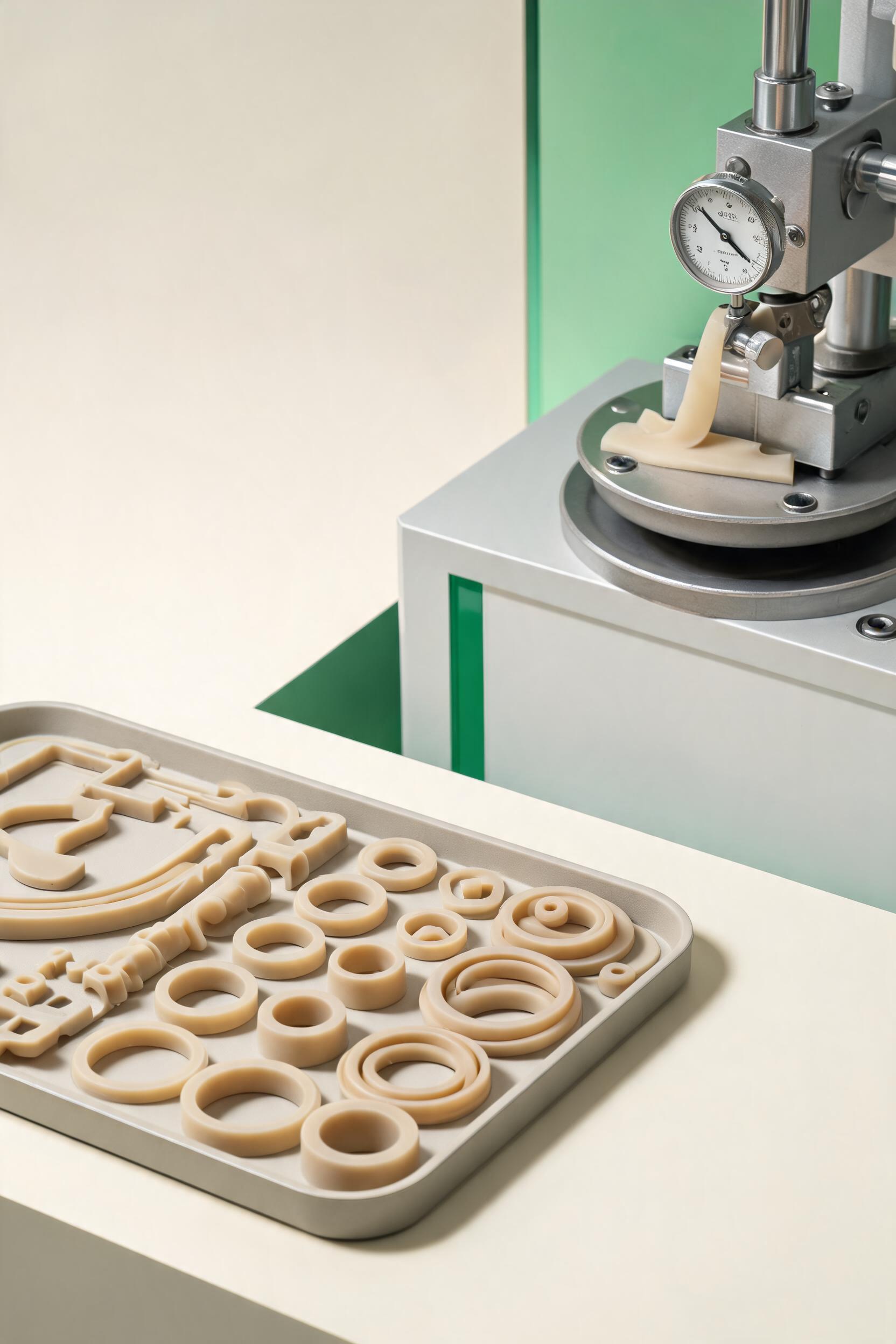
This article explains the characteristics, application scenarios and selection points of automotive waterproof silicone seal miscellaneous parts, analyzes the core advantages of liquid silicone rubber in high and low temperature resistance, aging resistance, waterproof sealing and other dimensions, sorts out the performance requirements of sealing parts for different automotive parts, and provides practical selection references for automotive parts manufacturers and purchasers to help improve the reliability and service life of automotive sealing systems.
Automotive sealing systems are critical barriers against environmental intrusion, structural vibration attenuation, and noise reduction, directly impacting vehicle durability, passenger comfort, and compliance with IP ingress protection standards. Traditional sealing materials such as EPDM (ethylene propylene diene monomer), nitrile rubber, and neoprene have long dominated the automotive sector, but rising performance requirements for electric vehicles (EVs), advanced driver-assistance systems (ADAS), and extreme operating condition durability have exposed limitations of these conventional materials: EPDM degrades rapidly under prolonged exposure to automotive fluids and high-temperature underhood environments, nitrile rubber has poor low-temperature flexibility for cold-climate applications, and both have compression set rates as high as 30–40% after 1000 hours of aging at 125°C, leading to premature sealing failure.
Liquid Silicone Rubber (LSR) waterproof sealing miscellaneous parts (custom-molded, non-standard sealing components designed for specific automotive mounting points) have emerged as a high-performance alternative, addressing these gaps with inherent material stability, design flexibility, and long-term reliability. As of 2024, LSR sealing components account for 18% of global automotive sealing system shipments, with a 22% annual growth rate driven by EV adoption, according to the International Organization for Standardization (ISO) 1043-1 polymer classification framework. This article analyzes the core performance advantages of automotive waterproof LSR seals, evaluates their application cases across vehicle subsystems, provides a data-driven selection guide for engineering teams, and outlines common failure mitigation strategies to support optimal design and deployment.
LSR is a two-part, platinum-catalyzed thermoset elastomer composed of polydimethylsiloxane (PDMS) polymer chains, reinforcing fumed silica fillers, and crosslinking agents, cured via injection molding at 120–180°C to form a highly crosslinked three-dimensional network structure. This molecular architecture gives LSR seals a unique combination of properties that outperform conventional rubber materials in demanding automotive environments.
The Si-O backbone of LSR has a bond energy of 452 kJ/mol, significantly higher than the C-C bond energy of 347 kJ/mol in hydrocarbon-based rubbers, giving LSR exceptional resistance to thermal, chemical, and weathering degradation. Table 1 compares key durability parameters between LSR, EPDM, and nitrile rubber (NBR), the three most widely used automotive sealing materials:
For EV applications, LSR’s high-temperature stability is particularly valuable: underhood and battery pack operating temperatures can reach 180°C during fast charging, a condition that causes EPDM to lose 40% of its tensile strength after 500 hours of exposure, while LSR retains 92% of its original mechanical properties. LSR also maintains 80% of its elongation at break at -60°C, eliminating the risk of seal cracking and leakage in cold-climate regions, a common failure point for NBR seals that become brittle below -30°C. LSR’s low compression set ensures that seals retain their preload force even after decades of cyclic compression from door closing, vibration, and thermal expansion, eliminating the need for periodic seal replacement required for conventional rubber components.
The non-porous, homogeneous cured structure of LSR, combined with its low compression set and high elasticity, delivers consistent waterproofing performance even under dynamic operating conditions. Unlike EPDM, which often requires secondary coating or post-curing to eliminate surface porosity, LSR cures to a pore-free finish with a surface roughness as low as Ra 0.2 μm, creating a tight interface with mating metal or plastic components.
LSR seals can meet IP69K ingress protection requirements, the highest level defined by IEC 60529, resisting high-pressure, high-temperature water jets (80°C, 80–100 bar pressure) from close range, making them suitable for ADAS sensor housings, battery pack enclosures, and exterior camera mounts that are exposed to car wash equipment and heavy rain. For static sealing applications, LSR’s typical leakage rate is less than 1×10⁻⁶ mbar·L/s for air and zero water leakage under 10 bar hydrostatic pressure, outperforming EPDM’s typical leakage rate of 1×10⁻⁴ mbar·L/s under the same conditions.
For dynamic sealing applications such as power window seals and steering column grommets, LSR has a low coefficient of friction (0.2–0.3, vs. 0.5–0.7 for EPDM), reducing wear during cyclic movement while maintaining constant contact pressure with mating surfaces. LSR seals also exhibit excellent hydrolysis resistance, with less than 3% change in hardness and tensile strength after 1000 hours of immersion in 80°C deionized water, ensuring long-term waterproofing performance in regions with high humidity or frequent rainfall.
LSR’s low viscosity (10,000–1,000,000 cP before curing) enables precision injection molding of complex, custom-shaped miscellaneous sealing parts with tight dimensional tolerances of ±0.02 mm for features smaller than 10 mm, and ±0.05 mm for features up to 100 mm. This allows engineering teams to integrate multiple sealing functions into a single component, reducing assembly time and part count: for example, a single LSR door seal can integrate a primary waterproofing lip, a secondary dust barrier, and a vibration-damping cushion, replacing 3 separate EPDM components and reducing assembly time by 40%.
Other key design and manufacturing benefits include:
Waterproof LSR miscellaneous seals are deployed across all major vehicle subsystems, with specific designs tailored to the performance requirements of each use case. The following sections outline the most common applications, with corresponding performance requirements and real-world validation data.
Exterior LSR seals are designed to resist direct exposure to weather, UV radiation, automotive fluids, and mechanical impact, while providing consistent waterproofing and noise reduction. Key use cases include:
In a 2023 field test of 500 electric vehicles operated in coastal regions with high salt spray and UV exposure, vehicles equipped with LSR charge port gaskets had zero sealing failure incidents over 3 years of operation, compared to a 12% failure rate for vehicles with EPDM charge port gaskets, which suffered from cracking and water leakage that led to charging system fault codes.
For internal combustion engine (ICE) vehicles and EVs, powertrain and battery system seals require resistance to high temperatures, automotive fluids, and pressure fluctuations, while providing critical protection against water intrusion that can cause component failure or safety hazards.
According to a 2022 report from the United States Council for Automotive Research (USCAR), LSR battery pack seals have a 99.98% reliability rate over 15 years of service, compared to 97.2% for EPDM seals, reducing the risk of battery pack water intrusion that is responsible for 7% of EV battery warranty claims globally.
Interior LSR seals focus on reducing noise, vibration, and harshness (NVH), protecting electrical connections from water and dust, and ensuring long-term reliability for in-vehicle electronics.
A 2023 JD Power initial quality study found that vehicles using LSR wiring harness grommets had 35% fewer electrical system fault codes related to water intrusion into wiring connectors, compared to vehicles using EPDM grommets, reducing warranty repair costs by an average of $27 per vehicle.
Selecting the right LSR seal for a specific automotive application requires a systematic evaluation of material grades, design parameters, and performance validation requirements, to balance performance, cost, and manufacturing feasibility. The following guide provides a step-by-step framework for engineering teams.
Automotive-grade LSR is available in multiple specialized formulations, each tailored to specific operating environment requirements. Table 2 outlines the most common LSR material grades, their key properties, and recommended applications:
Key material selection criteria include:
Proper design of LSR seal geometry and installation parameters is critical to achieving the required waterproofing performance and long service life. Key design considerations include: