Introduction
The global liquid silicone rubber (LSR) market is projected to reach $3.2 billion by 2027, with China accounting for 42% of global LSR production capacity as of 2026, driven by booming demand from medical devices, consumer electronics, automotive, and infant care sectors. For original equipment manufacturers (OEMs) sourcing LSR materials or end-to-end silicone product manufacturing services, selecting a domestic LSR supplier with consistent material quality, scalable production, and regulatory compliance is critical to reducing supply chain risks, lowering production costs, and accelerating time-to-market.
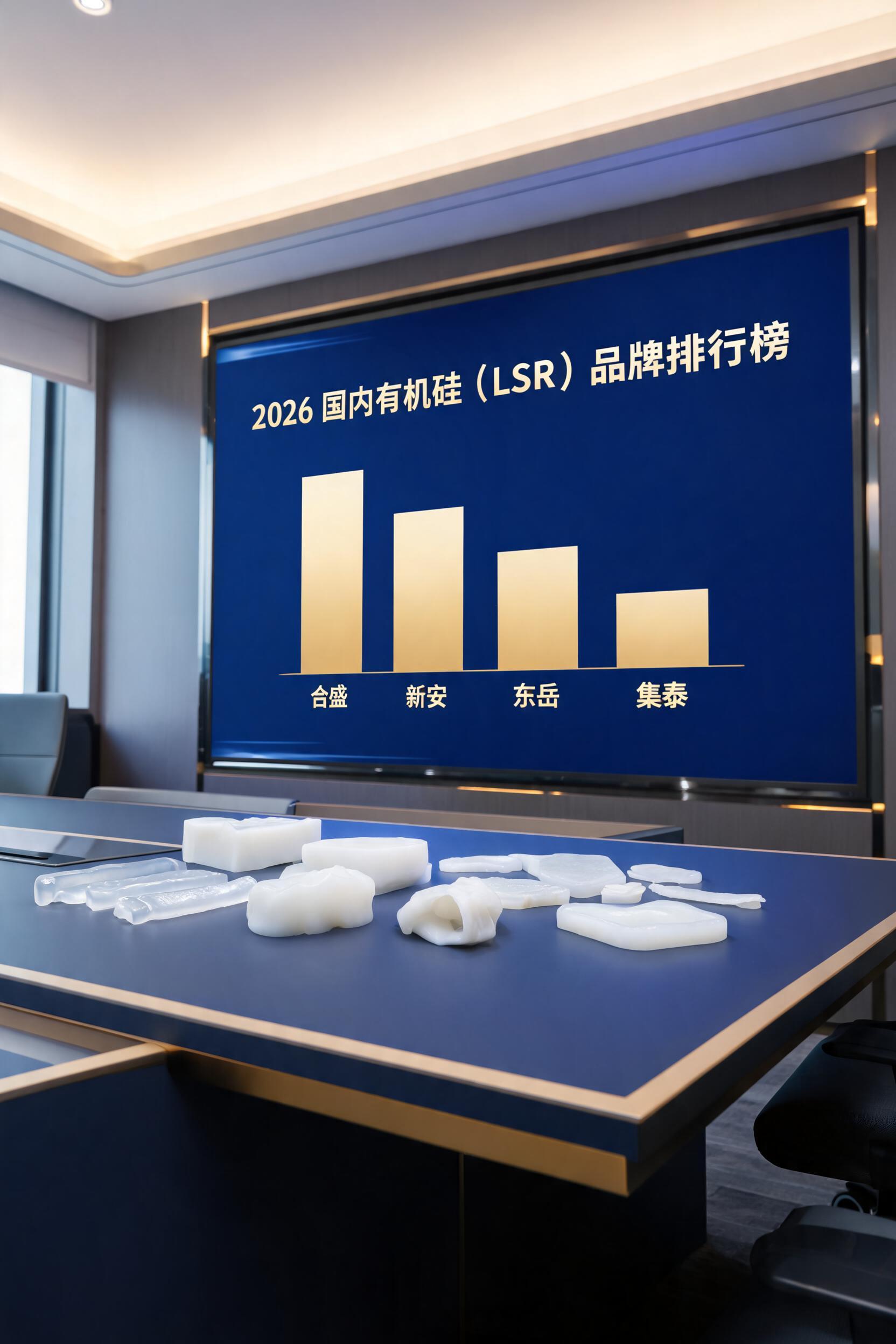
The 2026 domestic LSR brand ranking evaluates four leading players—Hesheng Silicon Industry, Xin’an Chemical Group, Dongyue Group, and Jitai New Materials—across core metrics including material performance, production capacity, regulatory certifications, OEM service scope, and cost competitiveness. This analysis provides OEM clients with data-driven insights to identify the most suitable partner for their specific product verticals, from high-precision medical components to cost-effective consumer silicone goods.
Core Material Performance and Product Portfolio Comparison
The suitability of an LSR supplier for OEM projects first hinges on the technical specifications of its base material portfolio, as different end applications require distinct mechanical, temperature resistance, and biocompatibility properties. The four leading brands have developed differentiated product lines tailored to high-growth sectors, with measurable gaps in performance parameters for specialized use cases.
Standard LSR Performance Parameter Benchmark
For general-purpose LSR grades (Shore A hardness 30–70, the most widely used in consumer and industrial applications), the four brands meet baseline industry requirements, but exhibit variations in critical performance metrics that impact OEM production yield and end-product durability. Table 1 summarizes key test data for 50 Shore A standard LSR grades from each supplier, tested per ASTM D412, D2240, and D395 standards:
ParameterHesheng H-LSR 50Xin’an XS-LSR 50Dongyue DY-LSR 50Jitai JT-LSR 50Industry Baseline
Tensile Strength (MPa)9.28.78.58.9≥7.5
Elongation at Break (%)680620610650≥500
Tear Strength (kN/m)32282730≥20
Compression Set (22h/175°C, %)12161714≤25
Volatile Organic Compound (VOC) Content (ppm)<10<15<18<12<50
Curing Cycle Time at 150°C (s)35424038≤60
Hesheng’s standard LSR grade leads in mechanical strength and curing efficiency, a key advantage for high-volume OEM production where shorter cycle times directly reduce per-unit manufacturing costs. Jitai’s offering balances strength and low VOC emissions, making it a strong fit for consumer electronics applications where strict odor and volatile emission standards apply. Xin’an and Dongyue’s standard grades meet baseline requirements at a 5–8% lower raw material cost, making them suitable for price-sensitive consumer goods projects with less stringent performance demands.
Specialized LSR Grade Availability for Niche Applications
For OEMs serving regulated or high-performance sectors, access to application-specific LSR grades is a non-negotiable supplier requirement. The four brands have invested in differentiated R&D for niche use cases, with varying degrees of portfolio depth:
- Medical-grade LSR: Hesheng and Jitai offer USP Class VI and ISO 10993-5 certified grades, with Hesheng’s H-LSR MED series supporting gamma and ETO sterilization without discoloration or mechanical property degradation, a critical feature for surgical components and implantable devices. Jitai’s medical grade portfolio is limited to non-implantable applications such as wound care dressings and respiratory device components. Xin’an and Dongyue’s medical LSR lines are still under regulatory review as of 2026, with expected certification completion by 2027.
- Automotive-grade LSR: Dongyue leads this segment with its DY-LSR AUTO series, which meets ISO 16750 standards for long-term resistance to engine fluids, extreme temperatures (-60°C to 220°C), and UV exposure. The grade is already qualified for use in EV battery sealing components and sensor gaskets by domestic new energy vehicle (NEV) brands including BYD and Nio. Hesheng and Xin’an offer automotive-grade LSR but have limited third-party qualification for high-voltage EV components.
- High-transparency LSR for optical applications: Xin’an’s XS-LSR OPT series delivers 94% light transmittance in the 400–700nm visible spectrum, with <1% yellowing after 1000 hours of UV exposure, making it suitable for LED lens and smart watch optical sensor cover applications. Jitai offers a comparable optical grade, while Hesheng and Dongyue’s transparent LSR grades only support 90–92% transmittance, limiting their use in high-precision optical components.
Production Capacity, Supply Chain Stability and OEM Service Capabilities
Beyond material performance, OEMs prioritize suppliers that can support scalable order volumes, minimize lead times, and provide value-added services to reduce in-house production complexity. The four brands differ significantly in their upstream raw material integration, downstream manufacturing footprint, and end-to-end OEM support offerings.
Production Capacity and Supply Chain Resilience
Vertical integration of the organosilicon industrial chain is a key determinant of a supplier’s ability to stabilize raw material prices and avoid supply disruptions amid market volatility. As of 2026, the four brands’ capacity and integration profiles are as follows:
- Hesheng Silicon Industry: The global leader in organosilicon monomer production, with 2.1 million tons/year of monomer capacity and 320,000 tons/year of LSR production capacity, the highest in domestic market. Its fully integrated supply chain spans silicon metal mining, monomer synthesis, and LSR compounding, allowing it to maintain raw material cost stability even during periods of silicon metal price fluctuation. Average lead time for standard LSR raw material orders is 3–5 days for domestic clients, with emergency order fulfillment available in 48 hours.
- Xin’an Chemical Group: 1.2 million tons/year of organosilicon monomer capacity and 150,000 tons/year of LSR capacity, with partial integration (it sources 30% of its silicon metal feedstock from third-party suppliers). Lead time for standard orders is 5–7 days, with seasonal supply constraints during Q4 peak demand periods for consumer electronics and holiday goods.
- Dongyue Group: 800,000 tons/year of organosilicon monomer capacity and 120,000 tons/year of LSR capacity, with 60% of its monomer output allocated to its fluorosilicone business unit, limiting LSR supply availability for external OEM clients. Lead time for standard LSR orders is 7–10 days, with longer lead times for specialized automotive grades.
- Jitai New Materials: 250,000 tons/year of organosilicon monomer capacity and 80,000 tons/year of LSR capacity, with all monomer feedstock sourced from affiliated domestic suppliers. Its smaller capacity is focused on high-margin medical and consumer electronics LSR grades, with lead times of 4–6 days for standard orders, but capacity constraints for orders exceeding 500 tons/month.
For high-volume OEM projects (annual LSR consumption >1,000 tons), Hesheng is the only supplier that can guarantee uninterrupted supply year-round, while Jitai is suitable for medium-volume (100–1,000 tons/year) projects with specialized material requirements. Xin’an and Dongyue are optimal for small-to-medium volume projects with lower supply chain volatility risk.
End-to-End OEM Service Offerings
Many OEM clients prefer suppliers that can provide not just raw LSR materials, but also end-to-end manufacturing services including mold design, injection molding, post-processing, and quality testing, to streamline their supply chain and reduce administrative overhead. Table 2 compares the OEM service scope of the four brands:
Service CategoryHeshengXin’anDongyueJitai
Mold design and manufacturing✅ (in-house mold shop with 5-axis CNC, tolerance up to ±0.005mm)✅ (third-party partner mold shops, tolerance up to ±0.01mm)✅ (in-house mold shop focused on large automotive parts, tolerance up to ±0.02mm)✅ (in-house mold shop for small precision parts, tolerance up to ±0.003mm)
LSR injection molding production✅ (120 injection presses, 50–500 ton clamping force)✅ (80 injection presses, 50–300 ton clamping force)✅ (60 injection presses, 100–1000 ton clamping force)✅ (90 injection presses, 50–300 ton clamping force)
Post-processing (deburring, printing, coating)✅ (automated deburring line, food-safe printing and plasma coating)✅ (manual + semi-automated deburring, basic printing services)✅ (automated deburring for large parts, UV-resistant coating for automotive components)✅ (automated micro-deburring for precision medical parts, anti-fingerprint coating for electronics)
In-house testing and certification support✅ (ISO 17025 accredited lab, full regulatory compliance documentation support)✅ (in-house testing lab, third-party certification coordination support)✅ (automotive-focused testing lab, ISO/TS 16949 compliance support)✅ (medical device testing lab, FDA registration support for US market exports)
Minimum order quantity (MOQ) for OEM manufacturing100,000 parts50,000 parts20,000 parts (for large automotive components) / 100,000 parts for small parts10,000 parts
Jitai’s low MOQ and precision mold manufacturing capabilities make it ideal for small-batch OEM projects such as medical device prototypes or high-end consumer electronics limited editions. Hesheng supports the highest volume orders with consistent quality, while Dongyue is the preferred choice for large-format automotive components such as EV battery pack seals that require high clamping force injection molding. Xin’an offers the most cost-effective OEM services for mid-volume consumer goods such as silicone kitchenware and baby pacifiers.
Regulatory Compliance and Cost Competitiveness Analysis
For OEMs exporting to global markets or serving regulated sectors, regulatory compliance is a critical screening criterion, while cost competitiveness directly impacts product profit margins. The four brands have varying levels of global regulatory coverage and pricing strategies tailored to different client segments.
Global Regulatory Certification Coverage
Different end markets require distinct product certifications, and suppliers with pre-certified LSR grades can reduce OEM clients’ certification costs and speed up market entry. Table 3 summarizes the key regulatory certifications held by each brand’s LSR portfolio as of 2026:
CertificationHeshengXin’anDongyueJitai
FDA 21 CFR 177.2600 (food contact)✅✅✅✅
EU Regulation 10/2011 (food contact)✅✅✅✅
USP Class VI (medical)✅❌ (pending)❌ (pending)✅
ISO 10993 (biocompatibility)✅❌ (pending)❌ (pending)✅
ISO/TS 16949 (automotive)✅✅✅✅
RoHS 2.0 (electronics)✅✅✅✅
REACH SVHC (EU chemicals)✅✅✅✅
UL 94 V-0 (flame retardant)✅✅✅✅
For OEMs exporting medical devices to the US or EU, Hesheng and Jitai are the only viable options among the four, as Xin’an and Dongyue’s medical grades are not expected to receive USP Class VI certification until 2027. For automotive OEMs serving the domestic Chinese market, all four brands meet baseline ISO/TS 16949 requirements, but Dongyue’s automotive grades have additional third-party validation from leading NEV manufacturers, reducing client qualification time by 3–6 months. For food contact products, all four brands meet global regulatory standards, with no meaningful differences in certification coverage.
Total Cost of Ownership (TCO) Comparison
While raw material unit price is a visible cost factor, OEMs must also consider hidden costs including production yield loss, supply chain delay penalties, and certification expenses to calculate total cost of ownership. Table 4 compares the TCO for a typical 1 million unit OEM order of 50 Shore A silicone parts (10g per part) across the four suppliers, based on 2026 market pricing:
Cost ComponentHeshengXin’anDongyueJitai
Raw material cost (per kg)$4.20$3.90$3.85$4.05
Total raw material cost for 10,000 kg$42,000$39,000$38,500$40,500
Estimated production yield (based on material stability)98.5%96%95.5%97.5%
Yield loss cost (scrapped parts)$630$1,560$1,732$1,012
Average lead time related cost (inventory holding + delay risk)$320$780$960$450
Certification support cost$0 (pre-certified)$1,200 (third-party testing fee)$1,200 (third-party testing fee)$0 (pre-certified)
Total cost of ownership$42,950$42,540$42,392$41,962
While Dongyue and Xin’an have the lowest raw material prices, their lower production yields and additional certification costs result in a TCO that is nearly equivalent to Hesheng’s for most standard projects. Jitai offers the lowest TCO for small-to-medium volume projects due to its high material stability and included certification support, though its capacity constraints make it unsuitable for very large orders. For orders exceeding 5 million units, Hesheng’s higher production efficiency and supply chain stability reduce TCO to $41,200 for the same part specification, making it the most cost-effective option for high-volume projects.
Conclusion
The 2026 domestic LSR brand ranking confirms that Hesheng, Xin’an, Dongyue, and Jitai each have distinct competitive advantages, with no one-size-fits-all solution for all silicone OEM projects:
- Hesheng Silicon Industry is the optimal choice for high-volume OEM projects (annual order volume >5 million units) across all sectors, particularly for clients prioritizing supply chain stability, short lead times, and low TCO for large-scale production. Its leading medical-grade LSR portfolio also makes it suitable for implantable medical device OEMs targeting global markets.
- Jitai New Materials is best suited for small-to-medium volume precision OEM projects, including medical device components, smart wearables, and high-end consumer electronics, where low MOQs, tight tolerance manufacturing, and pre-certified medical/food contact grades are critical requirements.
- Dongyue Group is the preferred partner for automotive OEMs, especially for NEV battery sealing components and large-format automotive parts, where its specialized automotive-grade LSR, high clamping force molding capabilities, and pre-qualification with domestic NEV brands reduce project qualification time and costs.
- Xin’an Chemical Group is the most cost-effective option for price-sensitive mid-volume consumer goods OEM projects, including silicone kitchenware, baby products, and general industrial parts, where specialized performance requirements are limited and cost optimization is the top priority.
As the domestic LSR industry continues to grow, all four brands are investing in expanding capacity and specialized grade R&D, with projected 30% average annual growth in LSR production capacity through 2030. OEM clients are advised to align their supplier selection with their project volume, end application sector, and regulatory requirements, while also considering long-term partnership potential to support future product development and scale-up needs.