
橡楚编辑部 6/18/2026 40 min read
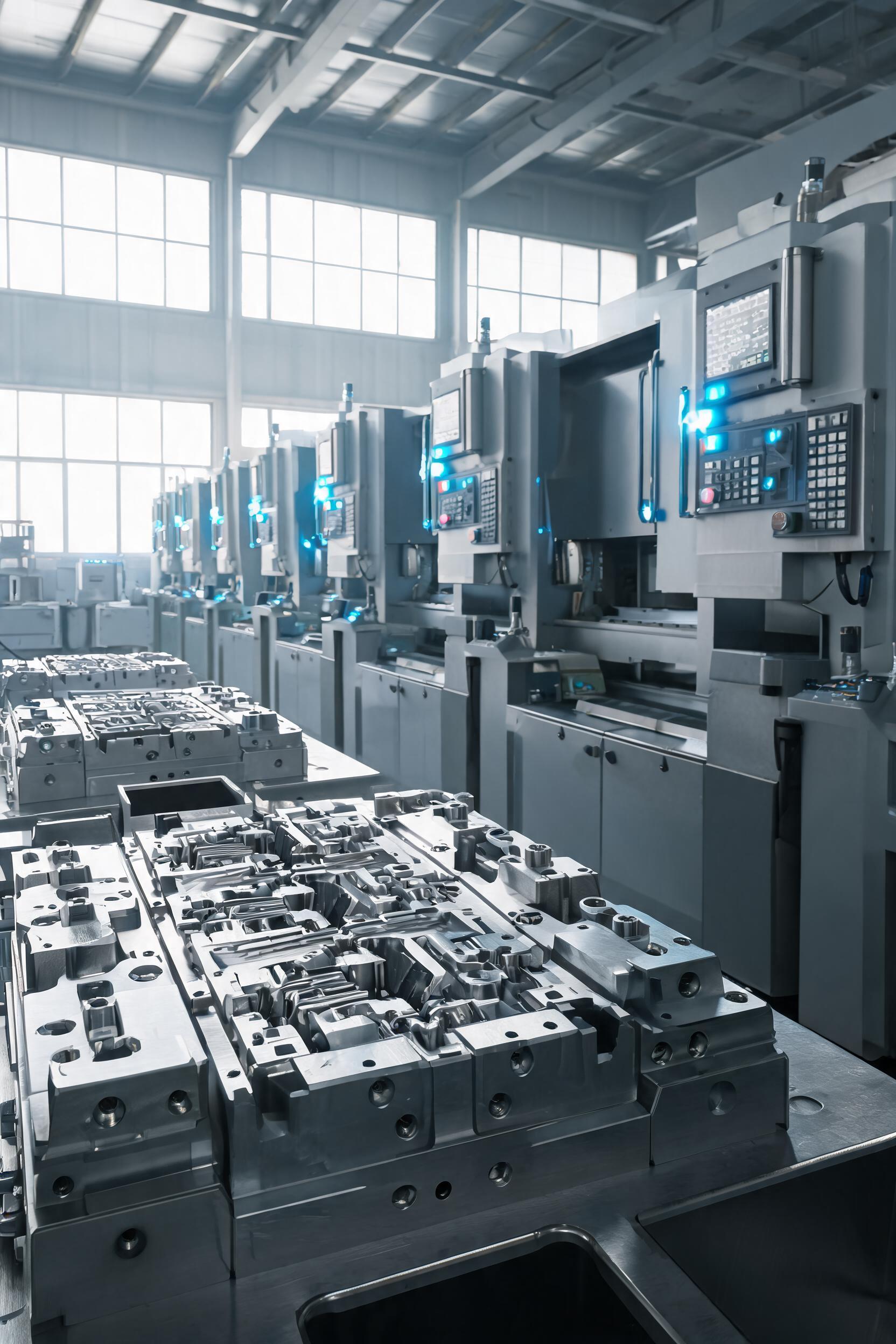
Xiangchu (Hubei) Rubber Co., Ltd. officially launched its new website. Located in Ezhou, Hubei, we provide 1-hour on-site mold review services for liquid silicone rubber (LSR) product demand enterprises in Wuhan and surrounding areas. We are ISO 9001 certified, specializing in various LSR products, and can quickly respond to mold review needs of regional customers to help promote projects efficiently.
Liquid Silicone Rubber (LSR) injection molding is a highly precise manufacturing process that depends entirely on early-stage mould design and evaluation to avoid costly downstream errors. For small and medium-sized product development teams and rapid prototyping facilities in Wuhan and the surrounding Hubei region, delayed mould evaluation often leads to extended product development cycles, increased material waste, and missed market launch windows. Many local LSR part manufacturers have historically struggled with long lead times for third-party mould reviews: off-site evaluation can take 3 to 7 business days, and on-site visits require advance scheduling that can stretch out over a week.
To address this pain point, 橡楚(湖北)橡胶有限公司 (Xiangchu (Hubei) Rubber Co., Ltd.), a leading Chinese manufacturer of custom Liquid Silicone Rubber products based at 湖北省鄂州市鄂城区经济开发区凡口街道内河巷54号, has launched a new official export website and introduced an industry-leading 1-hour on-site mould review service for all enterprises located in Wuhan and surrounding areas within a 100-kilometer radius. This service cuts through traditional logistics and scheduling bottlenecks, leveraging Xiangchu’s central geographic location in Hubei and in-house LSR mould engineering expertise to deliver fast, accurate, and actionable evaluation results for LSR product development teams. This article breaks down the value of this new service, the technical methodology behind our 1-hour evaluation, and how it supports local enterprises in accelerating LSR product development.
LSR injection moulding has unique design requirements that differ significantly from thermoplastic injection moulding, making generic mould evaluation insufficient for rubber parts. For Wuhan-based medical device, consumer electronics, and automotive component manufacturers developing new LSR products, unaddressed mould design errors lead to measurable production losses and development delays.
Liquid Silicone Rubber is a low-viscosity, two-part thermoset material that cures under heat and pressure. Unlike thermoplastics that shrink uniformly after cooling, LSR shrinkage rates vary between 2% and 4% depending on the part geometry, cure temperature, and silicone grade. Generic mould design tools often default to thermoplastic shrinkage values, leading to out-of-tolerance finished parts that require expensive rework or full mould replacement.
Other common design mismatches include:
For small and medium-sized product development teams with limited in-house LSR expertise, these errors often are not caught until trial production, leading to 1-2 weeks of unplanned delay and significant unexpected costs.
Most Wuhan-based OEMs and product development teams do not maintain full-time LSR mould engineering staff, so they rely on third-party evaluation services. Historically, most qualified LSR mould experts are based in the Pearl River Delta or Yangtze River Delta, requiring teams to ship mould blanks or design files out of province and wait 3-7 business days for a review. For on-site evaluation of fabricated mould blanks before mass production, scheduling a visit from an out-of-province expert can take up to 10 business days, adding critical time to already tight development cycles.
For enterprises working on rapid prototyping or time-sensitive new product launches, this delay can mean missing critical market windows. For example, a Wuhan-based medical device developer working on a new wearable sensor with an LSR seal may lose a competitive bid to a faster competitor if mould development is delayed by a week.
Located at 湖北省鄂州市鄂城区经济开发区凡口街道内河巷54号, 橡楚(湖北)橡胶有限公司 is just 80 kilometers from Wuhan’s central business district, with a 1-hour drive time to most industrial parks in Wuhan and surrounding areas including Huanggang, Ezhou, Huangshi, and Xiaogan. This central geographic position allows us to provide on-site mould review for local Wuhan enterprises with an unprecedented 1-hour response from confirmation of booking. As an ISO 9001 certified manufacturer of custom LSR products with over 10 years of in-house mould development experience, we combine fast on-site response with deep technical expertise in LSR-specific mould design.
Our 1-hour mould review service is available for all enterprises located within a 100-km radius of our facility in Ezhou, covering the entirety of Wuhan and all surrounding major industrial hubs. We accept two types of mould reviews: 2D/3D design file reviews for moulds still in the design phase, and on-site inspection of fabricated mould blanks before trial production.
The streamlined booking process is designed for minimal disruption to your development workflow:
What makes 1-hour on-site evaluation possible is not just our geographic proximity, but our standardized, LSR-specific evaluation framework developed over a decade of in-house mould production. Our senior mould engineers all have a minimum of 8 years of experience working exclusively on LSR injection moulds, and we use portable precision inspection equipment that allows us to complete full measurements and analysis on-site without returning samples to our facility.
Our standard on-site evaluation kit includes:
We also maintain a centralized digital library of 1200+ completed LSR mould designs, which our engineers can reference via cloud access on-site to compare against your design and identify common errors quickly.
Our evaluation process is structured to prioritize the highest-risk mould design features first, ensuring that we catch critical errors within the 1-hour timeframe without sacrificing accuracy. We follow a tiered evaluation framework that adapts to whether you are submitting a design for pre-fabrication review or a fabricated mould for pre-production inspection.
For design reviews before mould fabrication, our goal is to catch errors that would lead to costly rework after machining, so we focus on five core LSR-specific design parameters, completed in 45 minutes with a 15-minute summary and discussion.
We cross-verify the shrinkage allowance applied to your design based on the specific LSR grade you plan to use, part geometry, and projected injection pressure. For example, high-hardness LSR (50-70 Shore A) for automotive gaskets typically has a shrinkage rate of 2.0-2.5%, while low-hardness LSR (10-30 Shore A) for medical implants has a shrinkage rate of 3.0-3.8%. Complex undercut features often require adjusted shrinkage allowances that generic design software does not account for, which our engineers identify and correct.
We evaluate gate size, location, and type based on part thickness and LSR flow characteristics. For thin-walled LSR parts (<1 mm), we recommend fan gates to promote even flow and reduce knit lines, while for thick-walled parts (>5 mm) we verify that pin gates are sized to prevent premature curing before full cavity filling. We also check for potential flash formation at the gate based on LSR’s low viscosity, and recommend adjustments if the gate location will lead to excess flash.
Proper venting is one of the most critical and commonly overlooked features of LSR moulds, because LSR’s low viscosity means trapped air cannot escape as easily as it does in higher-viscosity thermoplastics. We verify that vents are sized between 0.005 mm and 0.02 mm (depending on part thickness) to prevent flash while allowing air to escape, and that vents are placed at all knit line locations and the end of flow paths. We also check that vent channels leading to the outside of the mould are sufficiently large to prevent air back-pressure.
LSR requires uniform temperature distribution across all cavities to ensure consistent curing, as even a 5°C temperature difference across the mould can lead to a 10% difference in part hardness and extended cure time. We verify that heating channels are spaced evenly (typically 2-3x the channel diameter from the cavity surface) and that the inlet and outlet positions are designed to prevent temperature gradients across the mould.
LSR has high elongation and tear strength, so demolding requires properly designed ejection systems to prevent part stretching or tearing. We verify that ejector pin positions are placed on thick-walled sections or rigid feature locations, and that undercut features have properly designed sliding cores or split cavities to avoid part damage during demolding.
For fabricated mould blanks that require inspection before trial production, our 1-hour evaluation combines dimensional verification with visual inspection of critical features, as outlined below:
After completing dimensional inspection, our engineers conduct a visual check for common machining defects including burrs at cavity edges, surface scratches that would transfer to the finished part, and improper alignment of core and cavity inserts. We also check the surface finish of the cavity against your requirements for the finished part, as LSR will replicate even minor surface imperfections from the mould.
All inspection results are recorded directly on-site, and any critical non-conformities are highlighted immediately for your team, with specific recommendations for re-machining or adjustment. Non-critical observations that will not affect part performance are also documented for your reference.
At 橡楚(湖北)橡胶有限公司, all our services including our 1-hour mould review follow strict quality management processes aligned with our ISO 9001 certification. We do not cut corners on accuracy to meet our 1-hour service target: our evaluation framework is standardized to ensure that every review meets the same quality standards regardless of turnaround time.
Every 1-hour mould review we complete receives a unique report number that is stored in our quality management system for a minimum of 5 years. The final report includes:
This documentation not only helps your team correct current mould issues, but also provides a traceable record for future product development projects and regulatory compliance for medical and automotive applications.
We designed our 1-hour mould review service to be accessible for small and medium-sized product development teams as well as large OEMs. Our pricing structure is transparent with no hidden fees:
In most cases, the cost of our review is less than 10% of the cost of reworking a faulty mould after trial production, making the service a cost-effective investment to avoid unexpected expenses.
For Wuhan and surrounding area enterprises developing new LSR products, 橡楚(湖北)橡胶有限公司’s new 1-hour on-site mould review service solves a long-standing bottleneck in product development. By combining our central geographic location in Ezhou (just 1 hour from most Wuhan industrial parks), deep specialized expertise in LSR mould design, and a standardized, efficient evaluation framework, we deliver fast, accurate, and actionable mould reviews that help you catch critical errors early, reduce development costs, and shorten time-to-market.
Our new export website launch makes it easier than ever for international and local clients to access our services and learn more about our full range of custom Liquid Silicone Rubber products. Whether you are a startup working on a new prototype or an established OEM preparing for mass production of LSR components, our team of senior mould engineers is ready to support you with fast, reliable evaluation.
To book a 1-hour mould review or learn more about our services, contact us today: